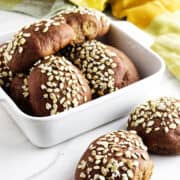
Cheesecake Factory Brown Bread Rolls (Copycat Dinner Rolls)
These Cheesecake Factory Brown Bread Rolls are a copycat of the soft, slightly sweet dark rolls served at the restaurant. Made with rye flour, molasses, cocoa, and coffee, they’re finished with oats and baked until tender. Serve warm with butter.
Servings: 18 rolls
Calories: 199kcal
Equipment
- Large Rimmed Baking Sheets
- Parchment Paper Sheets
Ingredients
- ½ cup warm water at 105-110℉
- 2¼ teaspoons active yeast (one envelope)
- 1¼ cup coffee cooled
- ¼ cup molasses
- 5 tablespoons honey
- 3 tablespoons oil
- 5 tablespoons unsweetened cocoa powder
- 2 teaspoons salt
- ¾ cup rye flour Light rye flour
- ¾ cup rye flour coarse ground or dark rye flour
- 3½ cups bread flour
- 6 tablespoons rolled oats for top of loaf
Instructions
- In a large bowl, combine the warm water and yeast. Let stand for 5 to 10 minutes, until foamy.½ cup warm water, 2¼ teaspoons active yeast
- Add the yeast mixture to a stand mixer or large mixing bowl. Stir in the cold coffee, vegetable oil, molasses, and honey.1¼ cup coffee, ¼ cup molasses, 5 tablespoons honey, 3 tablespoons oil
- Add the cocoa powder and stir until fully combined.5 tablespoons unsweetened cocoa powder
- Add the salt, rye flours, and bread flour.2 teaspoons salt, ¾ cup rye flour, ¾ cup rye flour, 3½ cups bread flour
- Mix until a shaggy dough forms.
- Knead the dough. It will be sticky at first but will become smoother as it develops. Scrape down the sides as needed, adding extra flour only 1 tablespoon at a time if necessary.
- Continue kneading with a stand mixer for 10 minutes, or knead by hand on a lightly floured surface for about 10 minutes, until smooth and elastic.
- Place the dough in a lightly oiled bowl, turning to coat. Cover and let rise in a warm place for 1 to 1½ hours, or until doubled in size.
- Gently punch down the dough and divide into thirds. Cut each third into six pieces (about 75 grams each), then shape into oblong rolls. Place on parchment-lined baking sheets.
- Lightly moisten the tops with water and press into oats. Cover and let rise in a warm place for 30 to 45 minutes, until nearly doubled.6 tablespoons rolled oats
- While the rolls rise, preheat the oven to 375°F. Bake for 15 to 20 minutes. Let cool on the baking sheet for a few minutes, then transfer to a wire rack. Serve warm or slightly cooled.
Notes
- Proof Your Yeast Properly: Ensure your yeast is active by dissolving it in the warm liquid (usually water or milk) with a pinch of sugar. If it doesn't foam up within 5-10 minutes, your yeast might be old, and it's best to start with a fresh packet.
- Don't Over-Flour: Pumpernickel dough can be sticky due to the rye flour. Resist the urge to add too much extra flour during kneading. A slightly sticky dough will yield a more tender roll. Use just enough flour to make it manageable.
- Develop Flavor with Resting Time: Allow the dough sufficient time to rise in a warm, draft-free place. This not only develops the yeast but also deepens the characteristic pumpernickel flavor.
- Achieve Dark Color and Flavor: Don't skip the molasses, coffee, and cocoa powder; they're key to both the color and the slightly sweet, rich flavor of pumpernickel.
- Bake to Deep Brown: Pumpernickel rolls benefit from being baked until they have a deep, rich brown crust. This contributes to both the flavor and the characteristic appearance. Keep an eye on them towards the end of baking to prevent burning.
Nutrition
Calories: 199kcal | Carbohydrates: 38g | Protein: 5g | Fat: 3g | Saturated Fat: 0.4g | Polyunsaturated Fat: 1g | Monounsaturated Fat: 2g | Trans Fat: 0.01g | Sodium: 262mg | Potassium: 224mg | Fiber: 4g | Sugar: 9g | Vitamin A: 2IU | Vitamin C: 0.03mg | Calcium: 24mg | Iron: 1mg
