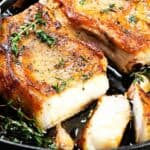
Pan Seared Boneless Pork Chops
For a weeknight meal that's both quick and easy to prepare, our Pan Seared Boneless Pork Chops recipe are a family favorites you'll turn to again and again. These juicy chops pair wonderfully with most sides.
Servings: 4
Calories: 304kcal
Equipment
- 1 Cast Iron Skillet
Ingredients
- 4 pork chops
- 3 tablespoon vegetable oil (1 tablespoon to coat, 1 tablespoon for each side when grilling)
- 2 tablespoon garlic and herb seasoning blend
- salt to taste
- pepper to taste
Instructions
- Prepare the pork chops my brushing in 1 tablespoon of the oil. Sprinkle with the garlic & herb seasoning blend, salt, and pepper. Either chill for 30 minutes to let flavors penetrate, or cook immediately.4 pork chops, 3 tbsp vegetable oil, 2 tbsp garlic and herb seasoning blend, salt, pepper
- Set the cast iron skillet on the burner at medium hot and preheat. Add 1 tablespoon oil. When hot, add the pork chops and cook for 5 minutes.
- Turn pork chops over, using the the last 1 tablespoon of oil if skillet it dry. Cook on this second side for another 5 minutes. If you like them cooked a little more, add one more minute to each side. NOTE: Pork chops are safely cooked when they reach an internal temperature of 145°F (63°C) in the thickest part.
- Remove skillet from heat and platter the pork chops, letting them rest about 5 minutes before serving.
Notes
- Choose the Right Chops: Opt for thick-cut, boneless pork chops (at least 1-inch thick). Thicker chops are less likely to dry out and allow for a good sear while remaining juicy inside.
- Pat Chops Dry: Before seasoning, thoroughly pat the pork chops dry with paper towels. Excess moisture on the surface will prevent a proper, golden-brown sear.
- Don't Crowd the Pan: Cook the chops in batches if necessary to avoid overcrowding the cast iron skillet. Overcrowding lowers the pan's temperature and steams the meat instead of searing it, preventing a good crust.
- Use High Heat Initially, Then Finish: Get your cast iron skillet smoking hot before adding the chops to achieve a beautiful sear. After searing both sides, you might need to lower the heat or transfer the pan to a preheated oven to finish cooking through without burning the outside.
- Rest the Chops: After cooking, transfer the pork chops to a cutting board and let them rest for 5-10 minutes before slicing or serving. This allows the juices to redistribute throughout the meat, resulting in a much juicier chop
Nutrition
Calories: 304kcal | Carbohydrates: 1g | Protein: 29g | Fat: 20g | Saturated Fat: 5g | Polyunsaturated Fat: 7g | Monounsaturated Fat: 6g | Trans Fat: 0.2g | Cholesterol: 90mg | Sodium: 65mg | Potassium: 514mg | Fiber: 0.2g | Sugar: 0.1g | Vitamin A: 58IU | Vitamin C: 0.2mg | Calcium: 29mg | Iron: 1mg
