


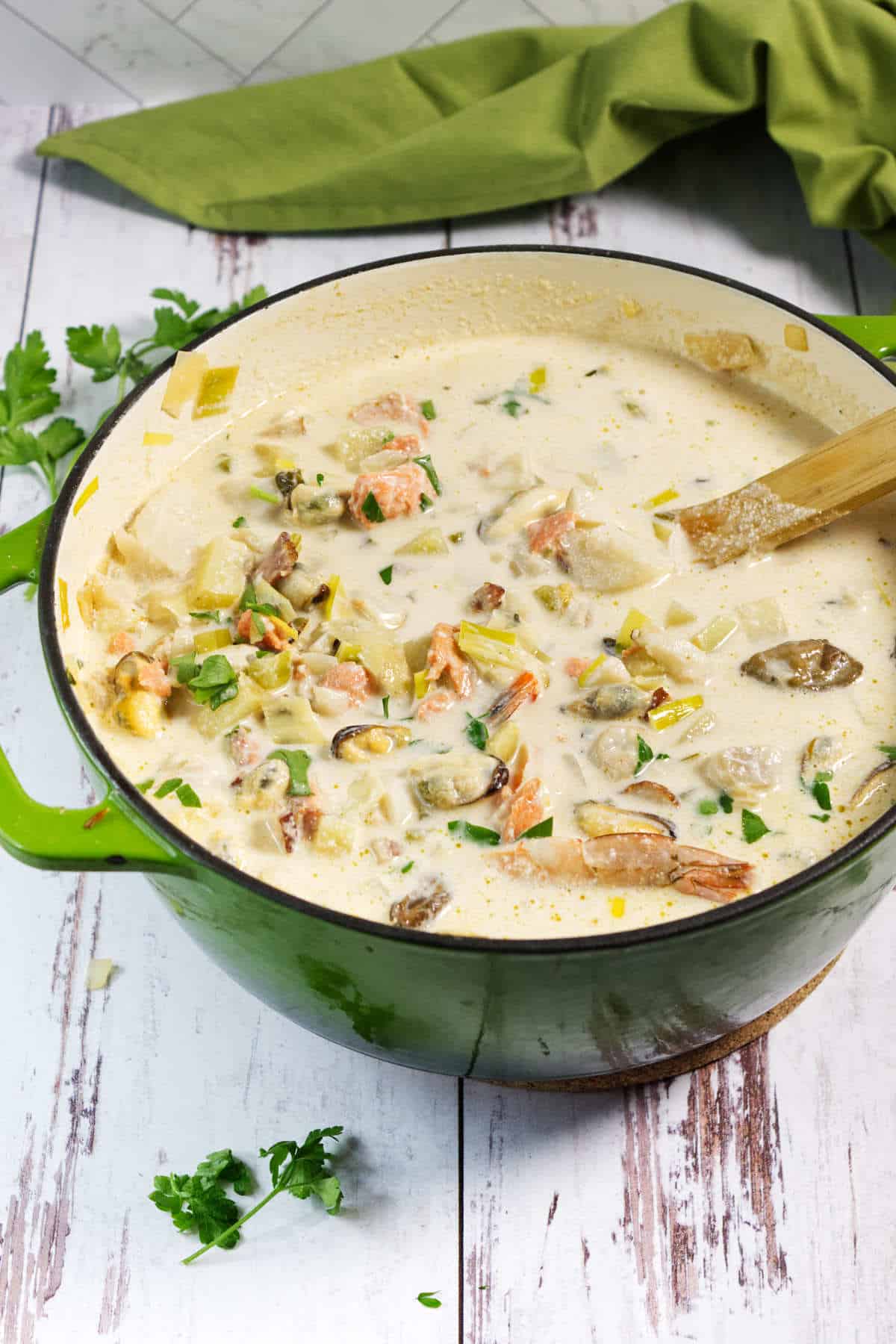
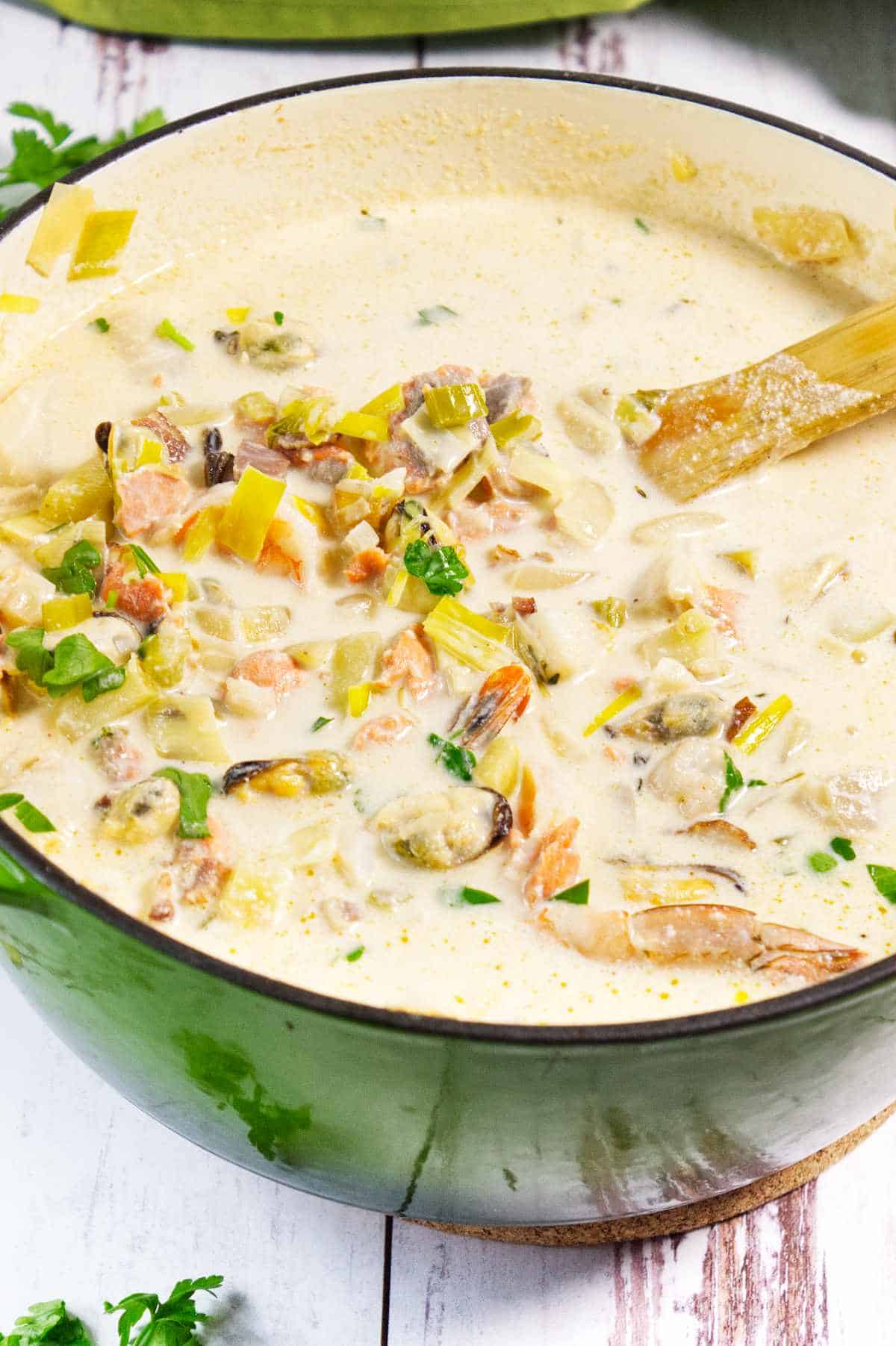
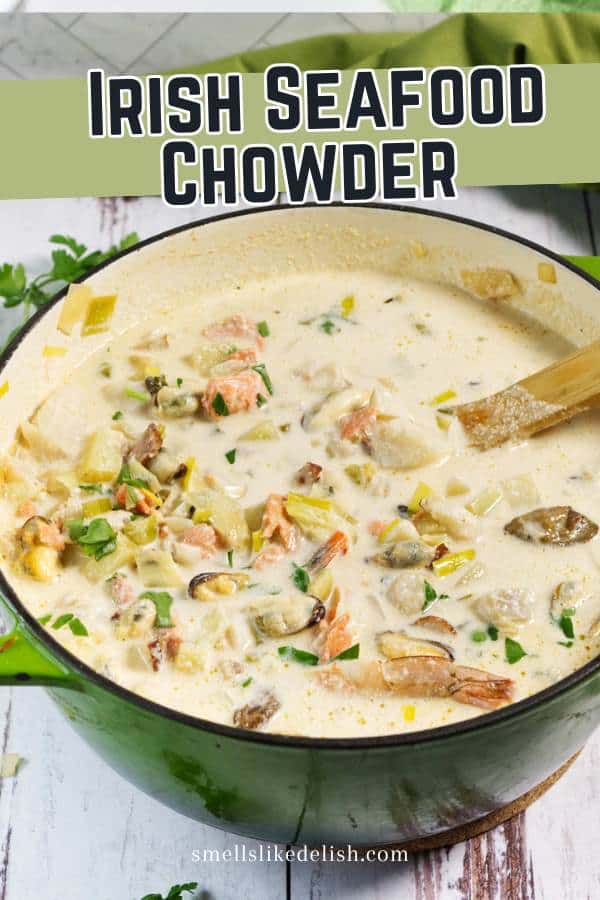
This Irish seafood chowder recipe is a creamy coastal soup filled with tender fish, shellfish, potatoes, and smoky bacon. This version follows the traditional Irish pub style chowder that is popular along the coast of Ireland.
What Is Irish Seafood Chowder
Irish seafood chowder is a creamy fish soup commonly served in coastal pubs throughout Ireland and is considered a traditional Irish dish. It usually contains several types of seafood such as white fish, salmon, mussels, or shrimp along with potatoes, leeks, bacon, and cream.
Many traditional versions also include smoked fish like smoked haddock, which adds a subtle smoky flavor to the broth.
Why You'll Love This Irish Seafood Chowder Recipe
Irish seafood chowder is built on a simple base of bacon, potatoes, leeks, and cream. The broth slowly develops flavor as the seafood cooks gently in the pot, creating a rich soup without needing complicated techniques. Using several kinds of seafood gives the chowder a full, layered flavor similar to what you would find in Irish pubs.
- Traditional Irish flavor: Bacon, leeks, potatoes, and cream form the classic base used in many Irish chowders.
- Mixed seafood richness: Salmon, cod, shrimp, and mussels give the soup a variety of textures and flavors.
- Smoky depth: Smoked oysters add the subtle smokiness that smoked haddock traditionally provides.
- One pot meal: Everything cooks together in a Dutch oven which makes preparation simple.
- Hearty comfort food: Potatoes and seafood make this chowder filling enough for dinner.
Ingredients Overview
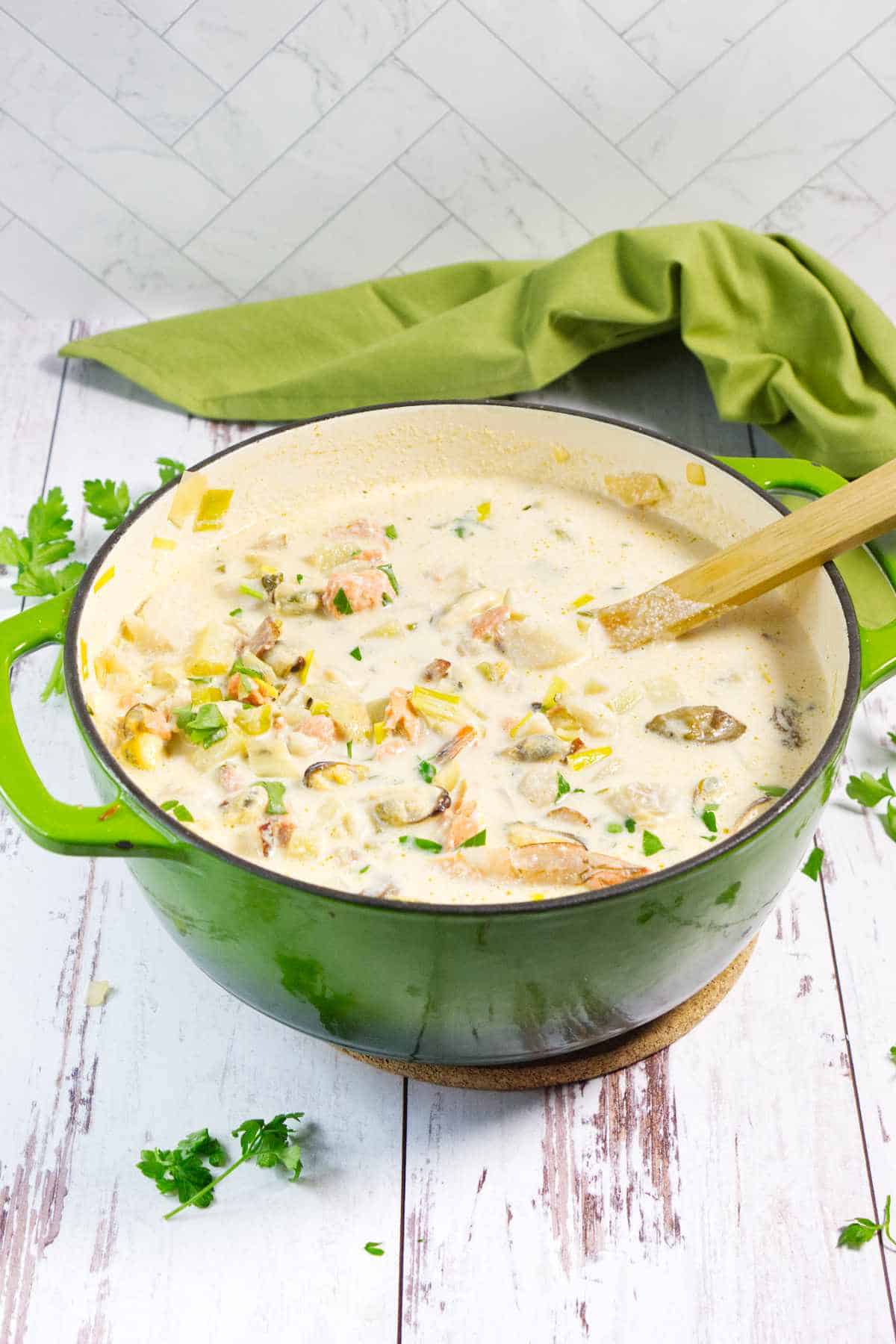
Irish seafood chowder uses simple ingredients that build layers of flavor in the pot. Bacon and aromatics create the base, potatoes add body, and several types of seafood give the soup its signature richness. Traditional versions often include a mix of firm white fish, flaky fish such as salmon, shellfish like shrimp or mussels, and a small amount of smoked fish for depth of flavor.
In Ireland, many fish markets even sell prepared "seafood chowder mix" bundles that contain a similar combination of seafood.
For the full list of ingredients and complete instructions, see the recipe card below.
How To Make Irish Seafood Chowder
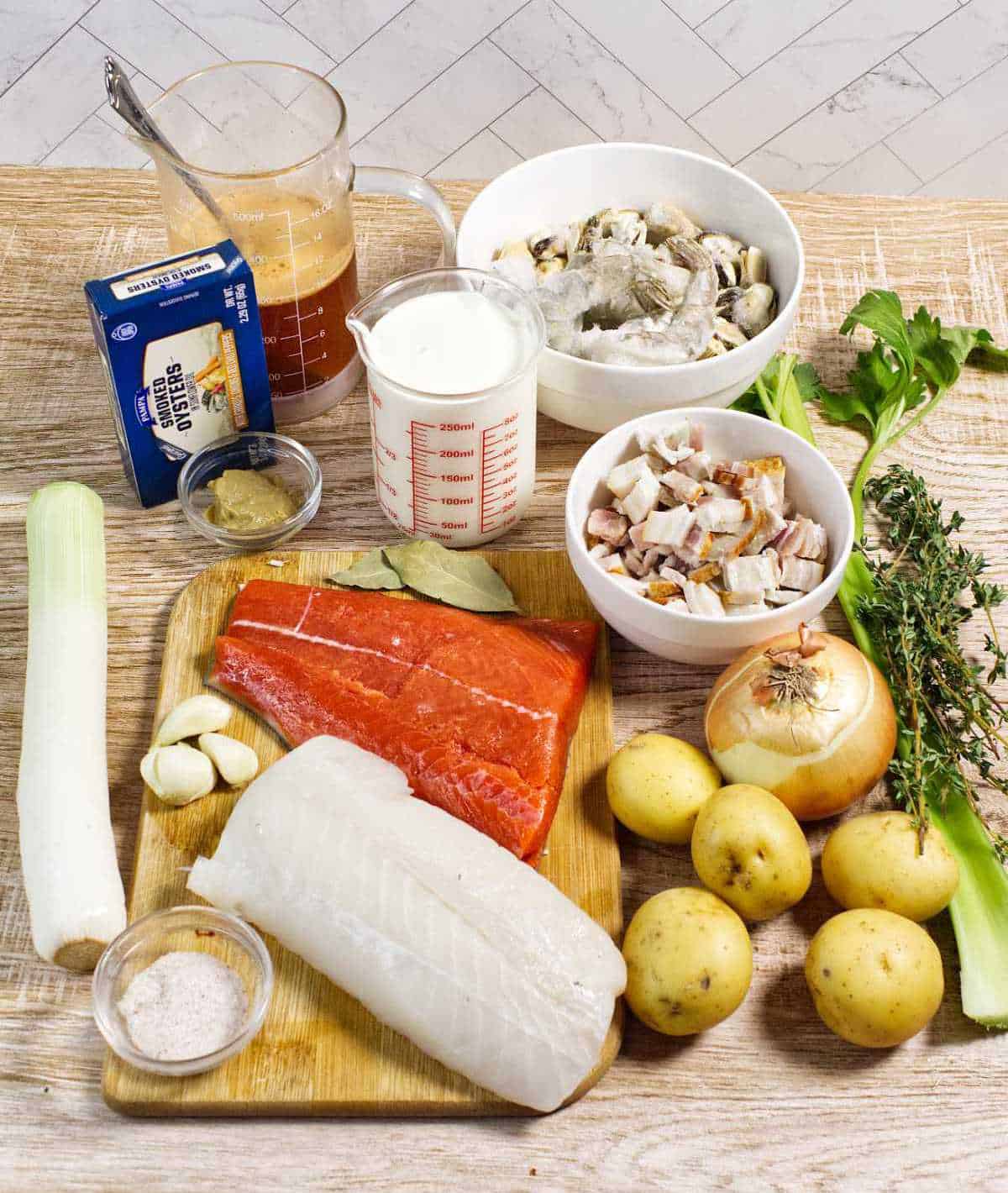
This chowder starts by sautéing bacon and vegetables to build flavor. The seafood is added in stages so each type cooks gently and stays tender. See the step by step photos below for the full visual guide.
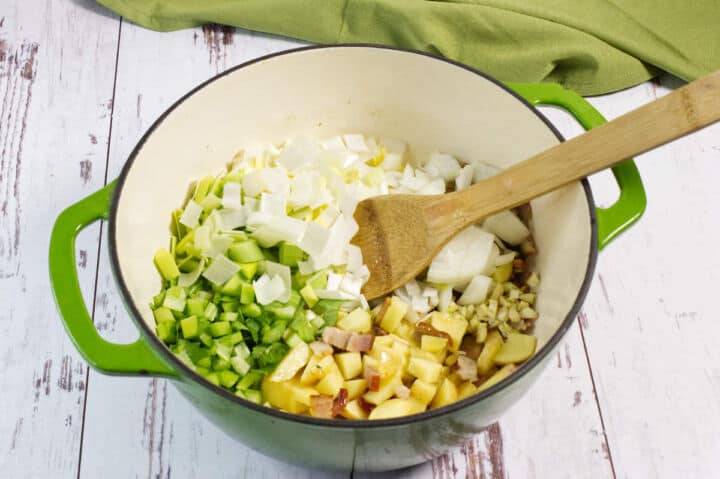
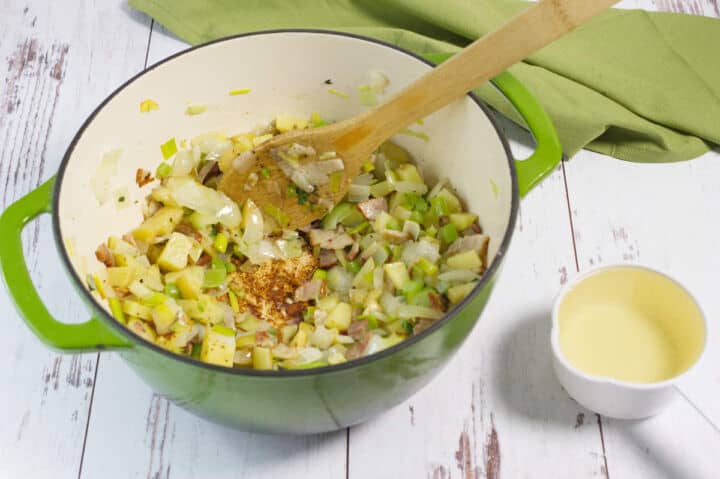
- Add the diced bacon to a Dutch oven and sauté until lightly browned. Add the butter, diced potatoes, leeks, onion, garlic, bay leaf, and thyme. Cook until the vegetables are fragrant and beginning to soften.
- Stir in the Dijon mustard and white wine. Let the wine simmer and reduce by about half while scraping any browned bits from the bottom of the pot. Season with salt and black pepper.
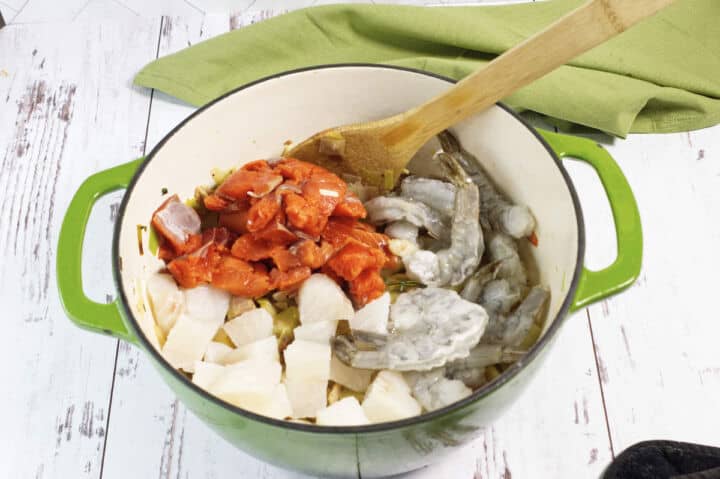
- Remove the bay leaf and thyme sprig. Add the cubed salmon, cod, shrimp, and fish stock. Reduce heat to low and cook uncovered for about 10 minutes, or until the potatoes are tender and the fish is cooked through.
- Stir in the cooked mussels, drained smoked oysters, heavy cream, and parsley if using.
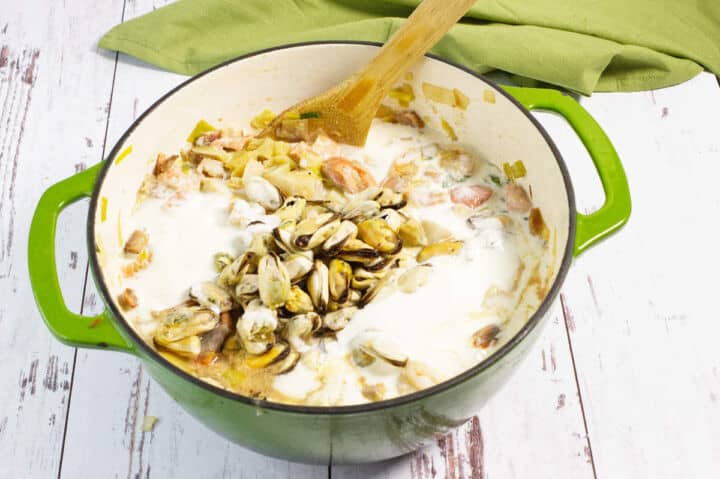
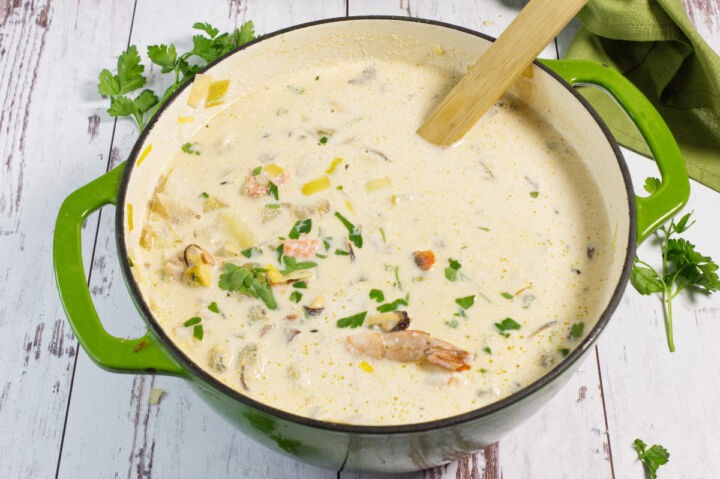
- Let the chowder warm gently for another 5 to 10 minutes before serving.
Pro Tip
Keep the chowder at a gentle simmer once the seafood is added. Boiling can cause fish to break apart and shellfish to become tough.
Serving Suggestions
Irish seafood chowder is often served as a main dish in coastal pubs and restaurants. The creamy broth and variety of seafood make it hearty enough to stand on its own for dinner.
This chowder is especially good served with traditional Irish soda bread or soft Waterford blaa rolls for dipping into the broth. It is also a popular choice for St. Patrick's Day meals and cool weather dinners.
For a fuller meal, serve the chowder with roasted carrots and parsnips or with champ, a simple Irish potato side dish that complements the rich seafood flavors.
Substitutions and Variations
Some useful tips and substitutions when making this recipe:
- Use smoked haddock if available: Traditional Irish chowder often uses smoked haddock instead of smoked oysters.
- Swap the fish: Halibut, haddock, pollock, or tilapia can replace cod or salmon.
- Make it lighter: Half and half can be used instead of heavy cream for a lighter broth.
- Add clams or scallops: Extra shellfish adds more variety and gives the chowder a coastal seafood stew feel.
- Use vegetable stock: Vegetable stock works well if fish stock is not available.
Tips for Success
Helpful tips to help you when making this recipe:
- Dice vegetables small: Small diced potatoes and vegetables cook evenly and give the chowder a better texture.
- Add seafood in stages: Delicate seafood cooks quickly and should be added near the end of cooking.
- Do not boil after adding cream: Gentle heat keeps the cream smooth and prevents curdling.
- Use fresh seafood when possible: Fresh fish and shellfish give the best flavor and texture.
- Taste before serving: Seafood and bacon both contain salt so final seasoning should always be adjusted at the end.
Storage Options
Here is how I store leftovers when making this recipe:
- Refrigerate leftovers: Store in an airtight container in the refrigerator for up to 3 days.
- Reheat gently: Warm the chowder slowly over low heat to prevent the seafood from becoming tough.
- Avoid freezing: Cream based seafood chowders tend to separate when frozen and thawed.
Related Irish Recipes
Frequently Asked Questions
Yes. The base of the chowder can be made earlier in the day. Add the seafood and cream shortly before serving so the fish stays tender.
Traditional Irish seafood chowder usually uses a mix of seafood rather than a single type of fish. A typical combination includes firm white fish such as cod, haddock, halibut, or pollock, flaky fish like salmon, shellfish such as shrimp or mussels, and a small amount of smoked fish for depth of flavor.
Yes. Frozen fish and shellfish work well in chowder. Thaw them first and pat them dry before adding to the soup.
Smoked fish adds depth and a mild smoky flavor that balances the richness of the cream and seafood.
Yes. Water or additional stock can replace the wine while still providing a flavorful broth.
Irish seafood chowder is usually moderately thick but still brothy. It should coat the spoon without being as thick as stew.
Milk can be used, but the chowder will be thinner and less rich than when made with heavy cream.
Many traditional Irish versions rely on potatoes and cream for body instead of flour or roux.
Keep the heat low and avoid stirring the chowder too aggressively once the fish has been added.
No. Traditional versions focus on creamy and savory flavors rather than heat.
Seafood chowder usually contains a mix of seafood such as fish, shrimp, or mussels, while fish chowder typically uses only one or two types of fish. Irish seafood chowder often includes several kinds of seafood along with potatoes, cream, and sometimes smoked fish.
Easy St. Patrick's Day Recipes
Get The Recipe!
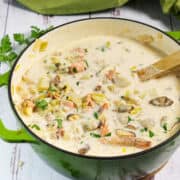
Irish Seafood Chowder
Equipment
- 6 qt Enameled Dutch Oven
- 6 qt Stainless Steel Dutch Oven
Ingredients
- 4 slices bacon thick cut slices
- 2 tablespoons butter or oil
- 8 oz potatoes any kind, diced small
- 1 leek white and light green only, diced
- 1 medium onion diced
- 2 cloves garlic minced
- 1 bay leaf
- 1 sprig fresh thyme
- 2 teaspoons Dijon mustard
- 1 cup white wine or water
- salt
- black pepper
- 8 oz salmon skin removed, cubed into 1"
- 8 oz cod cubed into 1" cubes
- 8 oz prawns or large shrimp, deveined and shells removed
- 1½ cup fish stock or vegetable stock
- 8 oz mussels frozen and cooked, or scrub and steam from shelled
- 2.9 ounce smoked oysters in tin, drained and rinsed
- 1½ cup heavy cream
- fresh parsley optional
Instructions
- Add the diced bacon to the Dutch oven and saute until it is lightly browned. Add the butter and let it melt, then add the diced potatoes, leeks, onion, minced garlic, bay leaf, and fresh thyme sprig. Sweat the vegetables until they are fragrant and tender.4 slices bacon, 2 tablespoons butter, 8 oz potatoes, 1 leek, 1 medium onion, 2 cloves garlic, 1 bay leaf, 1 sprig fresh thyme
- Add the Dijon mustard and the wine, simmering on low so the wine de-glazes the pan and reduces by about 50%. Season with salt and pepper to taste.2 teaspoons Dijon mustard, 1 cup white wine, salt, black pepper
- Remove the bay leaf and thyme sprig from the soup pot. Add the cubed salmon, cod, and the prawns or large shrimp, along with the fish or vegetable stock. Reduce heat to low and cook uncovered for about 10 minutes, or until the potatoes are tender and the fish is cooked through.8 oz salmon, 8 oz cod, 8 oz prawns, 1½ cup fish stock
- Add the cooked mussels, drained smoked oysters (optional), heavy cream, and chopped parsley. Keep the soup pot on low for another 5 to 10 minutes and then serve.8 oz mussels, 2.9 ounce smoked oysters, 1½ cup heavy cream, fresh parsley
Notes
- Dice vegetables small: Small diced potatoes and vegetables cook evenly and give the chowder a better texture.
- Add seafood in stages: Delicate seafood cooks quickly and should be added near the end of cooking.
- Do not boil after adding cream: Gentle heat keeps the cream smooth and prevents curdling.
- Use fresh seafood when possible: Fresh fish and shellfish give the best flavor and texture.
- Taste before serving: Seafood and bacon both contain salt so final seasoning should always be adjusted at the end.
Nutrition
Pin It For Later ⤵

Kelly Bloom says
Delicious, I'm making this again!