

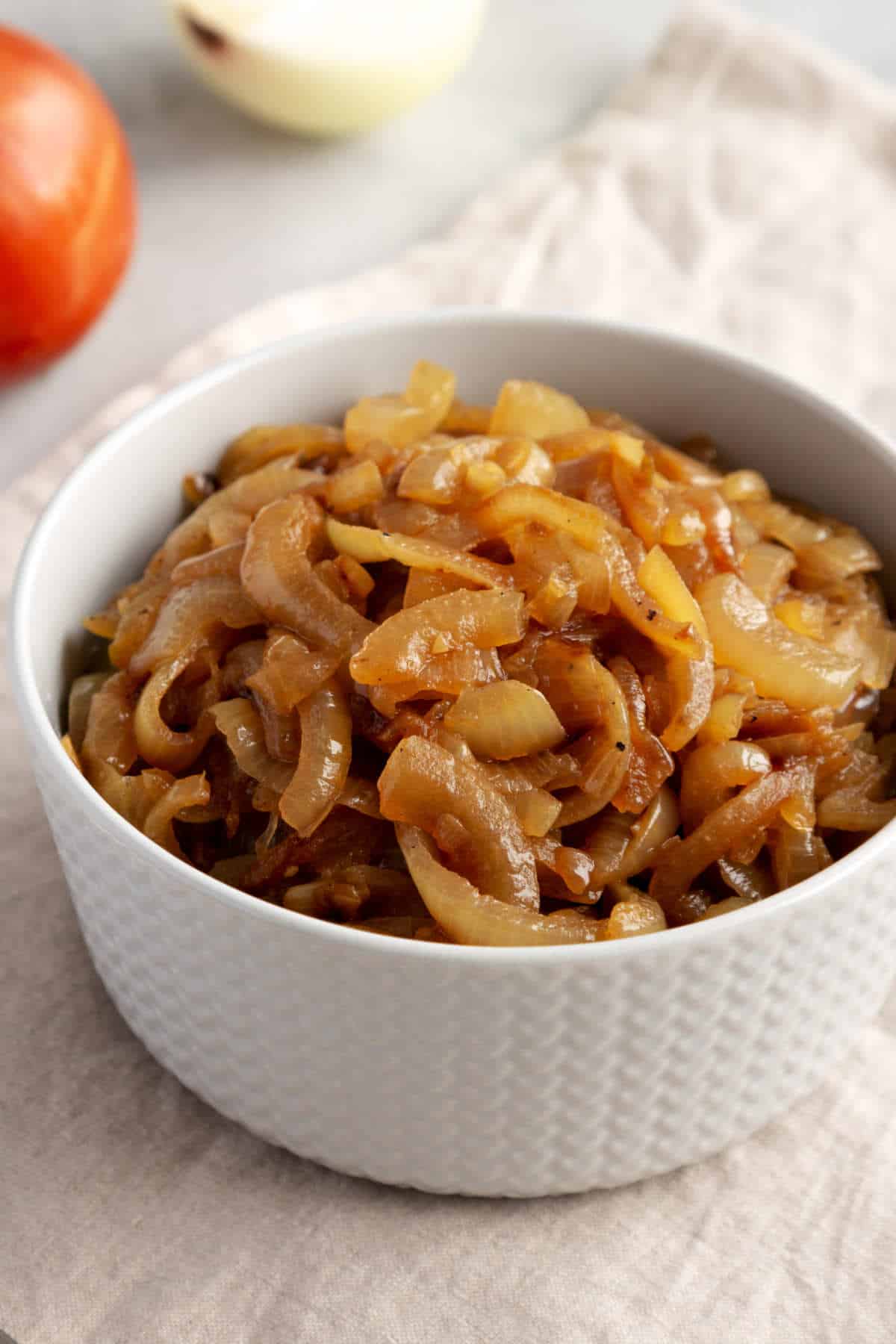
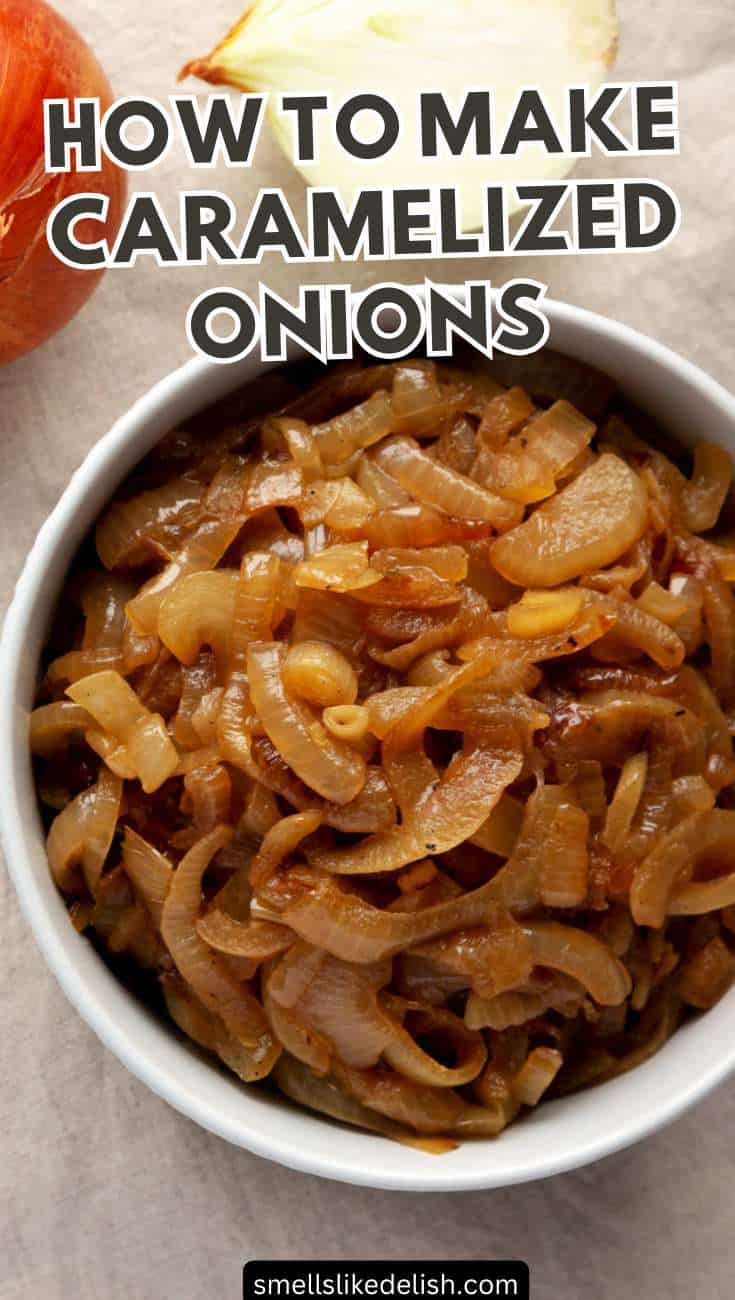
Unlock incredible depth of flavor for countless dishes by learning how to make caramelized onions perfectly! This simple technique transforms humble onions into a golden, jam-like condiment that elevates countless dishes.
Why You'll Love This Caramelize Onions Recipe
Making caramelized onions is more than just cooking; it's a process of flavor transformation! The slow, gentle cooking breaks down the onions' natural sugars, concentrating their sweetness and developing an astonishing depth of savory richness.
- Incredible Flavor: Develops a deep, sweet, and savory taste from simple onions.
- Highly Transformative: Turns a common vegetable into a gourmet ingredient.
- Enhances Many Dishes: Elevates everything from burgers to pasta.
- Rewarding Process: A meditative cooking experience with delicious rewards.
Ingredients Overview
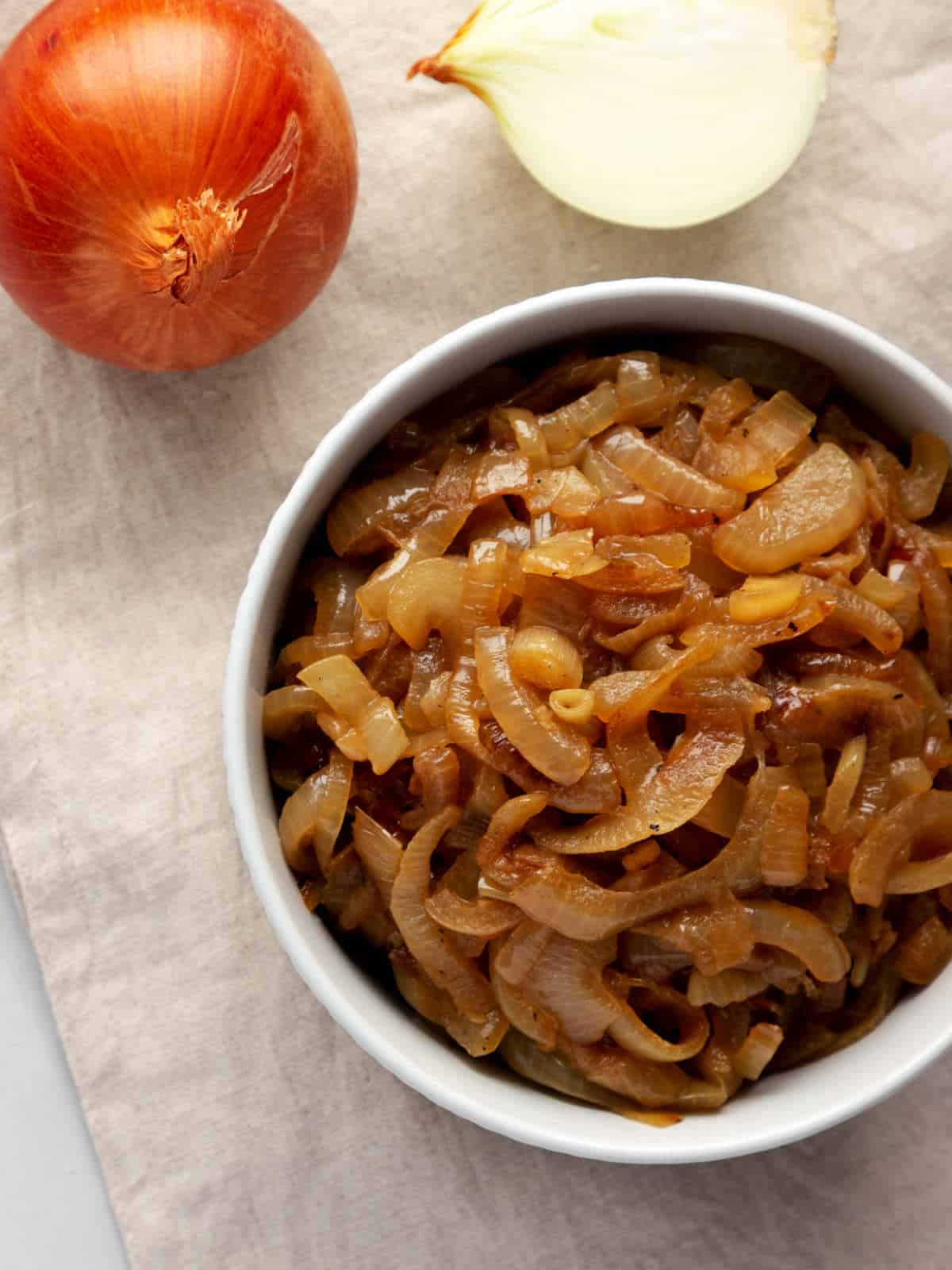
Making caramelized onions requires just a few simple ingredients to unlock incredible flavor. The stars of the show are large yellow or sweet onions, thinly sliced for even cooking. A little olive oil or unsalted butter provides the fat for sautéing, and a pinch of salt helps draw out moisture and enhance sweetness.
Full ingredient amounts and preparation instructions are in the printable recipe card at the bottom of this post.
How To Make Caramelized Onions
Creating perfectly rich Caramelized Onions involves thinly slicing onions and slowly cooking them in olive oil or butter over low heat. This patient process, often taking 45-60 minutes, allows the onions' natural sugars to develop a deep golden color and intense sweetness.
The result is a soft, jam-like condiment ready to elevate countless savory dishes. Refer to the step-by-step visual guide for perfect caramelized onions.
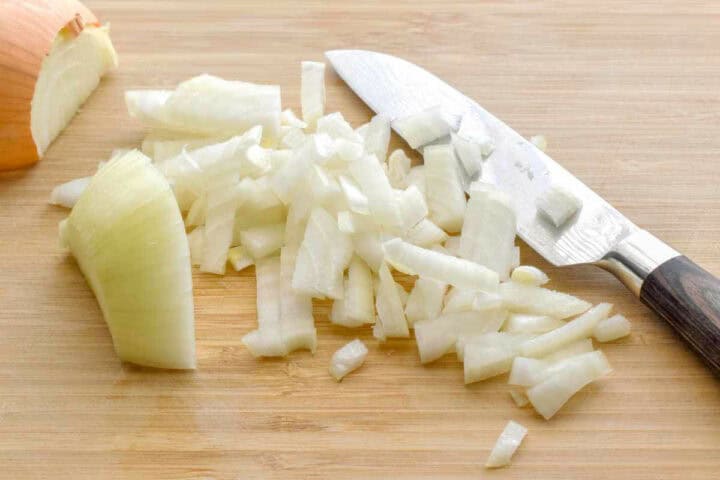
Step 1: Begin by thinly slicing your yellow onions. Aim for uniform slices for even cooking.
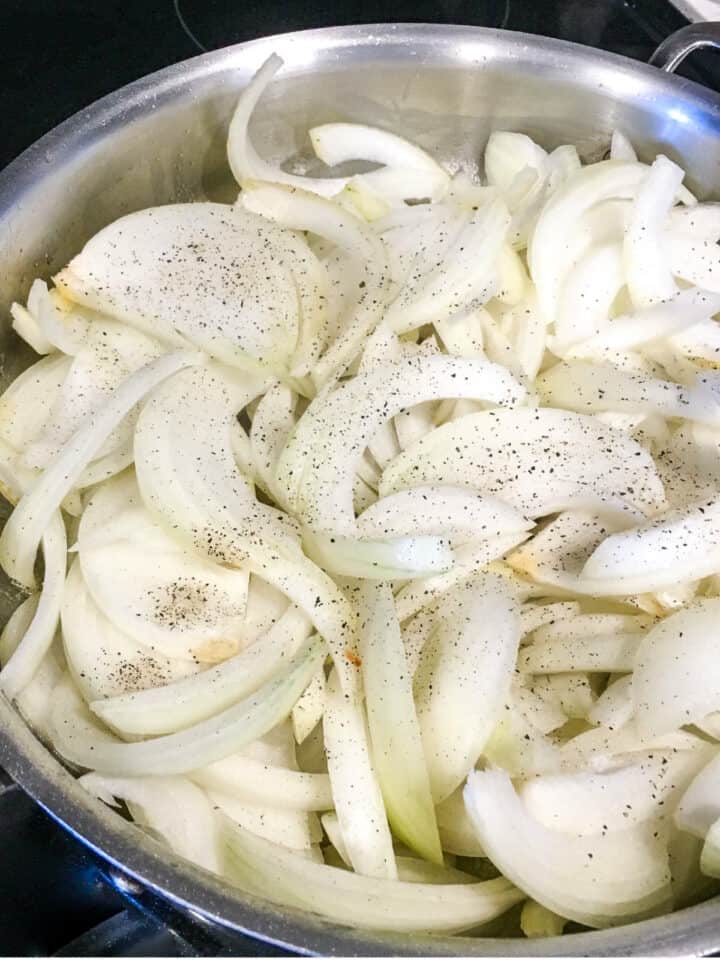
Step 2: Add the sliced onions to the hot oil and season with a pinch of salt and pepper. Stir occasionally to ensure the onions cook evenly.
Step 3: Reduce the heat to low and allow the onions to cook slowly. This process can take 30-45 minutes, depending on the amount of onions and the desired level of caramelization. Resist the urge to crank up the heat! Low and slow cooking is essential for achieving that deep, golden brown color and caramelized sweetness.
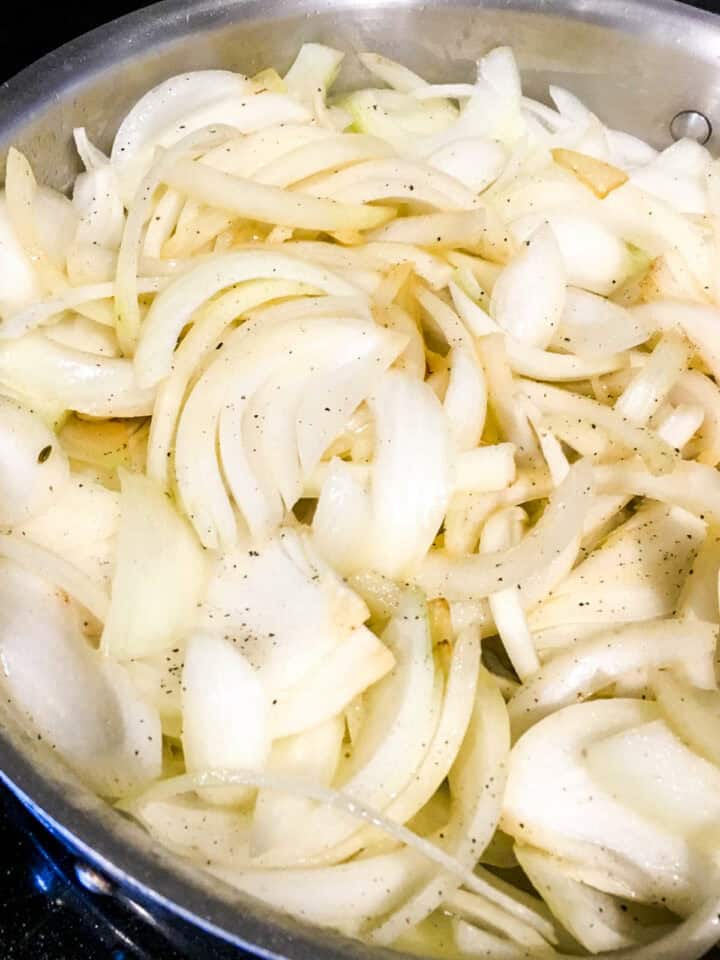
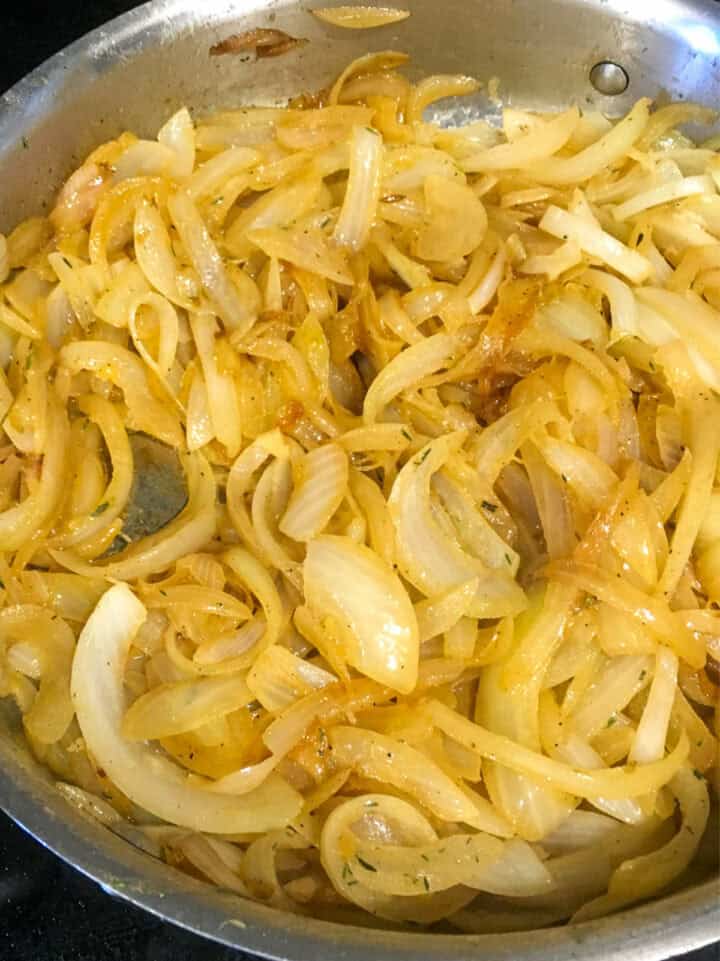
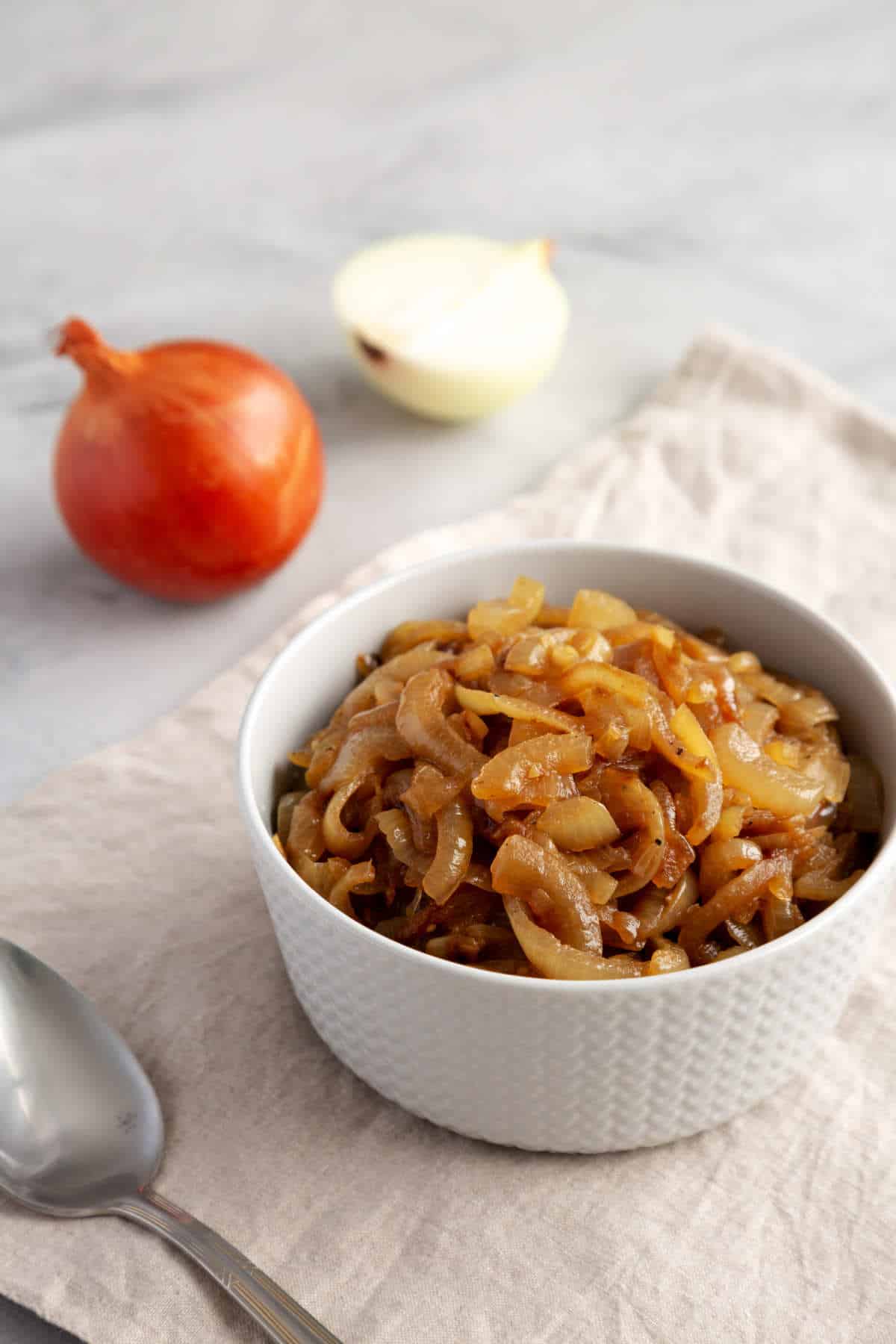
Step 4: The onions are caramelized when they have reached a deep golden brown color and have softened significantly. They should have a slightly jammy texture and a rich, sweet aroma.
Step 5: While the onions cook, stir them occasionally to prevent sticking and browning too quickly. You want them to soften and caramelize evenly, not burn.
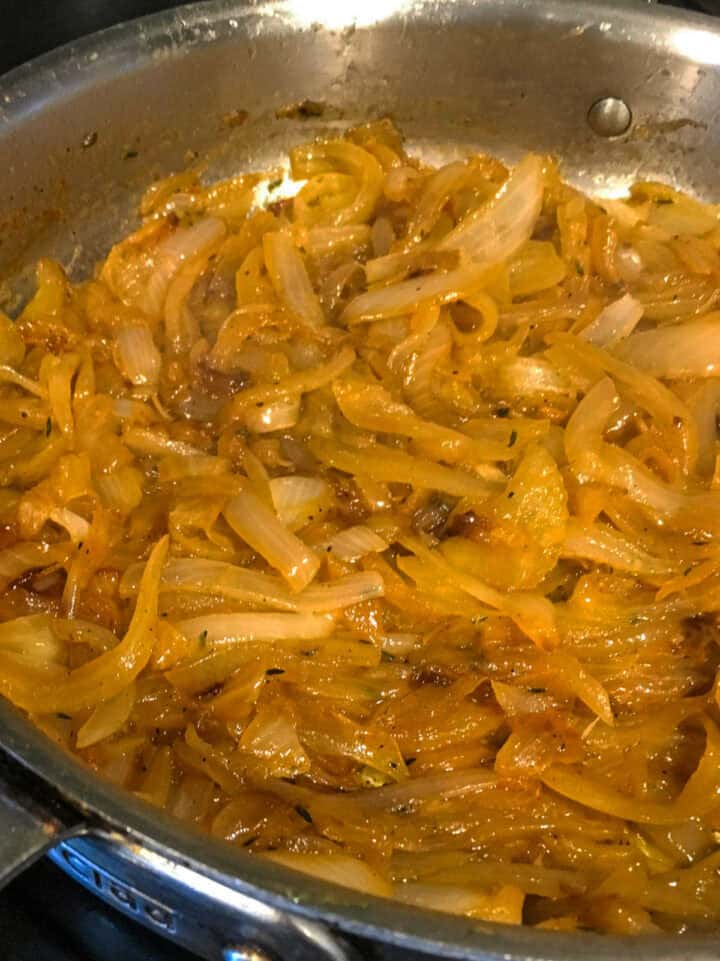
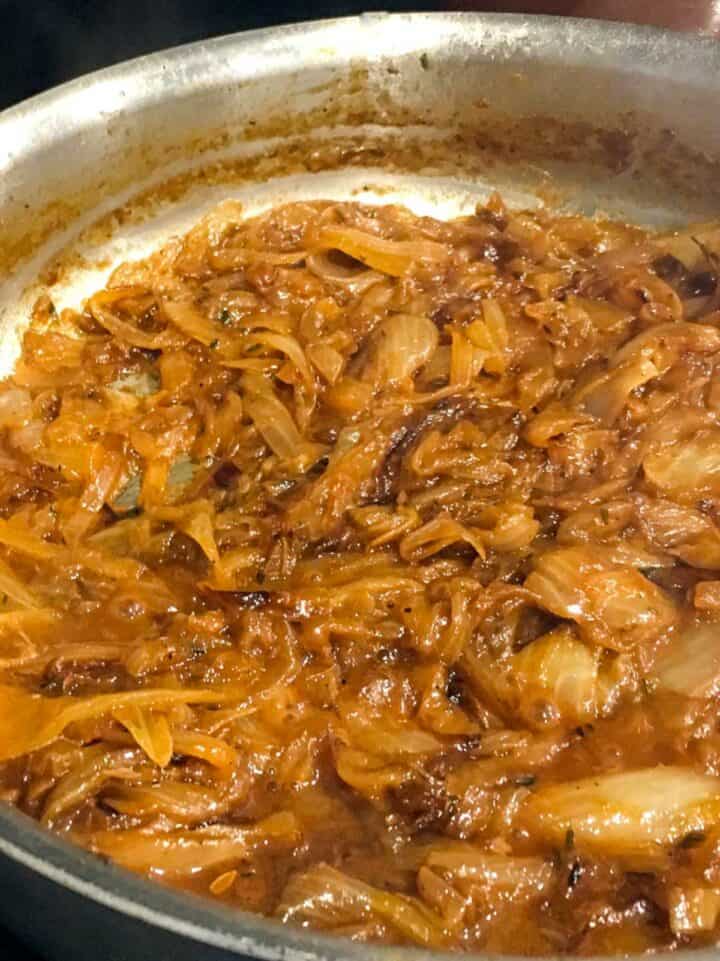
Step 6: Once caramelized, season the onions with a touch of black pepper (optional) and use them immediately in your favorite recipe or store them for later use.
How To Use Caramelized Onions When Cooking
Add caramelized onions to a bacon broccoli quiche, spoon them over lamb burgers, or serve them alongside pan-seared pork chops. Their sweet, savory flavor pairs especially well with rich meats, eggs, and cheese.
Substitutions and Variations
Here are a few delicious variations or substitutions when making this recipe.
- Yellow onions are the most common, but sweet onions like Vidalia or Walla Walla will caramelize even faster and sweeter. Red onions can also be caramelized, offering a slightly different flavor.
- Butter provides a richer flavor, while olive oil keeps it dairy-free. A mix of both is also excellent.
- A splash of balsamic vinegar, red wine, or a touch of fresh thyme or rosemary can be added in the last few minutes of cooking for extra complexity.
Tips for Success
Here are a few tips for making this recipe:
- The key to true caramelization is low heat and slow cooking. Don't rush the process!
- Slicing your onions consistently helps them cook evenly.
- If making a very large batch, use two pans or cook in batches to avoid steaming the onions instead of caramelizing them.
- Regularly scrape up the browned bits from the bottom of the pan; these are full of flavor.
Storage Options
- Store cooled caramelized onions in an airtight container in the refrigerator for up to 5-7 days.
- Caramelized onions freeze beautifully! Once completely cooled, portion them into ice cube trays (for small amounts) or freezer-safe bags/containers. Freeze for up to 3 months. Thaw in the refrigerator or add directly to hot dishes.
Related Recipes
Frequently Asked Questions
Typically 45-60 minutes, but it can take longer depending on the heat, pan, and amount of onions. Patience is essential.
The heat is too high. Reduce the heat and stir more frequently.
A tiny pinch of sugar can help kickstart the browning, but true caramelization comes from the onions' natural sugars breaking down slowly.
A heavy-bottomed skillet or Dutch oven (cast iron or stainless steel) that distributes heat evenly is ideal.
Vegetable Recipes

Get The Recipe!
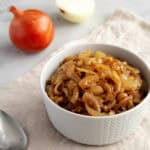
How To Caramelize Onions
Equipment
- Round Cast Iron Skillet - 12 Inch
Ingredients
- 3 large yellow onions sliced thin
- 5 tablespoon vegetable oil or any fat
- 1 teaspoon Salt plus more to taste
- Black pepper optional, to taste
Instructions
- Begin by thinly slicing your yellow onions. Aim for uniform slices for even cooking.3 large yellow onions
- In a large skillet, heat vegetable oil over medium-low heat. Avoid high heat, as this will quickly brown the onions without allowing them to caramelize properly.5 tablespoon vegetable oil
- Add the sliced onions to the hot oil and season with a pinch of salt and pepper. Stir occasionally to ensure the onions cook evenly.1 teaspoon Salt, Black pepper
- Reduce the heat to low and allow the onions to cook slowly. This process can take 30-45 minutes, depending on the amount of onions and the desired level of caramelization.
- Resist the urge to crank up the heat! Low and slow cooking is essential for achieving that deep, golden brown color and caramelized sweetness.
- The onions are caramelized when they have reached a deep golden brown color and have softened significantly. They should have a slightly jammy texture and a rich, sweet aroma.
- While the onions cook, stir them occasionally to prevent sticking and browning too quickly. You want them to soften and caramelize evenly, not burn.
- Once caramelized, season the onions with a touch of black pepper (optional) and use them immediately in your favorite recipe or store them for later use.
Notes
- Thinly sliced onions will caramelize more evenly and achieve a more consistent texture.
- Don't rush the process; allow the onions to cook slowly to achieve the desired caramelization.
- While occasional stirring is necessary to prevent sticking, avoid overworking the onions. Excessive stirring can break them down and prevent them from caramelizing properly.
- Use a large enough skillet to avoid overcrowding the onions. This allows for even cooking and prevents them from steaming instead of caramelizing.
- If the onions start to stick to the pan, you can deglaze the pan with a splash of water, white wine, or even broth. This will loosen any browned bits and add a touch of extra flavor.
Nutrition
Pin It For Later ⤵
Kelly Bloom says
This recipe takes the mystery out of making caramelized onions. Now I can use them to make my own Onion soup!