


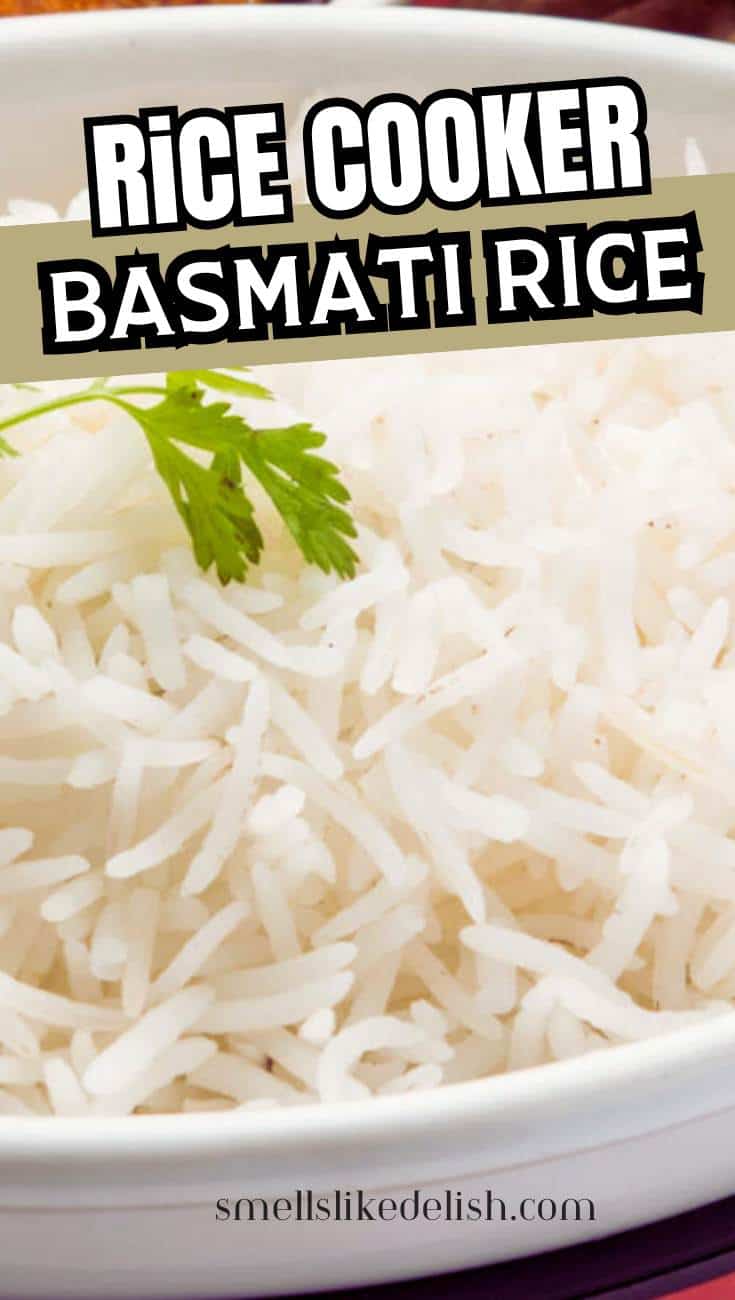
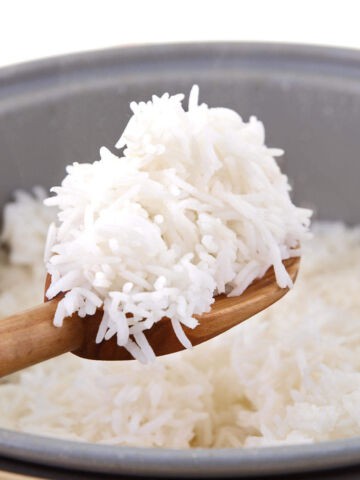
This rice cooker basmati rice comes out light and fluffy with long, separate grains instead of turning soft or clumpy. The simple water ratio makes it easy to get consistent results for curries, grilled meats, vegetables, and other saucy meals.
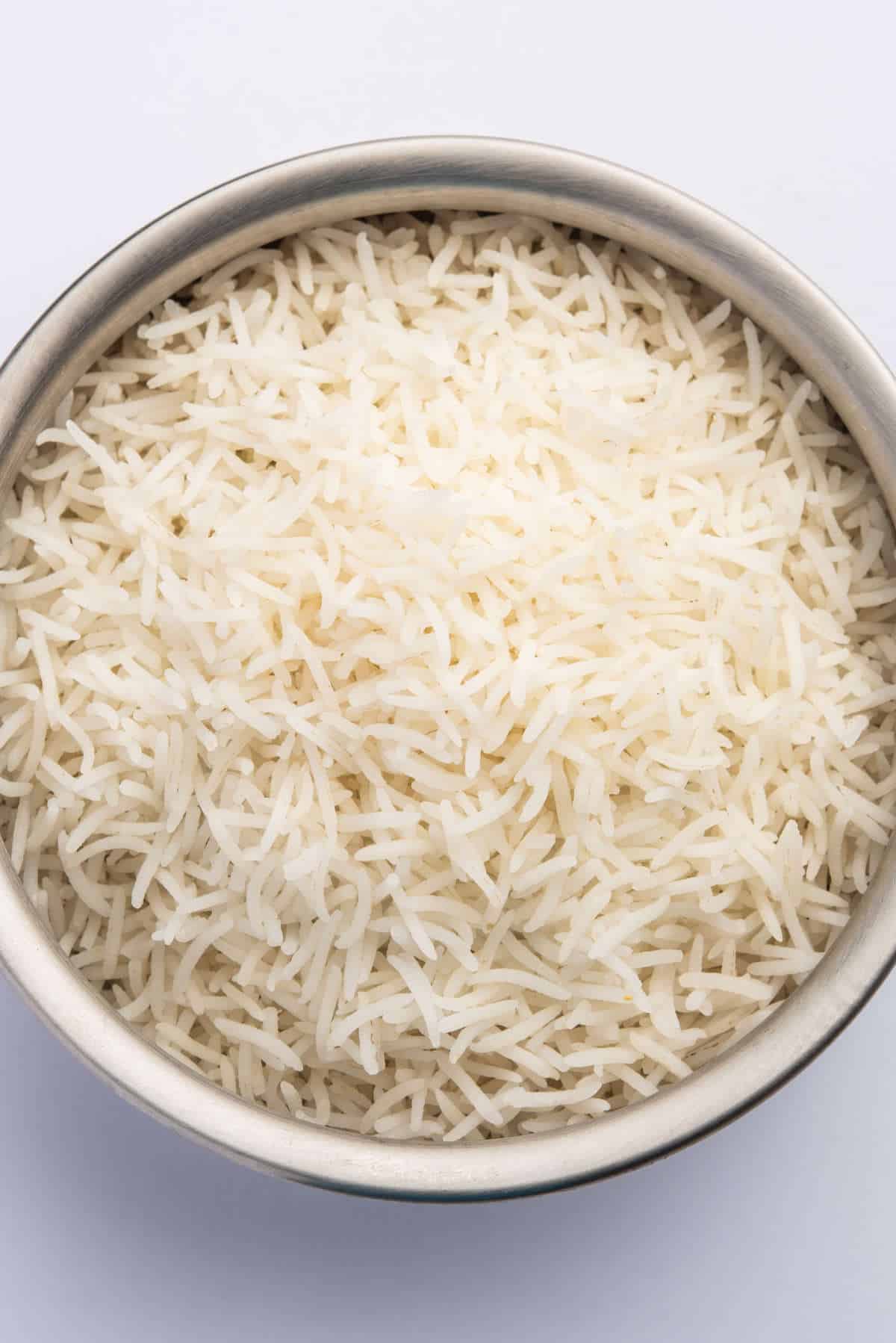
These instructions are written for a common 6-cup Aroma rice cooker, but they also work for most standard rice cookers with a basic Cook and Warm cycle.
Why This Basmati Rice Cooker Recipe Works
Basmati rice cooks differently than standard long-grain white rice, and using the correct ratio is what keeps the grains separate and fluffy. The rice cooker controls the heat and timing so the rice steams evenly without needing attention. Rinsing the rice removes excess starch so the finished rice stays light and not sticky.
- Lower water ratio matters: Basmati uses less water than standard white rice, which helps keep the grains separate instead of soft.
- Naturally long grains: Basmati rice cooks into long, distinct grains that do not clump together.
- Hands-off cooking: The rice cooker handles the timing and temperature so you do not need to monitor it.
- Consistent results: Rinsing and resting the rice improves texture every time you make it.
Ingredients Overview
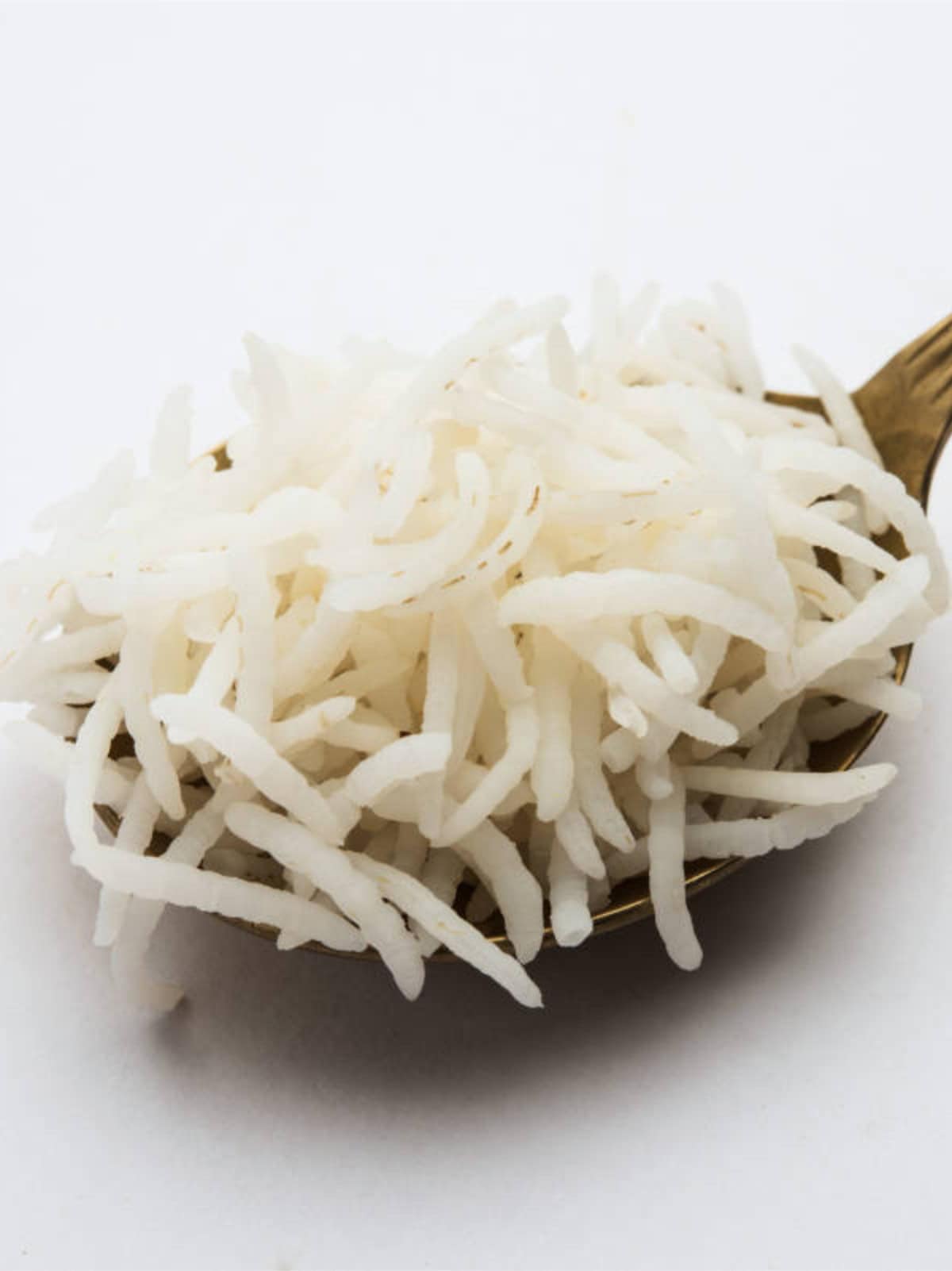
This recipe uses standard U.S. measuring cups instead of the smaller rice cup that comes with most rice cookers. Basmati rice requires slightly less water than other white rice varieties, which helps maintain its light texture.
When using standard measuring cups, a reliable rice cooker ratio for basmati rice is 1 cup rice to 1¼ cups water. For this recipe, 2 cups rice and 2½ cups water cook evenly in most 6-cup rice cookers.
Pro Tip - Rice-to-Water Ratios
If you want a full comparison of rice-to-water ratios for different rice varieties, see our Aroma Rice Cooker Instructions guide.
Full ingredient amounts and preparation instructions are in the printable recipe card at the bottom of this post.
Basmati Rice to Water Ratio for Rice Cooker
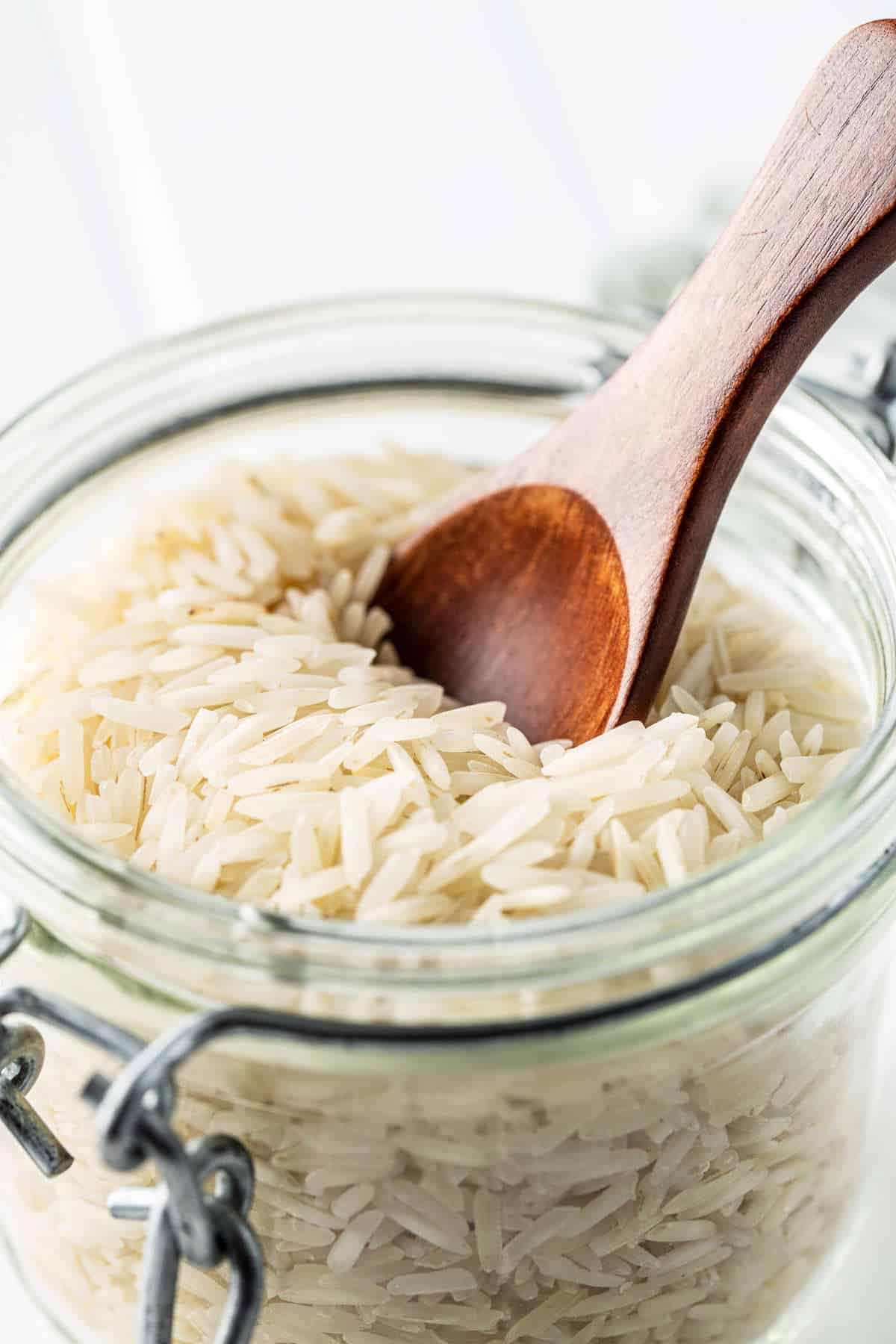
A reliable rice cooker ratio for basmati rice is:
- 1 cup rice to 1¼ cups water
For this recipe, use 2 cups rice to 2½ cups water.
This ratio keeps the grains long, separate, and tender without becoming soft or clumped.
How to Cook Basmati Rice In a Rice Cooker
Rinse the rice to remove excess starch, then add it to the rice cooker with water and salt. Start the cooking cycle and allow the rice to rest briefly before fluffing.
Basmati rice usually cooks in about 20 to 30 minutes depending on the rice cooker, and the appliance will automatically switch to Warm when the cooking cycle finishes. This method also works for most standard rice cookers with a basic cook and warm cycle.
Follow the step-by-step visual guide below for the full process.
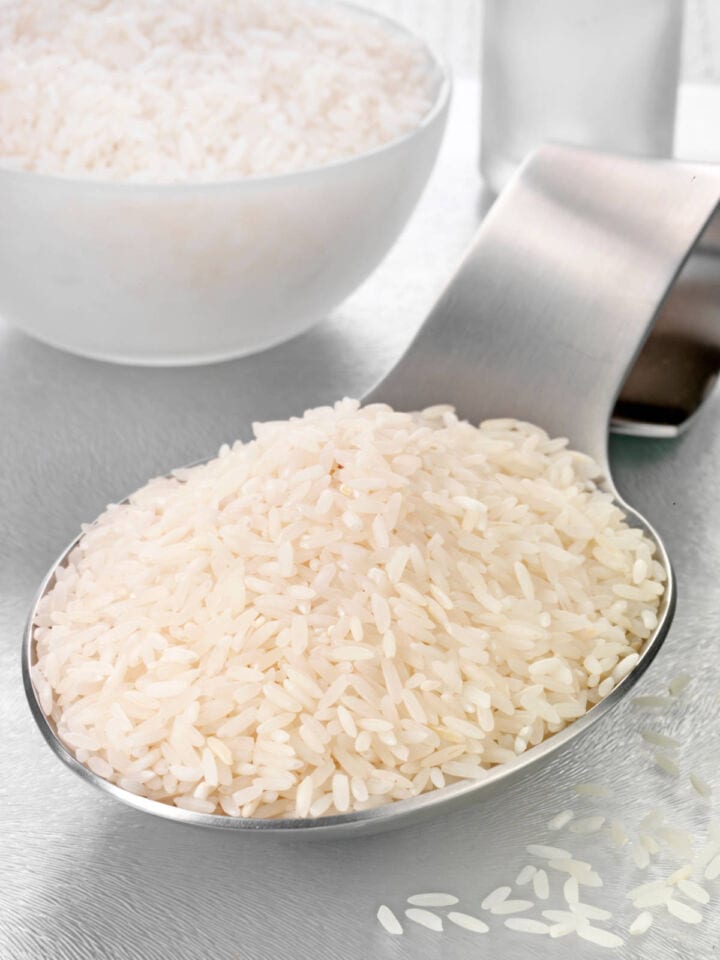
- Measure 2 cups basmati rice using a standard measuring cup.
- Place the rice in a fine mesh strainer and rinse under cold water until the water runs mostly clear.
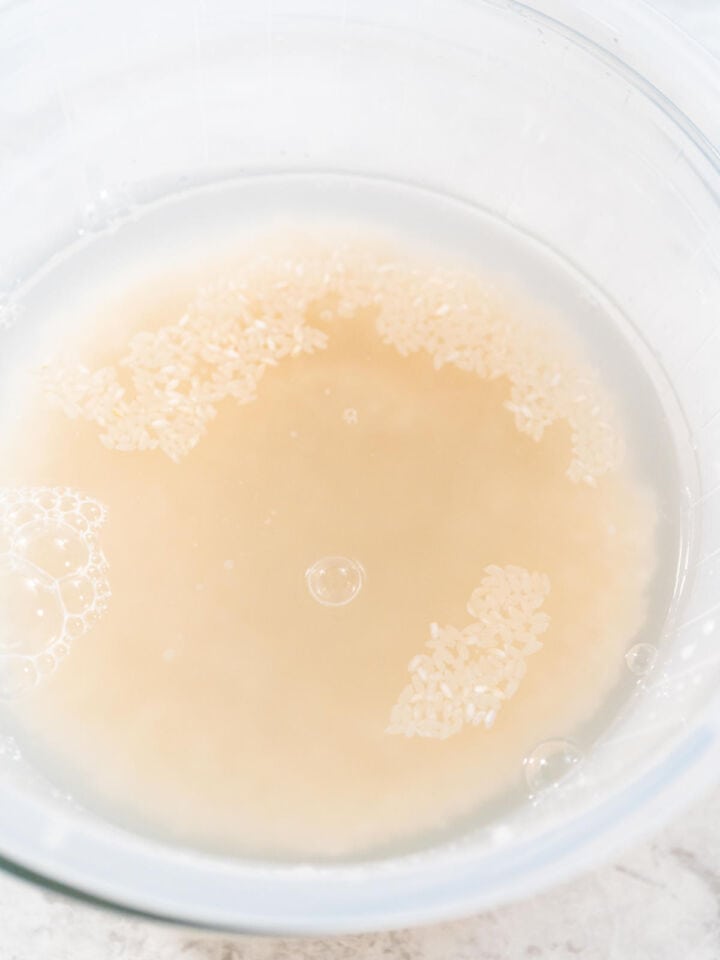
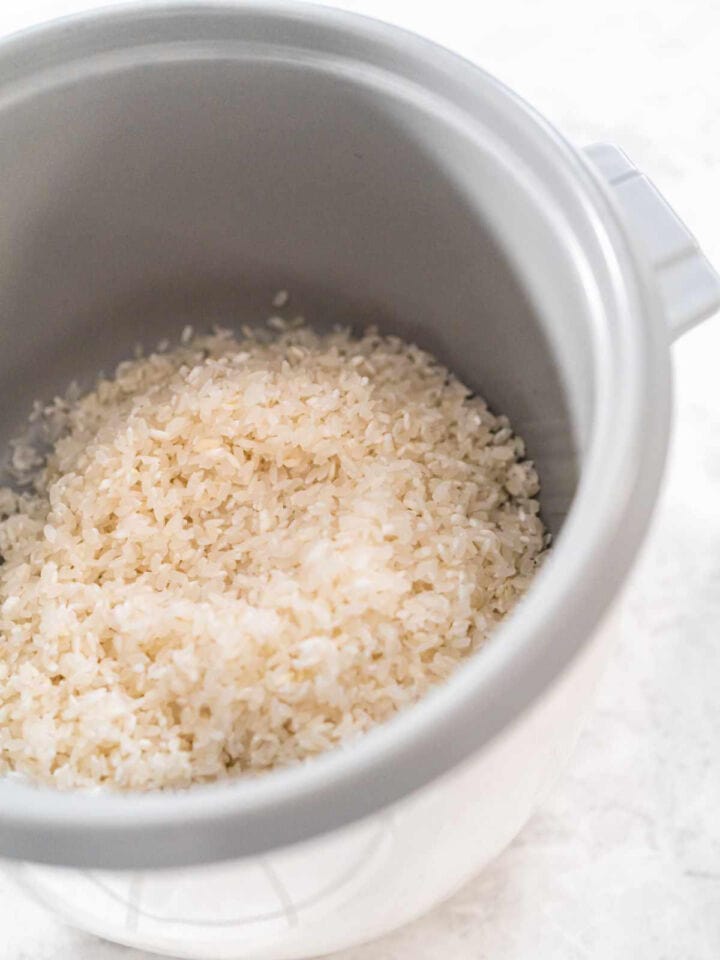
- Add the rinsed rice to the inner pot of the rice cooker.
Pro Tip
Rinsing rice until the water runs mostly clear removes excess surface starch. This helps the grains stay separate and prevents the rice from becoming sticky or gummy during cooking.
- Add 2½ cups water.
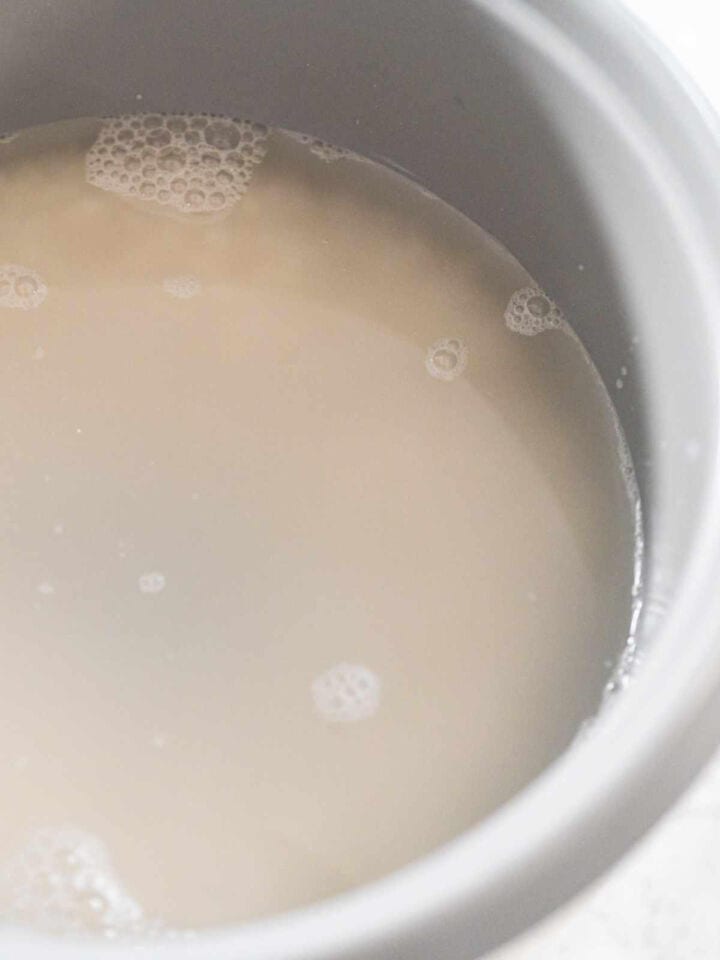
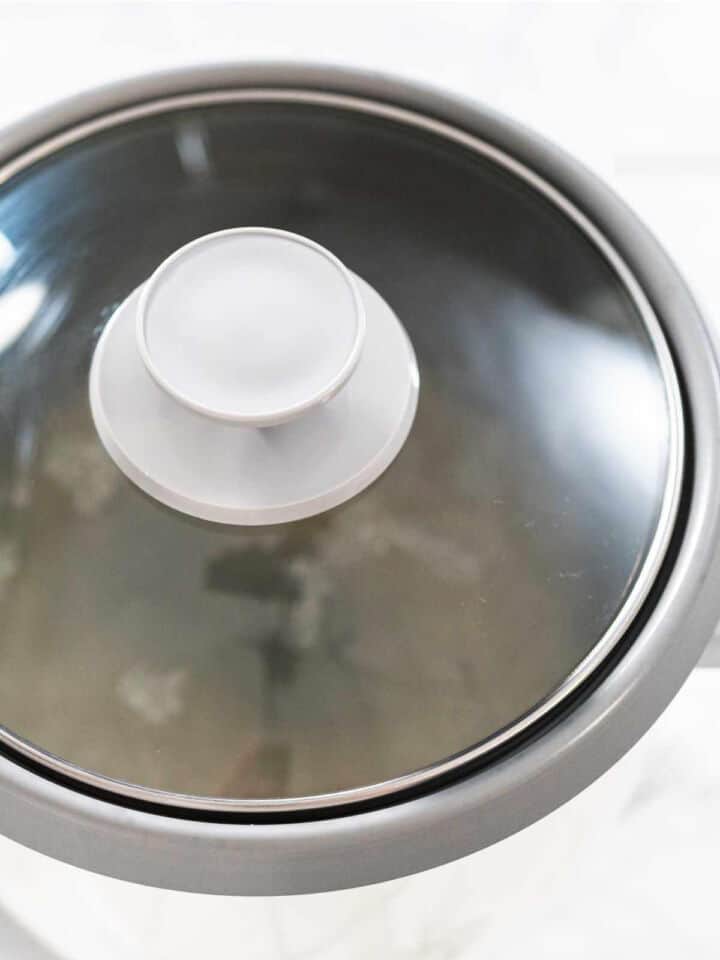
- Place the pot in the rice cooker and close the lid.
- Press the Cook button or select the White Rice program.
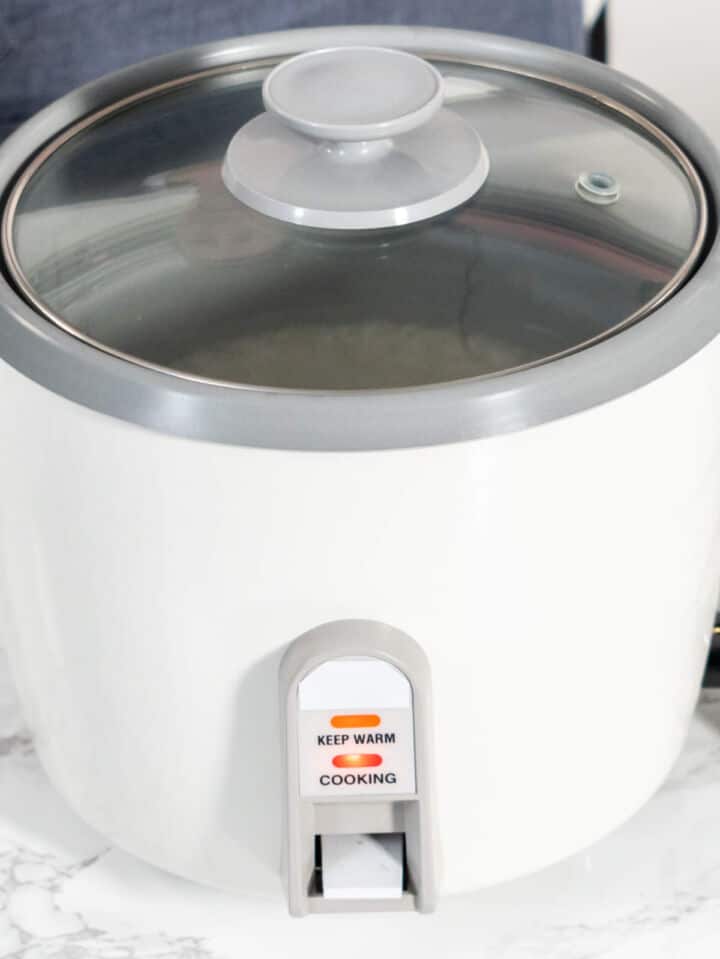
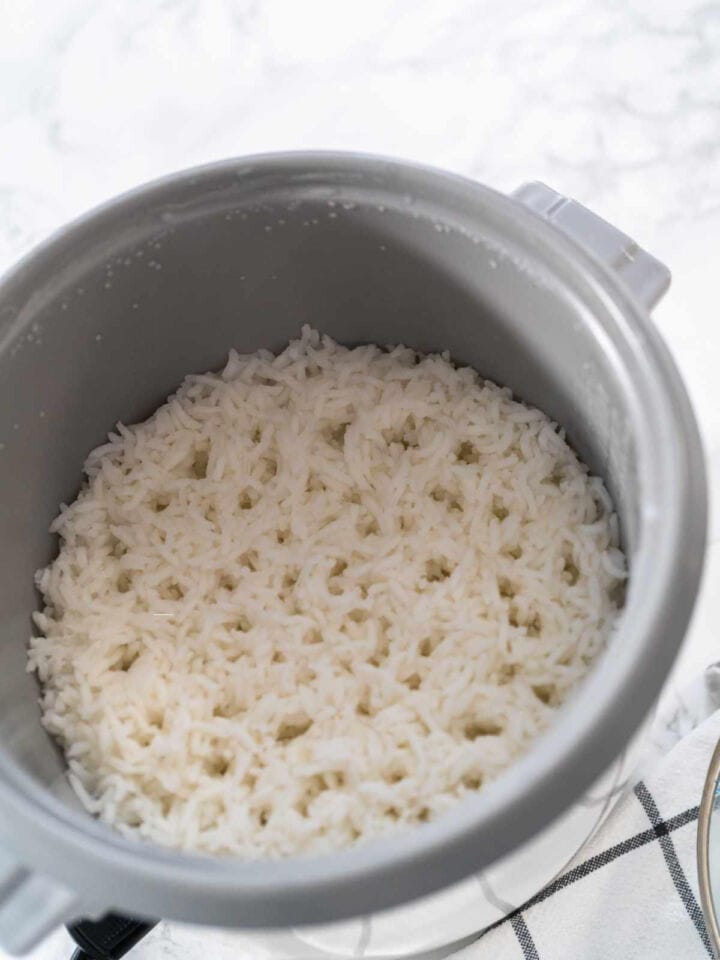
- When the cooker switches to Keep Warm, allow the rice to rest for about 10 minutes.
- Fluff the rice gently with a rice paddle or fork before serving.
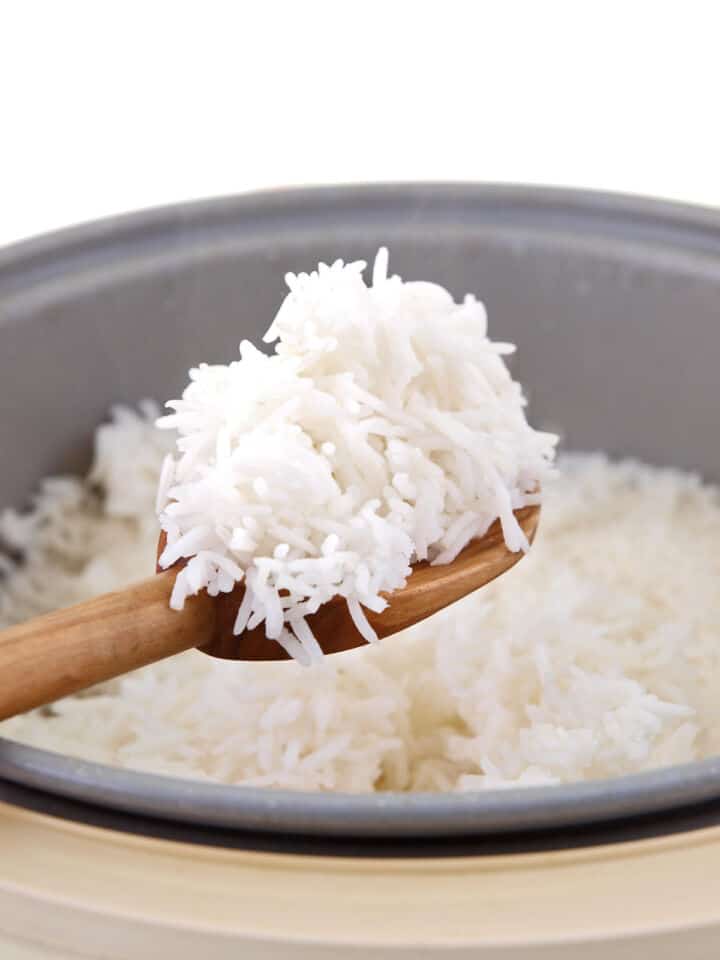
Serving Suggestions
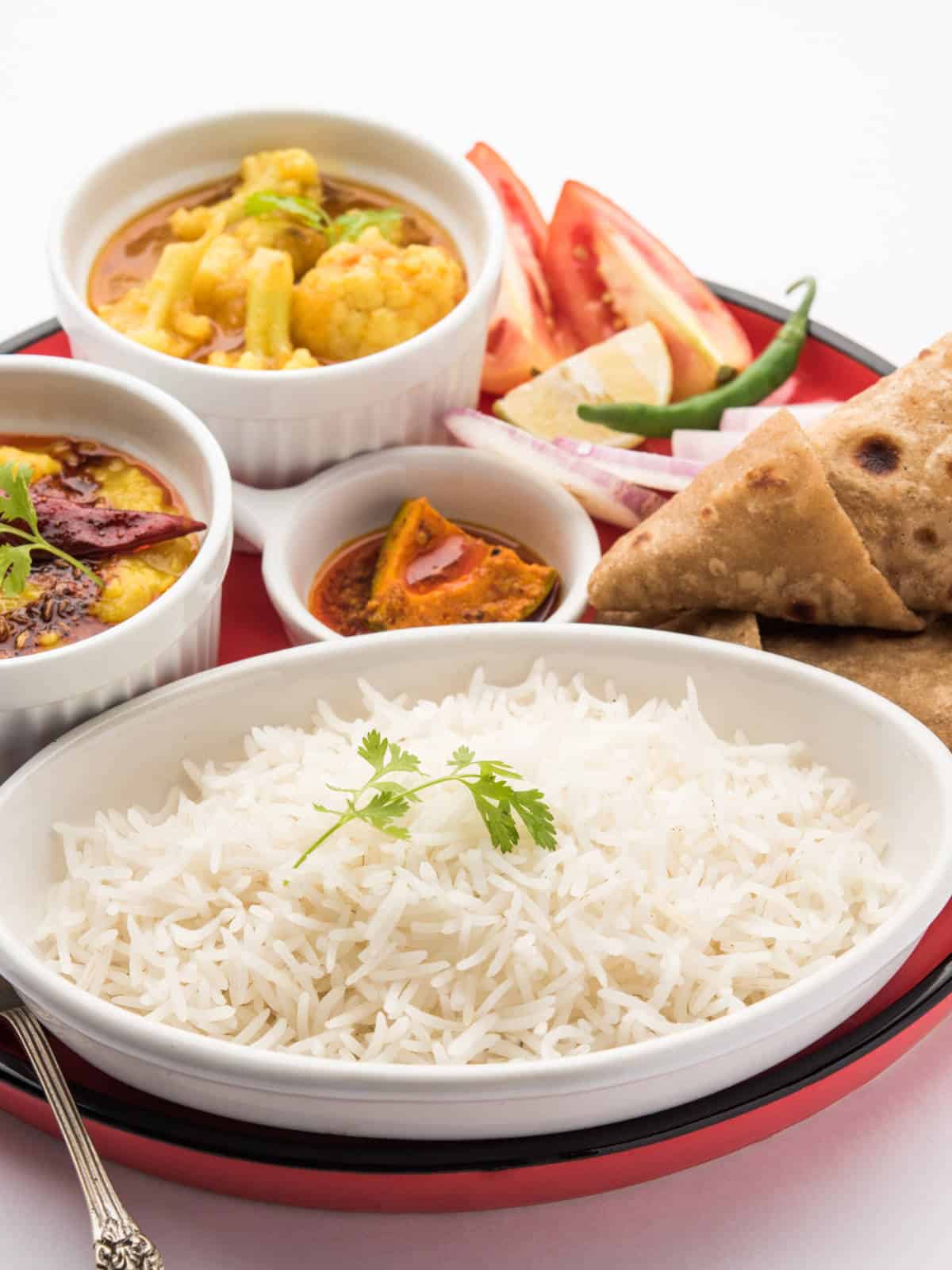
Basmati rice is commonly served with dishes that have bold spices or sauces, where the rice helps balance and absorb flavor. It pairs well with soups and stews when you want a very fluffy rice.
Serve it alongside slow cooker pot roast, Cuban chicken stew, or the base for your next pilaf.
Substitutions and Variations
Useful substitutions and variations:
- Use broth instead of water: Cooking the rice in chicken or vegetable broth adds more flavor.
- Add whole spices: A bay leaf, cardamom pods, or cloves can be added to the rice for subtle aroma.
- Use butter or oil: Stir in a small amount after cooking for a richer finish.
- Make it plain or seasoned: Leave it simple or lightly season depending on what you are serving it with.
Tips for Success
Helpful tips when making this recipe:
- Rinse thoroughly: Removing starch helps keep basmati rice light and separate.
- Use less water than white rice: Too much water will make the rice soft instead of fluffy.
- Keep the lid closed: Steam is essential for even cooking.
- Let it rest after cooking: Resting allows moisture to fully absorb into the grains.
- Fluff gently: Use a fork or paddle to separate the grains without breaking them.
Storage Options
How to store leftover basmati rice:
- Refrigerate: Store in an airtight container for up to 4 days.
- Freeze: Portion and freeze for up to 2 months.
- Reheat with moisture: Add a small amount of water before reheating to keep the rice from drying out.
Related Recipes
Frequently Asked Questions
Use a ratio of 1 cup basmati rice to 1¼ cups water. This keeps the grains long and separate instead of soft or clumped.
No, soaking is not required when using a rice cooker. While soaking can slightly lengthen the grains, rinsing and using the correct ratio is enough to get light, separate rice.
Too much water or not rinsing the rice can make it mushy. Use the correct ratio and rinse the rice before cooking.
This usually happens when there is not enough water or the rice was not allowed to rest after cooking. Let the rice sit for about 10 minutes before fluffing.
Yes, but you must adjust the water accordingly. Rice cooker cups are smaller than standard cups, so keep the same ratio when measuring.
Basmati rice usually takes about 20 to 30 minutes to cook, depending on the rice cooker.
Yes, rinsing removes excess starch and helps keep the grains separate and fluffy.
Yes, salt is optional and can be left out or added after cooking.
Yes, as long as the rice cooker is large enough. Keep the same rice-to-water ratio.
Use the white rice or standard cook setting on most rice cookers.
Yes, whole spices like bay leaves, cardamom, or cloves can be added for extra flavor.
This can happen if the rice is stirred too much or handled roughly after cooking. Fluff gently to keep the grains intact.
Dinner Recipes


Get The Recipe!
Rice Cooker Basmati Rice
Equipment
- Amazon Aroma Rice Cookers
Instructions
- Measure the basmati rice using a standard measuring cup.2 cups basmati rice
- Place the rice in a fine mesh strainer and rinse under cold water until the water runs mostly clear.
- Add the rinsed rice to the inner pot of the rice cooker.
- Add the water and the salt to the rice cooker pot.2½ cups water, ¾ teaspoon salt
- Place the pot in the rice cooker and close the lid.
- Press the Cook button or select the White Rice program.
- When the cooker switches to Keep Warm, allow the rice to rest for about 10 minutes.
- Fluff the rice gently with a rice paddle or fork before serving.
Notes
- Rinse Your Rice: Always rinse your rice thoroughly under cold running water until the water runs clear. This removes excess starch, leading to fluffier, less sticky rice.
- Use the correct rice-to-water ratio: Use the correct water-to-rice ratio specified by your rice cooker's manual or for the type of rice you're cooking. Too much water makes it mushy, too little leaves it undercooked.
- Don't Open Lid During Cooking: Resist the urge to lift the lid during the cooking cycle. Opening it releases steam, which is essential for proper cooking and can result in unevenly cooked rice.
- Let it Rest: Once the rice cooker switches to "warm" or finishes cooking, let the rice rest in the cooker with the lid on for at least 10-15 minutes. This allows the steam to redistribute, making the rice perfectly tender.
- Do not leave rice on Warm for long periods: Rice can dry out or begin sticking to the pot if it sits on the Warm setting too long after cooking.
- Fluff with a Fork: After resting, gently fluff the rice with a rice paddle or fork before serving. This separates the grains and creates a light, airy texture.
Nutrition
Pin It For Later ⤵
Kelly Bloom says
Delicious, I'm making this again!