

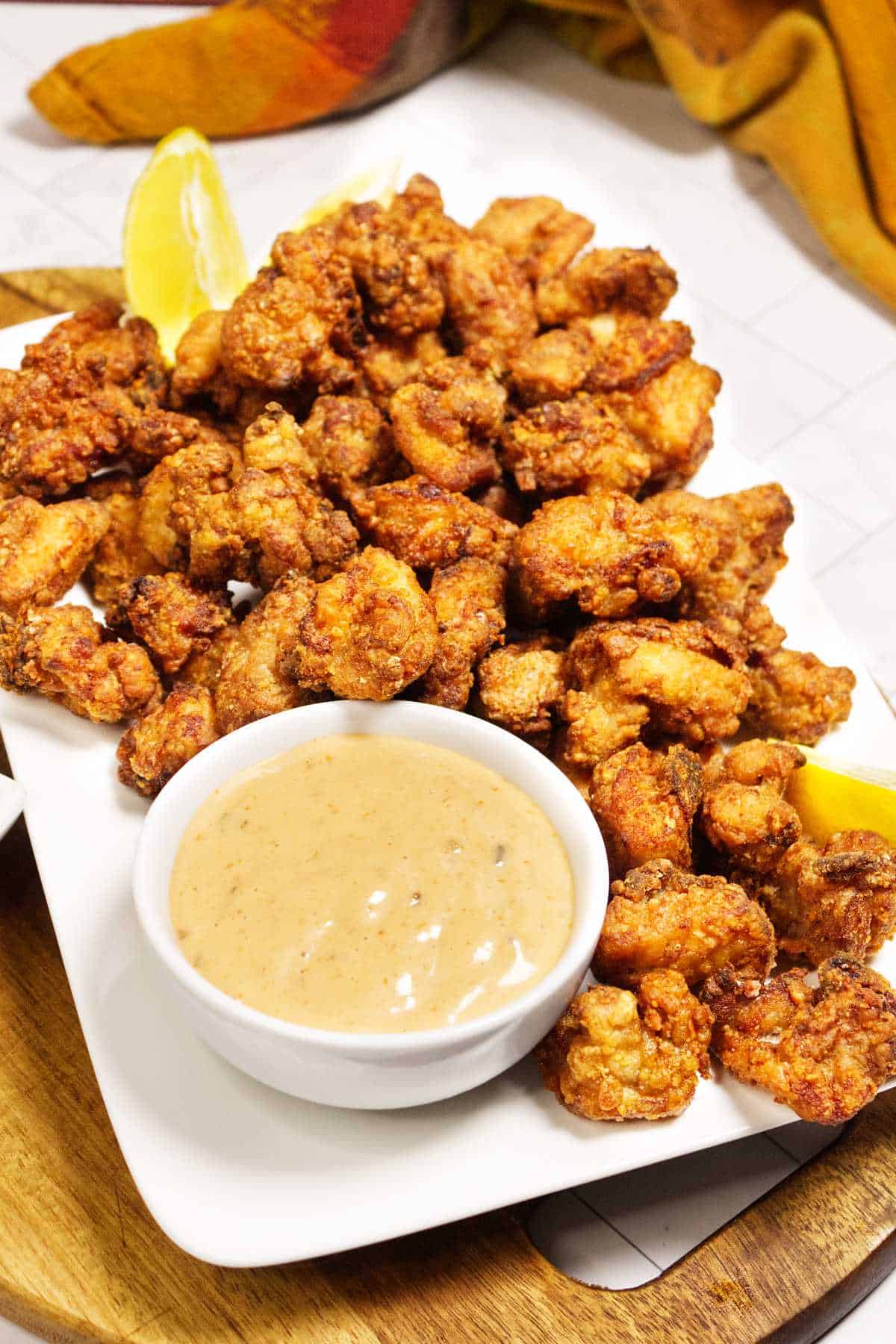
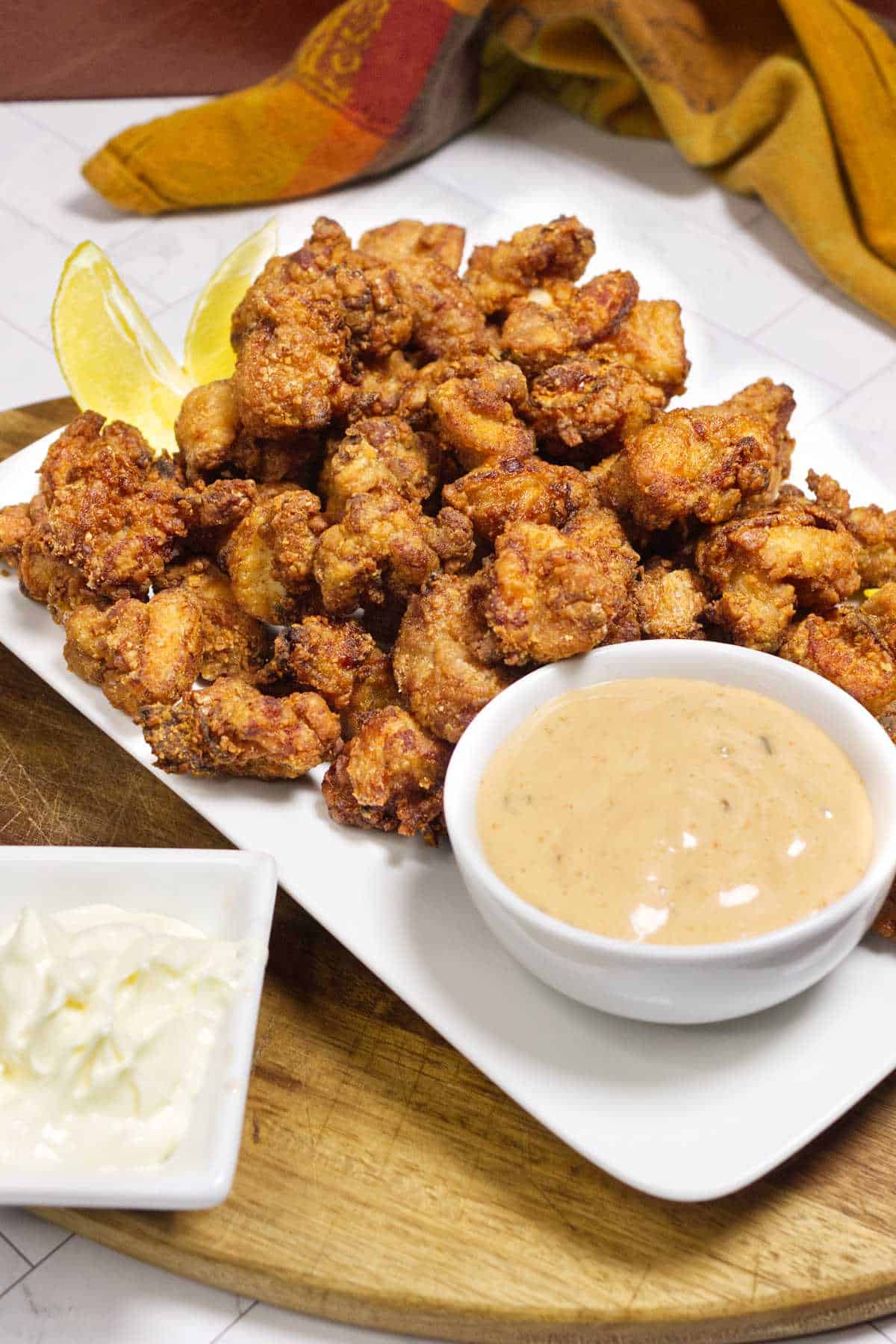
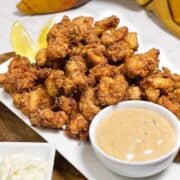
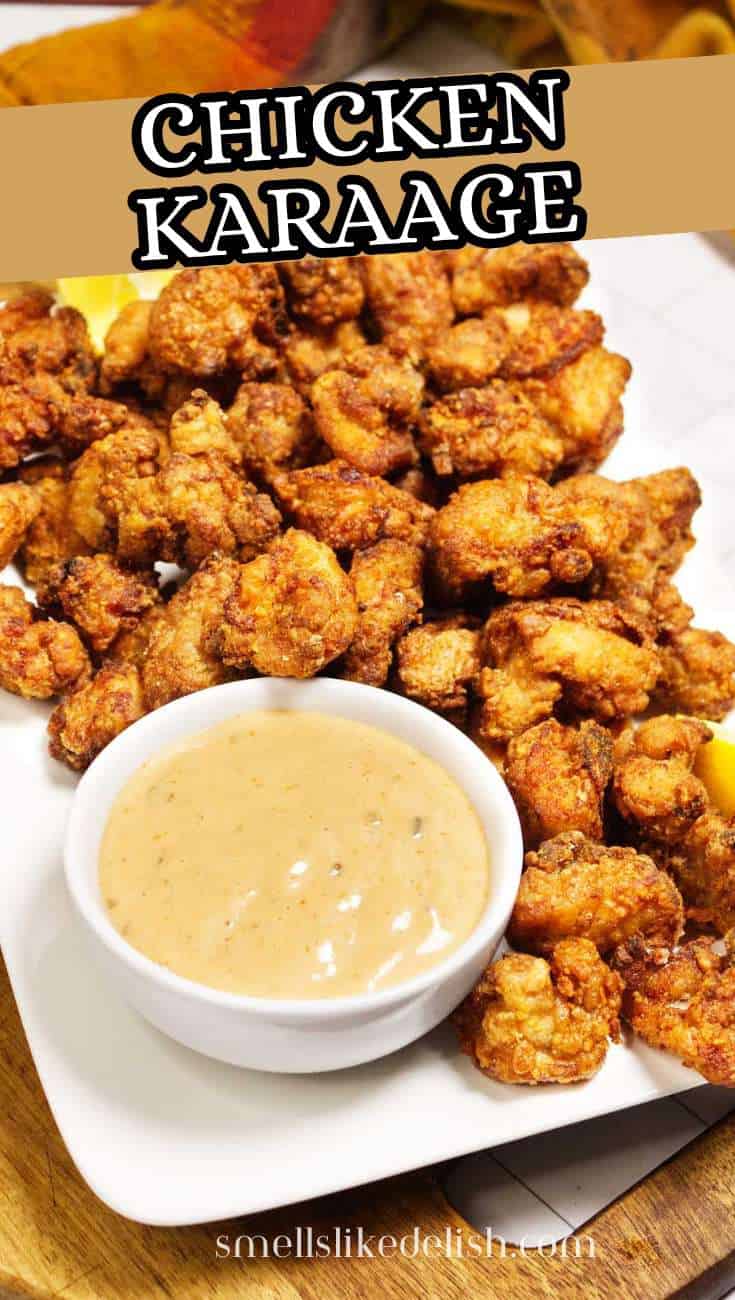
Japanese chicken karaage (pronounced kah-rah-ah-geh) is a light, crispy fried chicken made with bite-sized pieces of marinated chicken thigh. The coating stays crisp while the chicken stays juicy, making it easy to serve as an appetizer, snack, or main dish.
Serve it hot with lemon wedges and a dipping sauce, or pair it with rice and simple vegetables for an easy Japanese-style meal.
Why You'll Love This Chicken Karaage Recipe
This recipe uses a simple soy, garlic, and ginger marinade that gives karaage its signature flavor. The coating fries up light and crisp, so each piece stays crunchy outside and tender inside.
- Light crisp coating: A thin starch coating fries up golden without a heavy crust.
- Juicy chicken: Chicken thighs stay tender and flavorful, not dry.
- Quick to cook: Bite-sized pieces fry fast, so everything cooks evenly.
- Easy to serve: Works just as well as a snack, appetizer, or main dish.
- Goes with everything: Serve with lemon wedges, dipping sauces, or a simple side of rice.
Ingredients Overview
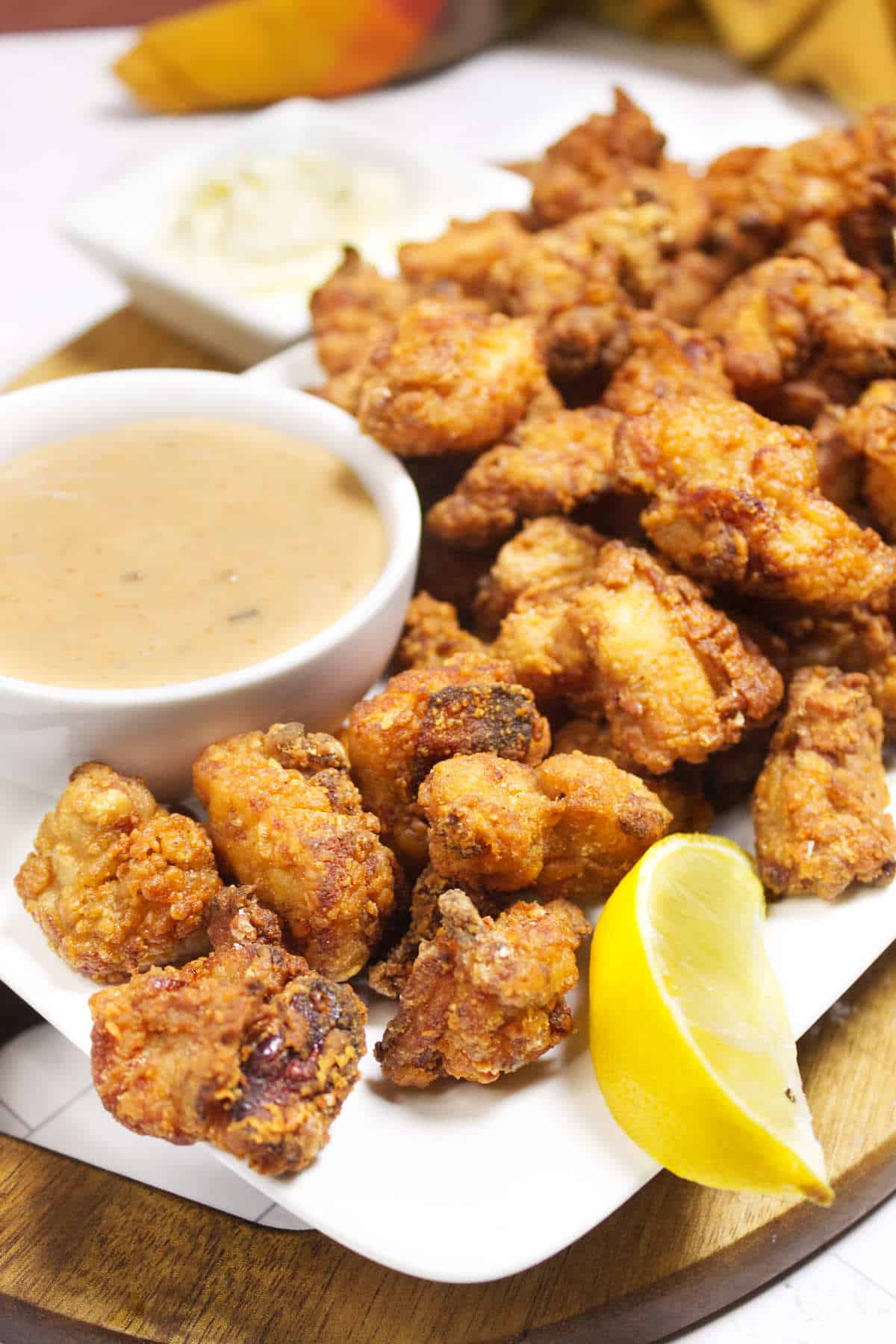
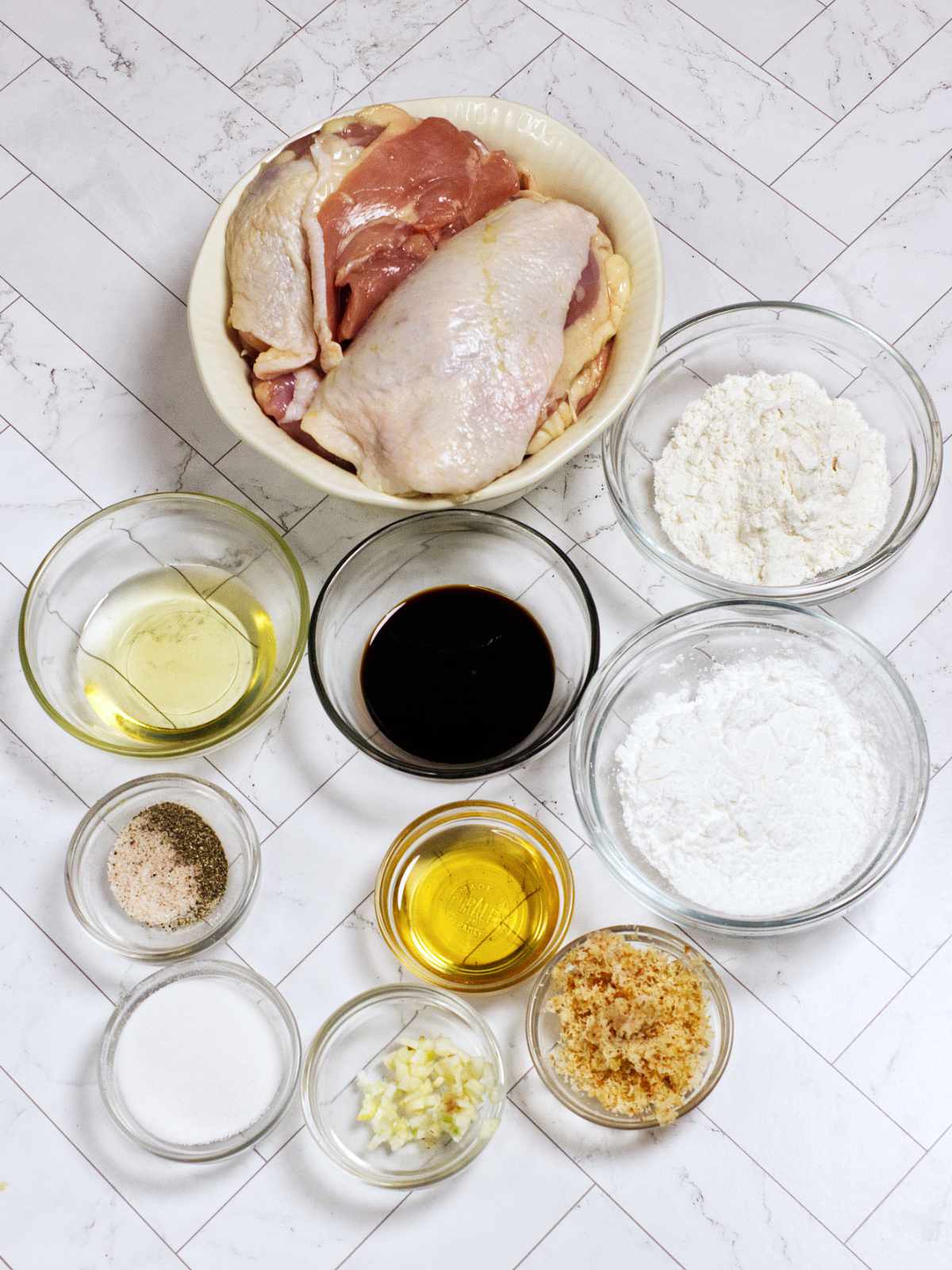
This recipe uses boneless chicken thighs marinated in soy sauce, garlic, ginger, mirin, and sesame oil for a savory base. The coating is a mix of cornstarch and flour, which fries up crisp and light instead of heavy.
Karaage is often made with potato starch in Japan, but a mix of cornstarch and flour works well in home kitchens and uses pantry staples.
Full ingredient amounts and instructions are in the printable recipe card at the bottom of this post.
How To Make Japanese Chicken Karaage
Here's how to make crispy Japanese chicken karaage step by step. The process is simple, but a quick marinade and double fry make all the difference. This recipe serves 4 to 6 as a main dish or 8 to 10 as an appetizer.
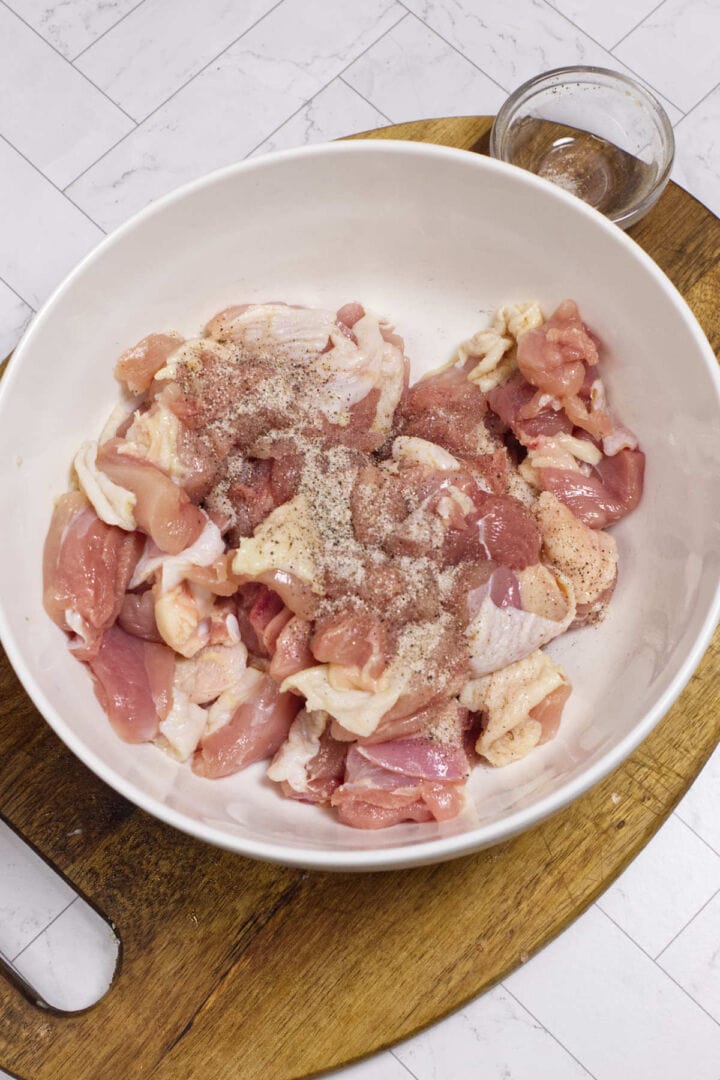
- Cut the chicken thighs into bite-sized pieces and season lightly with salt and pepper.
- In a bowl, mix the soy sauce, garlic, ginger, Mirin, and sesame oil. Add the chicken and toss to coat. Cover and refrigerate for 30 minutes to 1 hour, or marinate overnight.
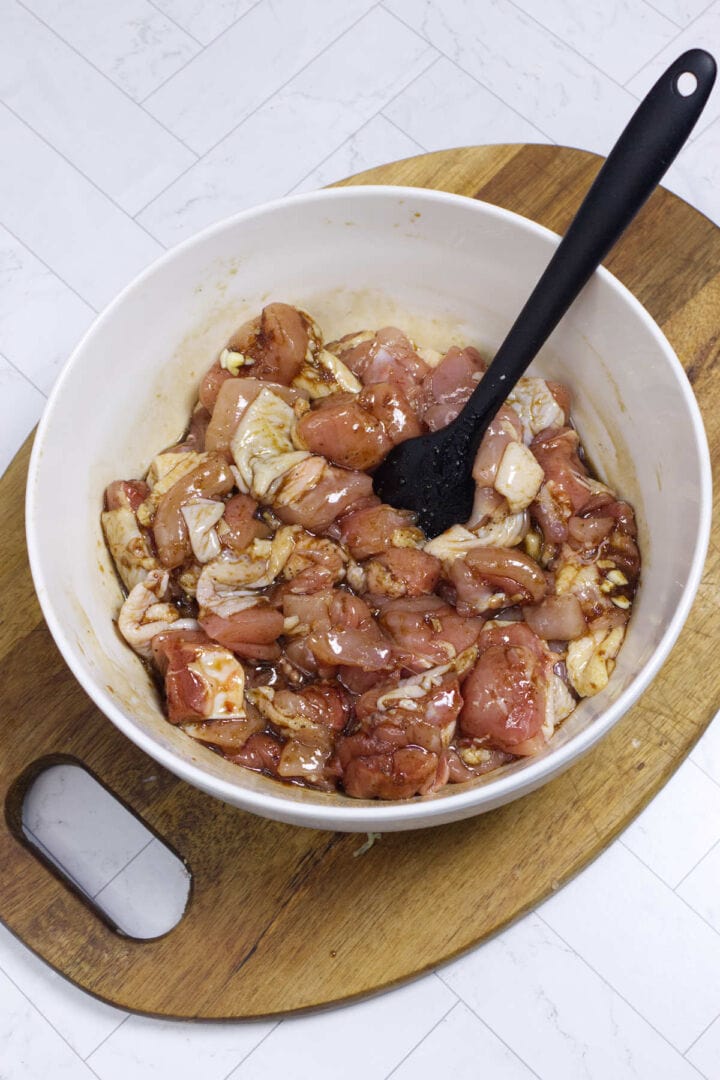
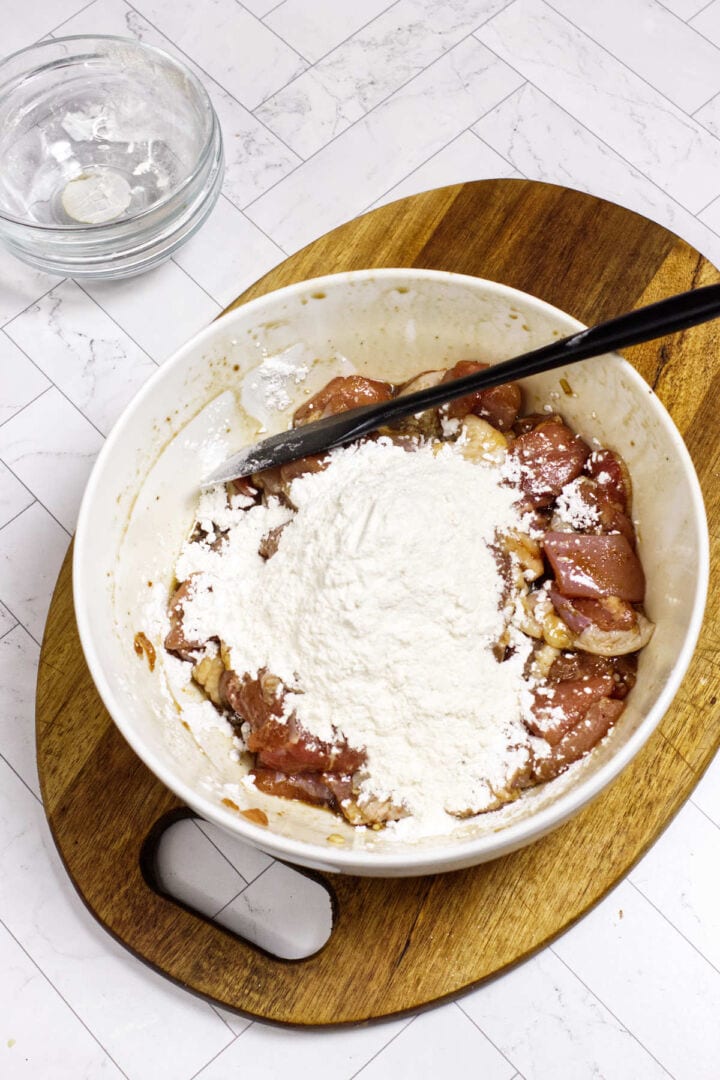
- Sprinkle the cornstarch and flour over the marinated chicken and toss until each piece is lightly coated. Shake off any excess coating.
Pro Tip
Let the coated chicken rest for 20 to 30 minutes in the refrigerator before frying so the coating hydrates and clings better during cooking.
- Refrigerate the coated chicken for 20 to 30 minutes while you heat the oil.
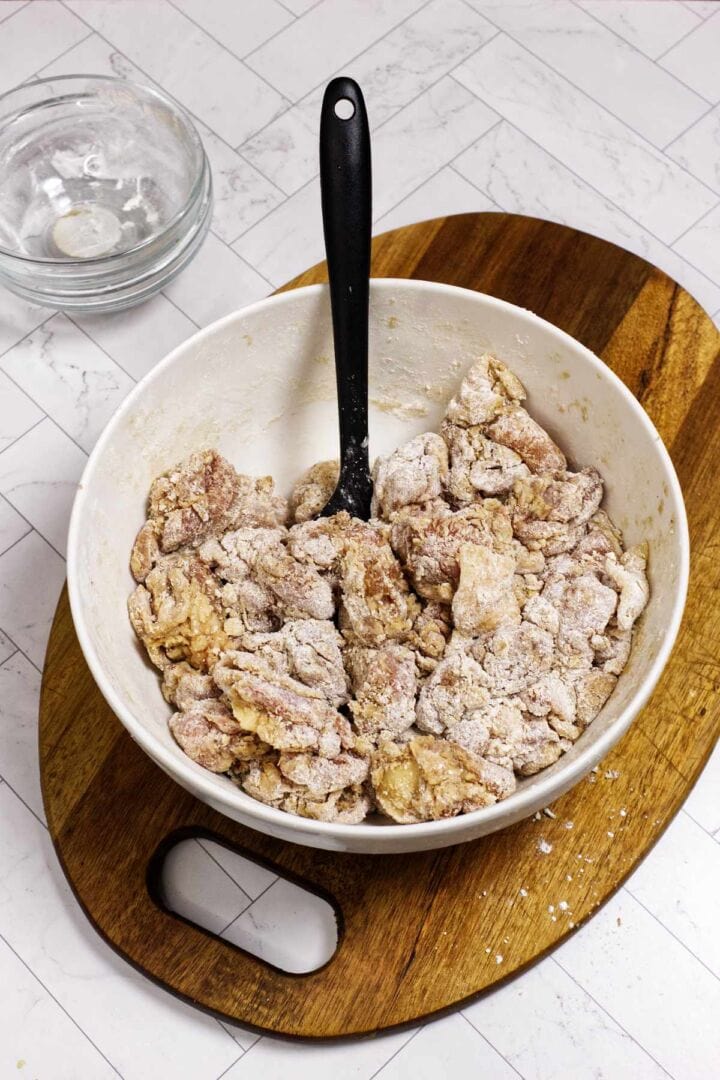
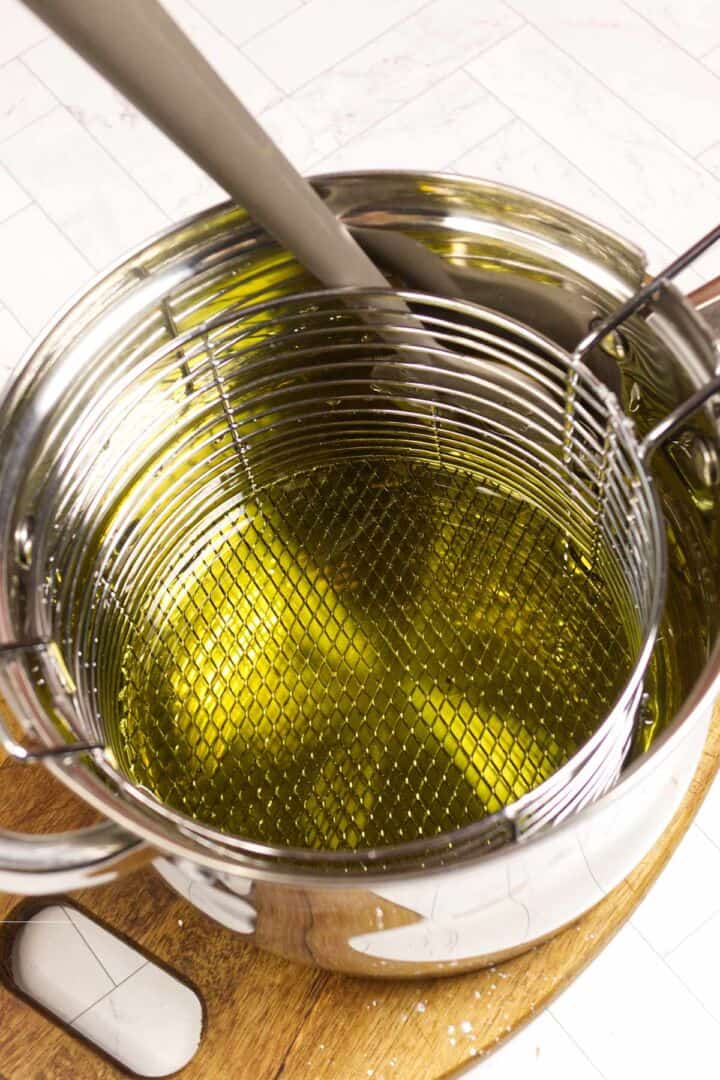
- Add 1 to 1 ½ inches of oil to a heavy pot or deep skillet and heat it to 325°F.
- Working in small batches, fry the chicken for 2 to 3 minutes until pale golden and just cooked through. Do not overcrowd the pan.
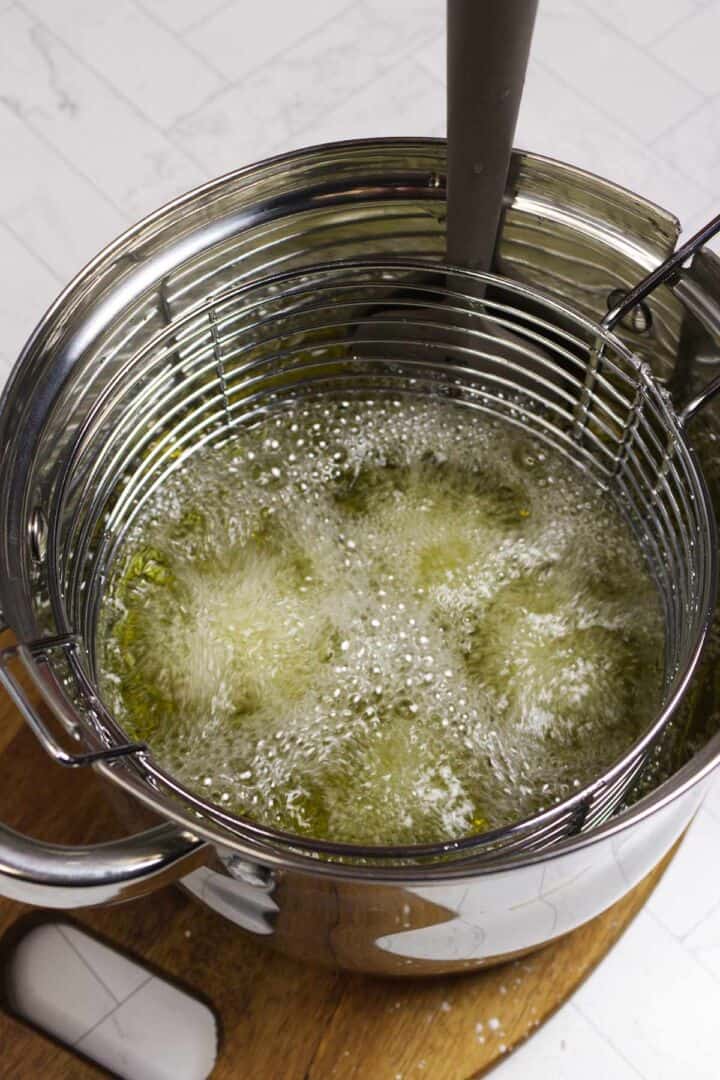
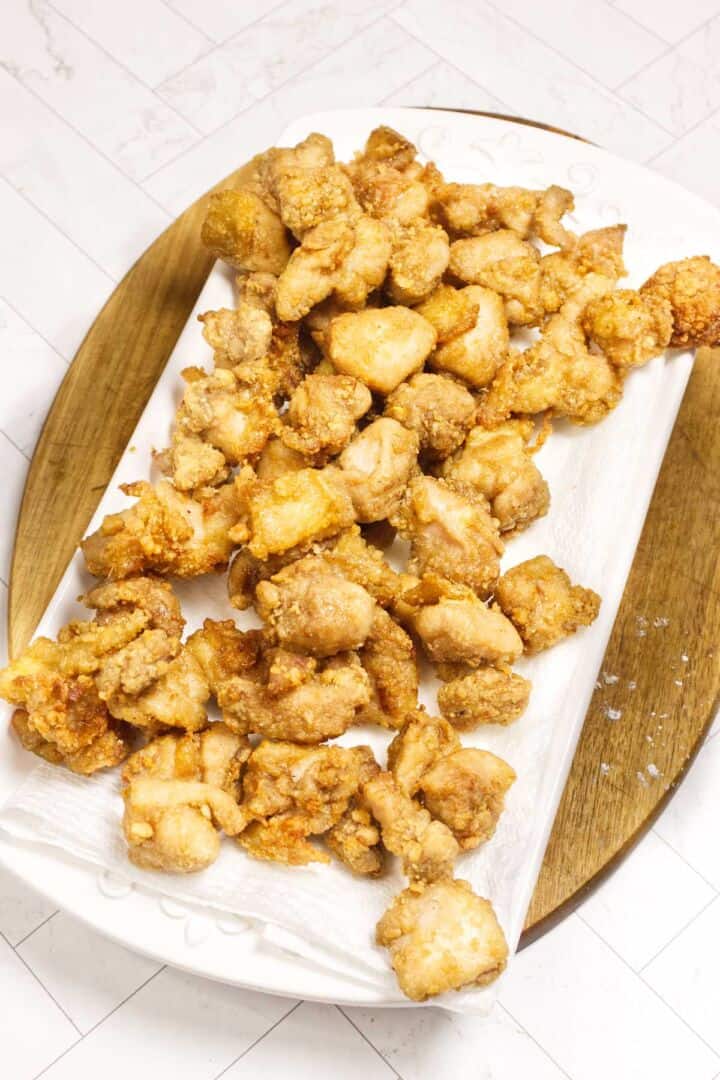
- Transfer the chicken to a rack or paper towel-lined platter and let it rest for 3 minutes.
- Increase the oil temperature to 350°F. Working in small batches, return the chicken to the oil and fry for 45 to 60 seconds, until deep golden and crisp.
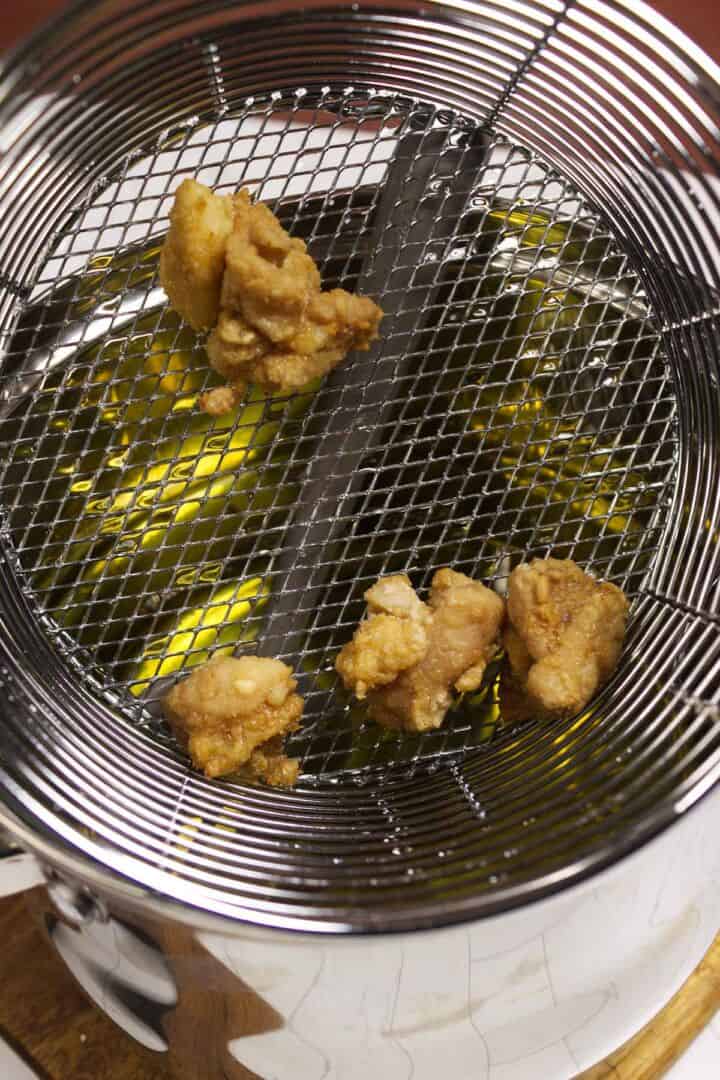
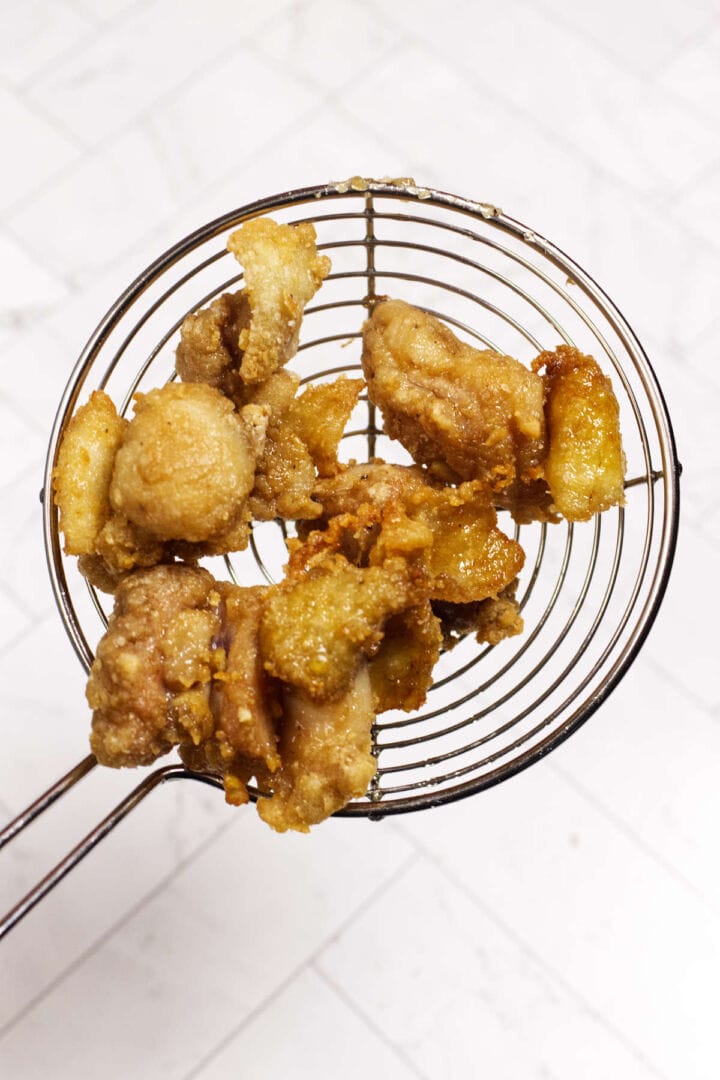
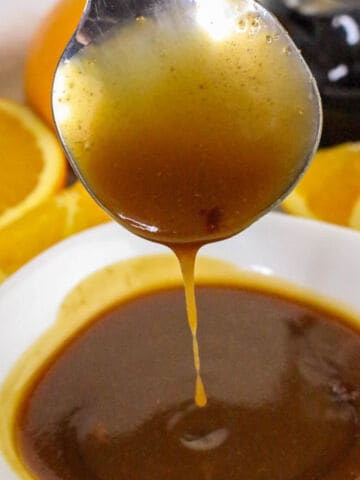
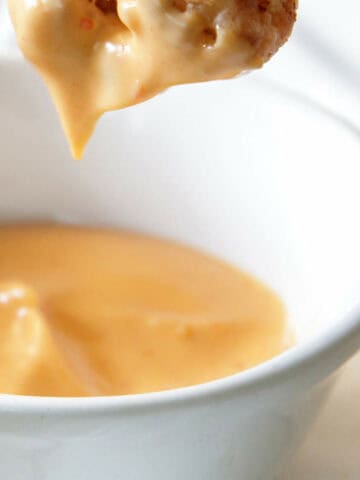
- Transfer to a rack or paper towels to drain. Serve hot with lemon wedges and dipping sauces like Japanese yum yum sauce or yakiniku sauce, and a sprinkle of shichimi togarashi if desired.
My Kitchen
I usually make karaage with boneless chicken thighs because they stay juicier and have better flavor than chicken breast. If you use breast meat, watch the frying time carefully so it doesn't dry out.
Serving Suggestions
Serve chicken karaage hot with lemon wedges and a dipping sauce like Japanese yum yum sauce or yakiniku sauce. For a full meal, pair it with rice cooker sushi rice, a simple salad, or hibachi-style vegetables.
Substitutions and Variations
These simple swaps let you adjust the recipe based on what you have on hand or how you like it.
- Chicken breast: Use boneless breast meat for a leaner option. Cut the pieces slightly larger and reduce the frying time so it stays juicy.
- Potato starch: Swap for some or all of the cornstarch for a slightly lighter, crisper coating.
- No Mirin: Use a small pinch of sugar to balance the marinade.
- Spicy version: Add a pinch of shichimi togarashi or red pepper flakes to the marinade.
Tips for Success
These small tips make a big difference in getting that light, crisp coating just right.
- Cut evenly: Keep the chicken pieces similar in size so they cook at the same rate.
- Rest the coating: Let the coated chicken sit for 20 to 30 minutes so the coating sticks better during frying.
- Fry in batches: Don't crowd the pan, or the oil temperature will drop and the coating won't stay crisp.
- Maintain oil temperature: Fry at about 325°F for the first fry and 350°F for the second so the coating crisps instead of absorbing oil.
- Double fry for best texture: The first fry cooks the chicken, and the second fry crisps the outside.
- Use a rack if possible: Let the chicken drain on a rack so air can circulate and keep it crisp.
Storage Options
Leftover karaage keeps well, and you can crisp it back up without much trouble.
- Refrigerator: Store in an airtight container for up to 3 days.
- Reheat: Reheat in a 375°F oven or air fryer until hot and crisp again.
- Freeze: Freeze in a single layer first, then transfer to a container for longer storage.
Related Recipes
Frequently Asked Questions
Cornstarch creates a light, crisp coating, while flour adds structure and flavor. Together, they give a coating that is crisp but not heavy.
Yes, but cut the pieces slightly larger and watch the frying time closely. Chicken breast cooks faster than thighs, so pulling it a little earlier helps keep it from drying out.
You'll need enough oil to reach about 1 to 1½ inches deep, which is usually around 4 cups in a medium saucepan. Very little of that oil is actually absorbed during frying, so once it cools, most of it can be strained and poured back into the bottle to reuse for other savory cooking.
A medium saucepan or deep skillet works well. A 3-quart pan is a good size. You don't need a deep fryer, just enough space to prevent splashing or foaming. If the oil foams, gently move the chicken to keep it under control.
If the oil is too cool, the coating will absorb oil instead of crisping, making the chicken greasy. Keeping the oil between 325°F and 350°F helps the coating set quickly so it fries up light and crisp.
Yes, but use enough oil so it comes about halfway up the chicken pieces, then turn them as they cook. The coating may not be as evenly crisp and can shed slightly, but you'll still get good results.
A fry basket is helpful but not required. A slotted spoon, spider, or spatula works fine. A thermometer helps, but you can test the oil with a small piece of chicken.
The first fry cooks the chicken through at a lower temperature. The second quick fry at a higher temperature crisps the coating and deepens the color without overcooking the meat.
The second fry is what gives karaage its crisp texture and deep golden color. You can fry it once, but the coating will be lighter and less crisp.
Karaage is best served fresh, but you can fry it ahead and reheat it in the oven or air fryer to crisp it back up. Avoid microwaving, as it softens the coating.
More Asian Recipes
Get The Recipe!
Chicken Karaage (Crispy Japanese Fried Chicken)
Ingredients
- 1½ lb boneless chicken thighs skin-on chicken thighs (about 4 thighs, 1.5 to 1.75 lbs)
- 1½ teaspoon salt
- ¼ teaspoon ground black pepper
For the Marinade
- 2 tablespoon soy sauce
- 1 clove garlic finely minced
- 1 teaspoon fresh grated ginger
- 1 teaspoon sugar
- 2 tablespoon Sake or any dry white cooking wine (both are optional if you prefer no alcohol)
- 1 teaspoon toasted sesame oil
For Deep-Frying
- 4 cups vegetable oil (Most of the oil is not absorbed-only about ⅓ to ½ cup total is used during frying.)
- ½ cup cornstarch or potato starch for even more crunch
- ¼ cup all-purpose flour
For Serving (optional)
- lemon wedges
- Japanese Yum Yum Sauce or mayonnaise
- shichimi togarashi Japanese seven spice
Instructions
Prepare the chicken
- Cut the chicken thighs into bite-sized pieces and season lightly with salt and pepper.1½ lb boneless chicken thighs , 1½ teaspoon salt, ¼ teaspoon ground black pepper
Make the marinade
- In a bowl, combine soy sauce, garlic, ginger, Mirin, and the sesame oil. Add the chicken and toss to coat.2 tablespoon soy sauce, 1 clove garlic, 1 teaspoon fresh grated ginger, 1 teaspoon sugar, 1 teaspoon toasted sesame oil
Marinate
- Cover and refrigerate for 30 minutes to 1 hour; you can also prepare the night before an let it marinate overnight.
Coat the chicken
- Remove the chicken from the marinade and let any excess drip off. Add the cornstarch and flour to the bowl of chicken and toss to lightly coat each piece of chicken, shaking off any excess.½ cup cornstarch, ¼ cup all-purpose flour
- Refrigerate the coated chicken for 20 to 30 minutes while you heat the oil.
Heat the oil
- Add 1 to 1 ½ inches of oil to a heavy pot or deep skillet and heat it to 325°F.4 cups vegetable oil
First fry
- Working in small batches, fry the chicken for 2 to 3 minutes until pale golden and just cooked through. Do not overcrowd the pan.
- Transfer the chicken to a rack or paper towel-lined platter and let it rest for 3 minutes.
Second fry
- Increase the oil temperature to 350°F. Fry the chicken a second time for 45 to 60 seconds, until deeply golden and crisp. Serve hot with lemon wedges and dipping sauces.
Drain and serve
- Transfer to a rack or paper towels. Serve hot with lemon wedges and Japanese Yum Yum dipping sauce, Yakiniku sauce, and garnish with Shichimi Togarashi (Japanese Seven Spice).lemon wedges, Japanese Yum Yum Sauce, shichimi togarashi
Notes
- Cut evenly: Keep the chicken pieces similar in size so they cook at the same rate.
- Rest the coating: Let the coated chicken sit for 20 to 30 minutes so the coating sticks better during frying.
- Fry in batches: Don't crowd the pan, or the oil temperature will drop and the coating won't stay crisp.
- Maintain oil temperature: Fry at about 325°F for the first fry and 350°F for the second so the coating crisps instead of absorbing oil.
- Double fry for best texture: The first fry cooks the chicken, and the second fry crisps the outside.
- Use a rack if possible: Let the chicken drain on a rack so air can circulate and keep it crisp.
Nutrition
Pin It For Later ⤵
Kelly Bloom says
Delicious, I'm making this again!