

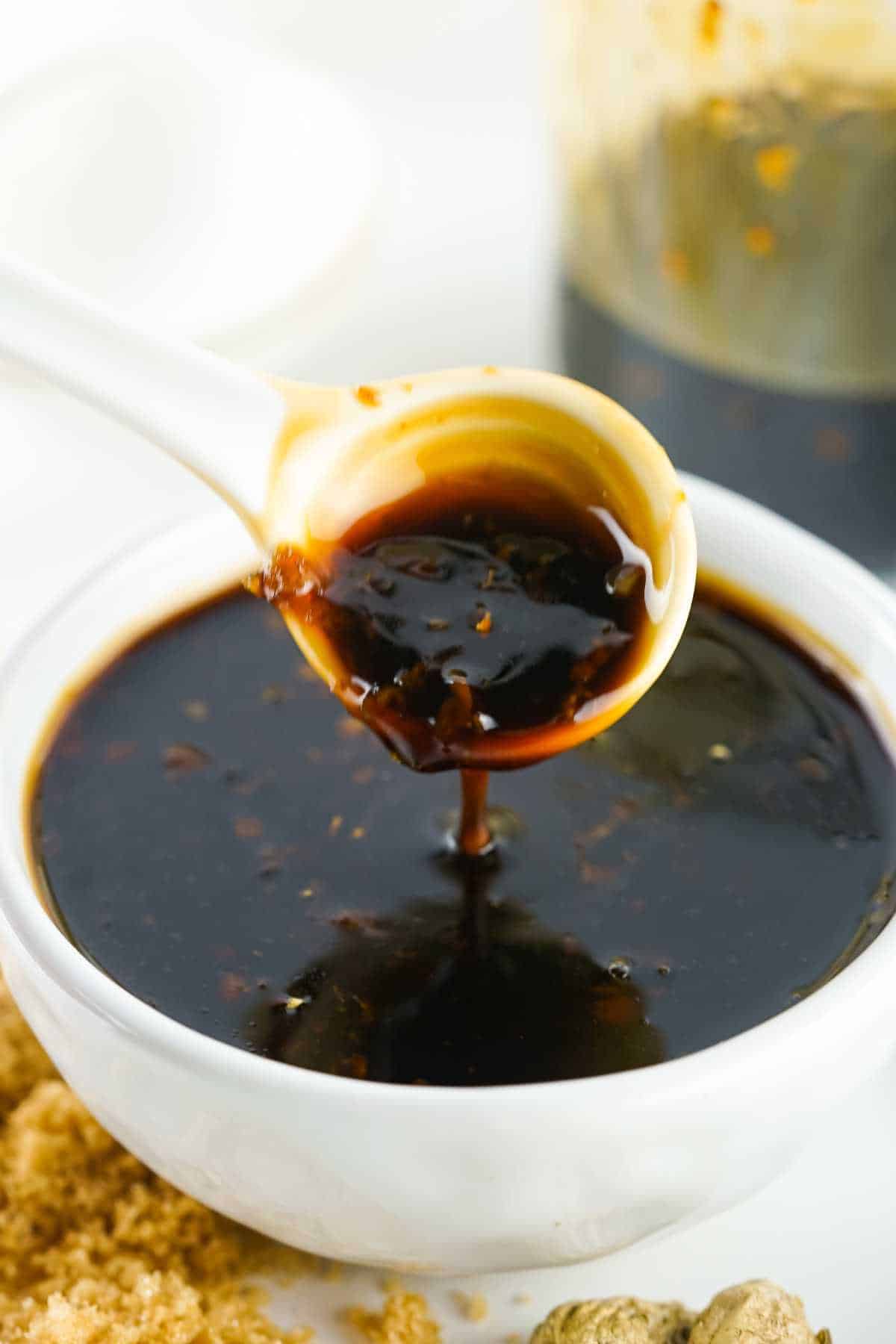
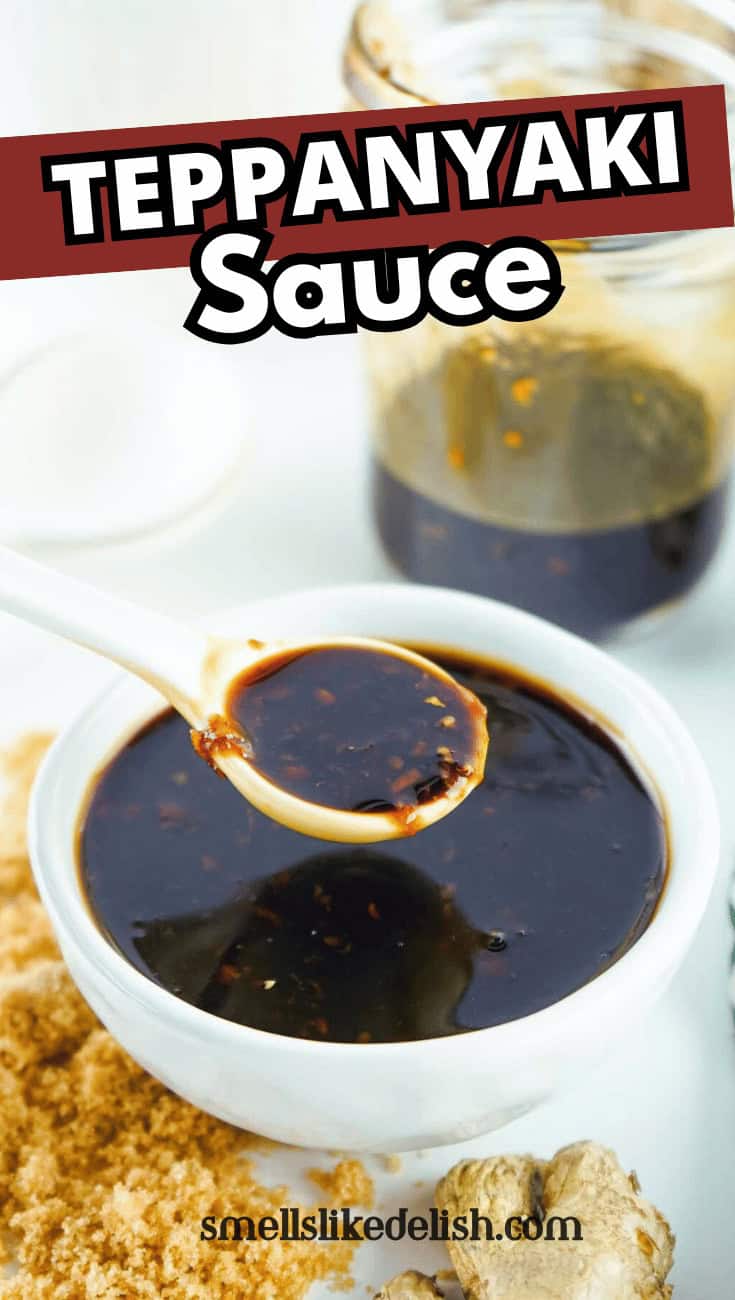
This teppanyaki sauce, also known as yakiniku sauce, is a sweet and savory grilling sauce that gives meats, seafood, and vegetables the bold flavor of a Japanese steakhouse. Brush it on as they cook or serve it alongside the meal for dipping.
What Is Teppanyaki Sauce Used For?
Teppanyaki sauce is used both as a cooking sauce and a dipping sauce in Japanese-style flat top cooking. It's commonly brushed onto meats while grilling or served on the side for dipping.
It's most often used with:
- Grilled meats: Beef, steak tips, chicken, pork, and shrimp.
- Flat top cooking: Blackstone or hibachi-style teppanyaki meals.
- Rice and noodles: Sushi rice, Fried rice, yakisoba, and stir fry dishes.
- Vegetables: Zucchini, onions, mushrooms, and tempura vegetables.
- Dipping sauce: Sushi rolls like kimbap, grilled skewers, or chicken karaage.
What Does Teppanyaki Sauce Taste Like?
Teppanyaki sauce has a sweet and savory flavor built on a soy sauce base, balanced with sugar, garlic, and ginger.
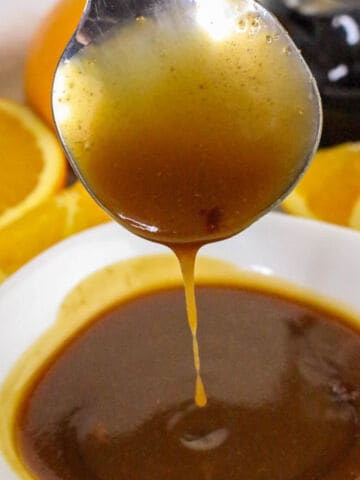
It's slightly thicker than soy sauce, with a richer taste that caramelizes lightly when brushed onto meats or vegetables on the grill.
The flavor is similar to what's served at Japanese steakhouses, with a mild sweetness and a savory finish that works well with beef, chicken, seafood, and fried rice.
Why You'll Love This Teppanyaki Sauce Recipe
This sweet and savory sauce recipe is also used as a Japanese marinade, Teppanyaki grilling sauce, and used as a dipping sauce at the serving table.
- Sweet and Savory Harmony: It strikes a perfect balance between a delightful sweetness and a rich, savory depth, making every bite incredibly satisfying.
- Umami Powerhouse: Teppanyaki sauce often contains ingredients like soy sauce and Mirin that contribute a profound umami flavor, enhancing everything it touches.
- Versatile Flavor Booster: It's not just for teppanyaki! This sauce elevates stir-fries, grilled meats, roasted vegetables, and even simple rice bowls with its unique and delicious profile.
Ingredients Overview
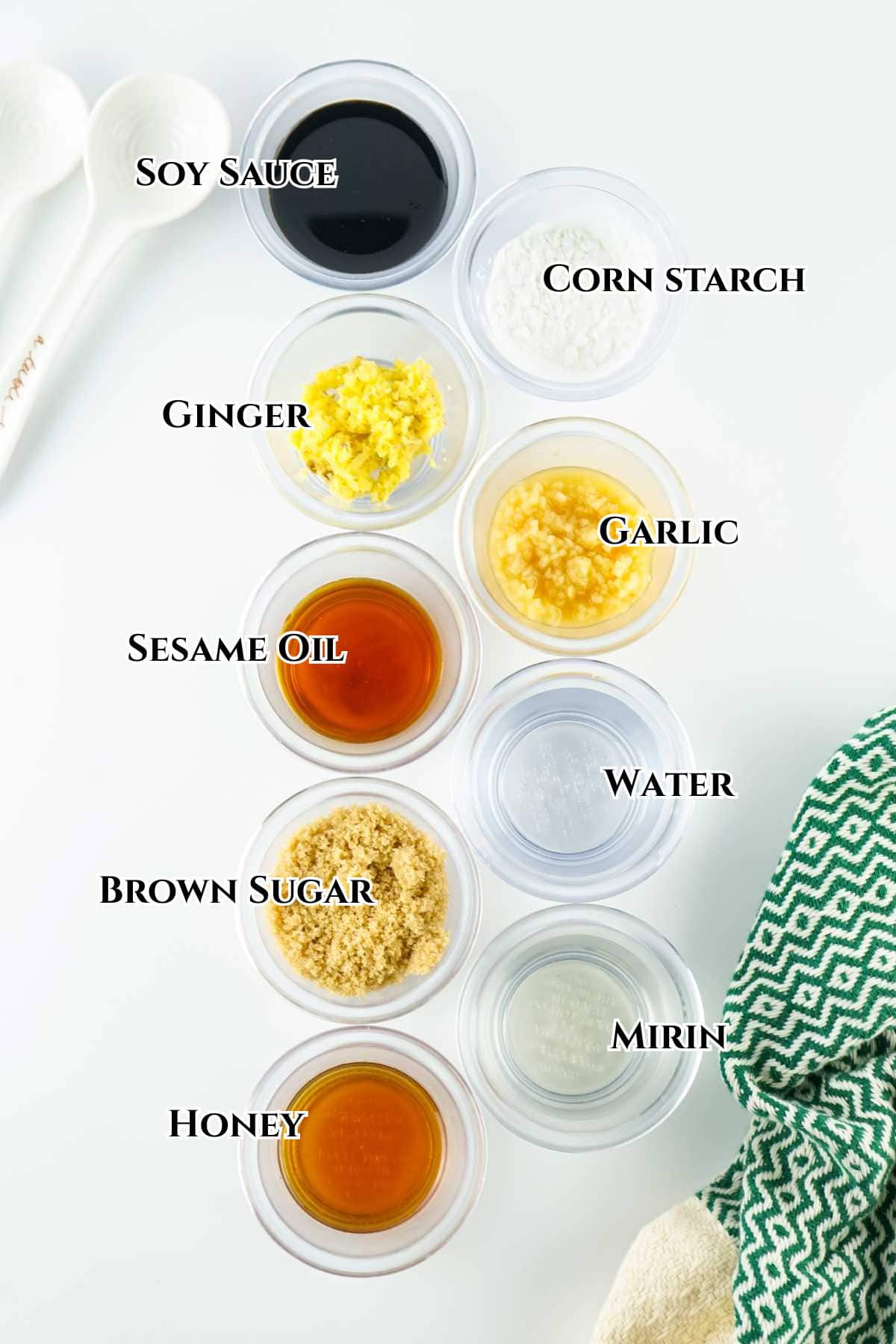
This sauce recipe is made with everyday ingredients, including soy, Mirin (you can use Sake` as a substitute), sugar, ginger, garlic, and sesame seeds. Adding a pinch of red pepper flakes is popular for a spicier sauce.
Full ingredient amounts and preparation instructions are in the printable recipe card at the bottom of this post.
How To Make This Japanese Barbecue and Dipping Sauce
This Japanese grilling sauce is a delicious and easy way to add flavor to grilled or barbecued meats. Simply combine the ingredients and then add the cornstarch slurry to thicken the sauce, either in the microwave or on the stovetop.
Step 1: Combine the soy sauce to a microwave safe bowl with the brown sugar, grated garlic, and grated ginger.
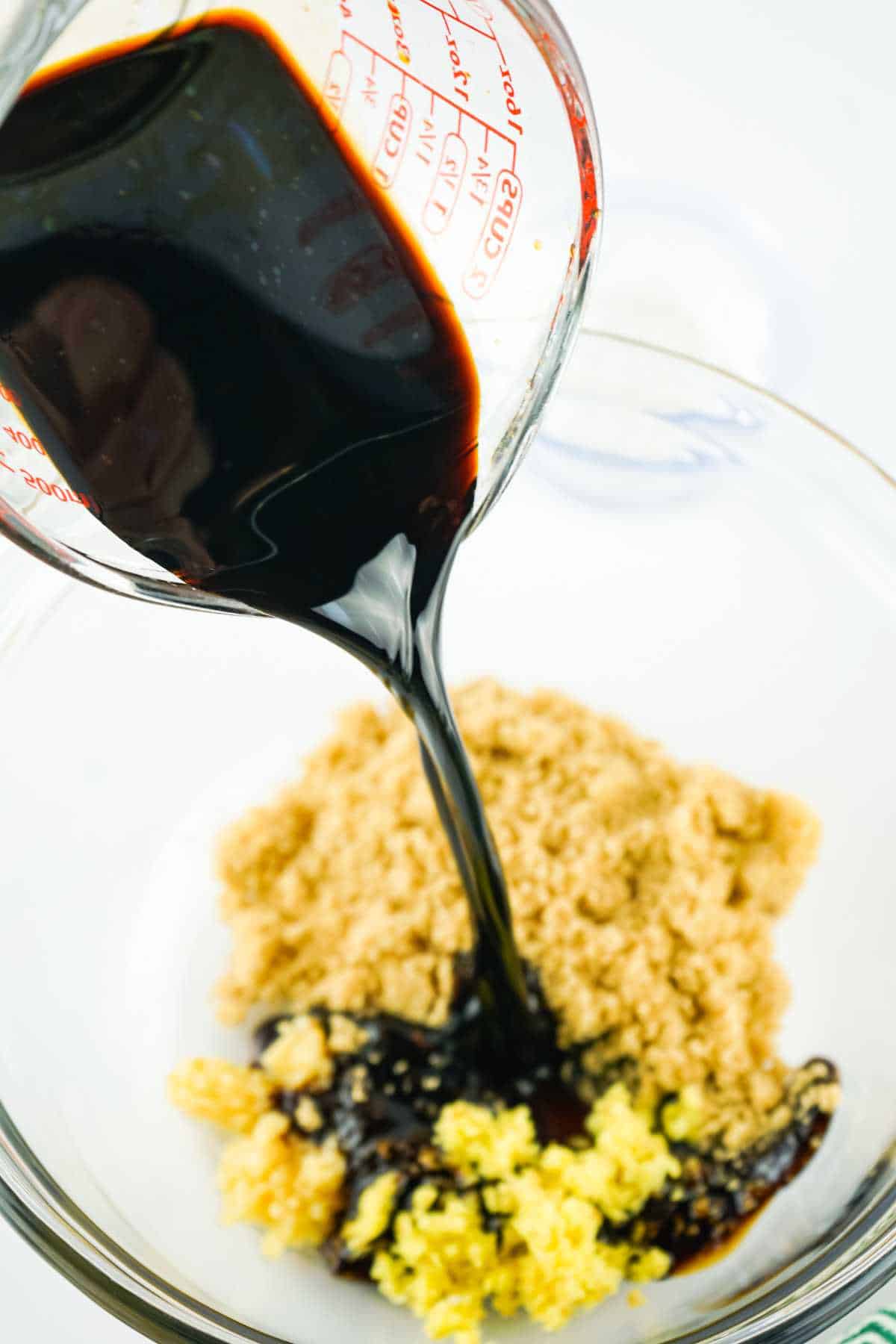
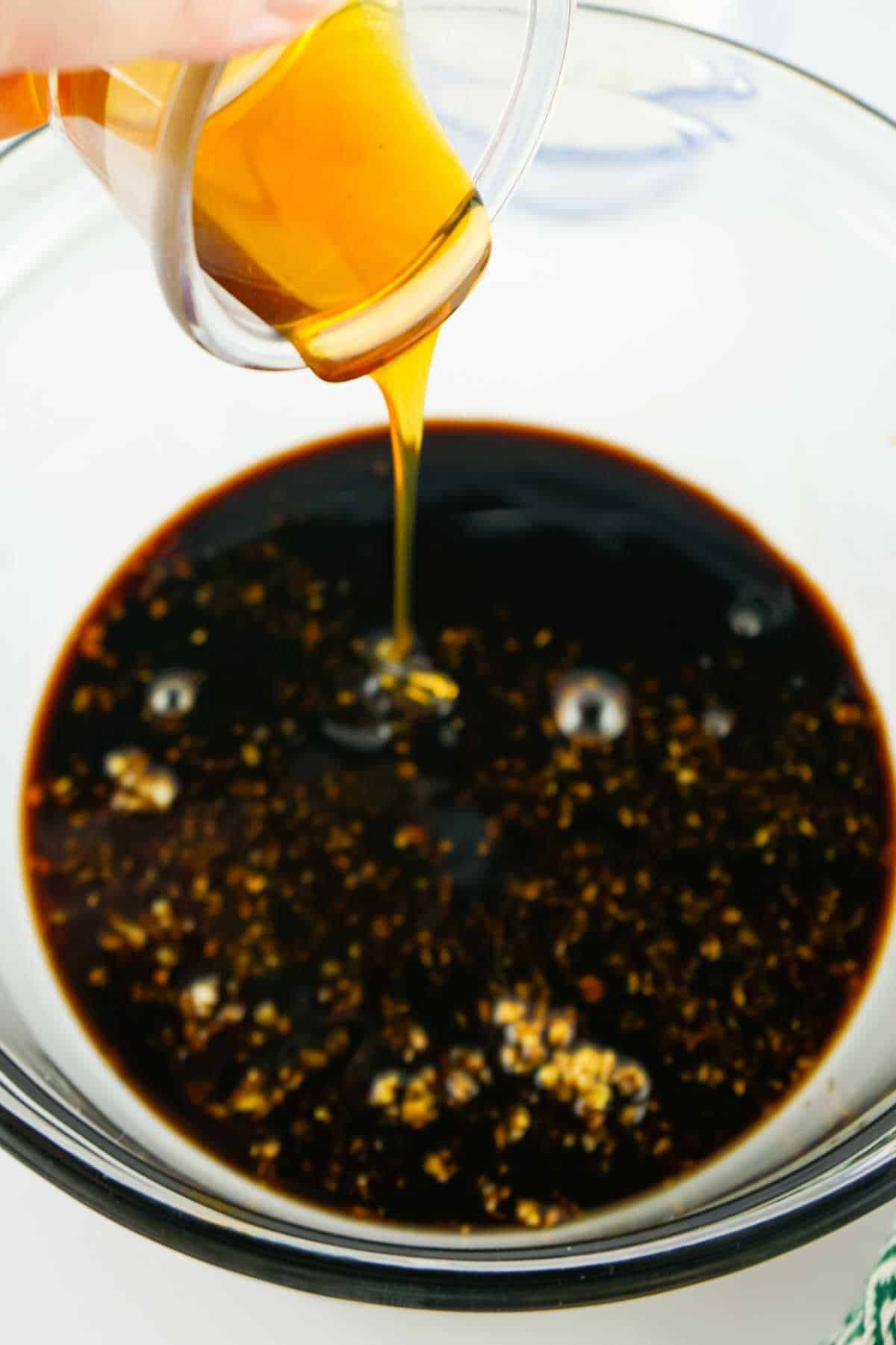
Step 2: Stir in the honey and sesame oil and whisk.
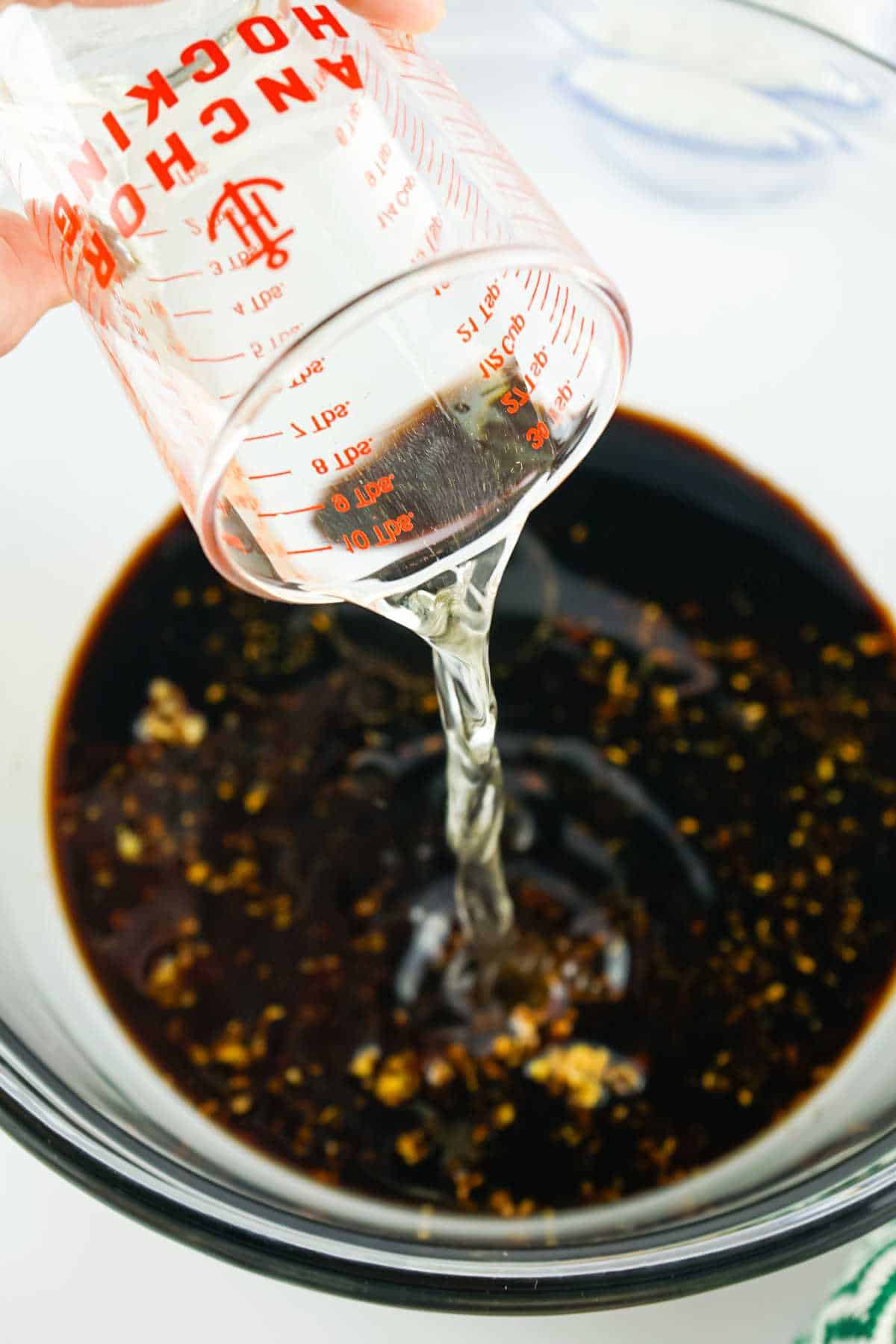
Step 3: Pour the Mirin into the mixture and whisk to blend.
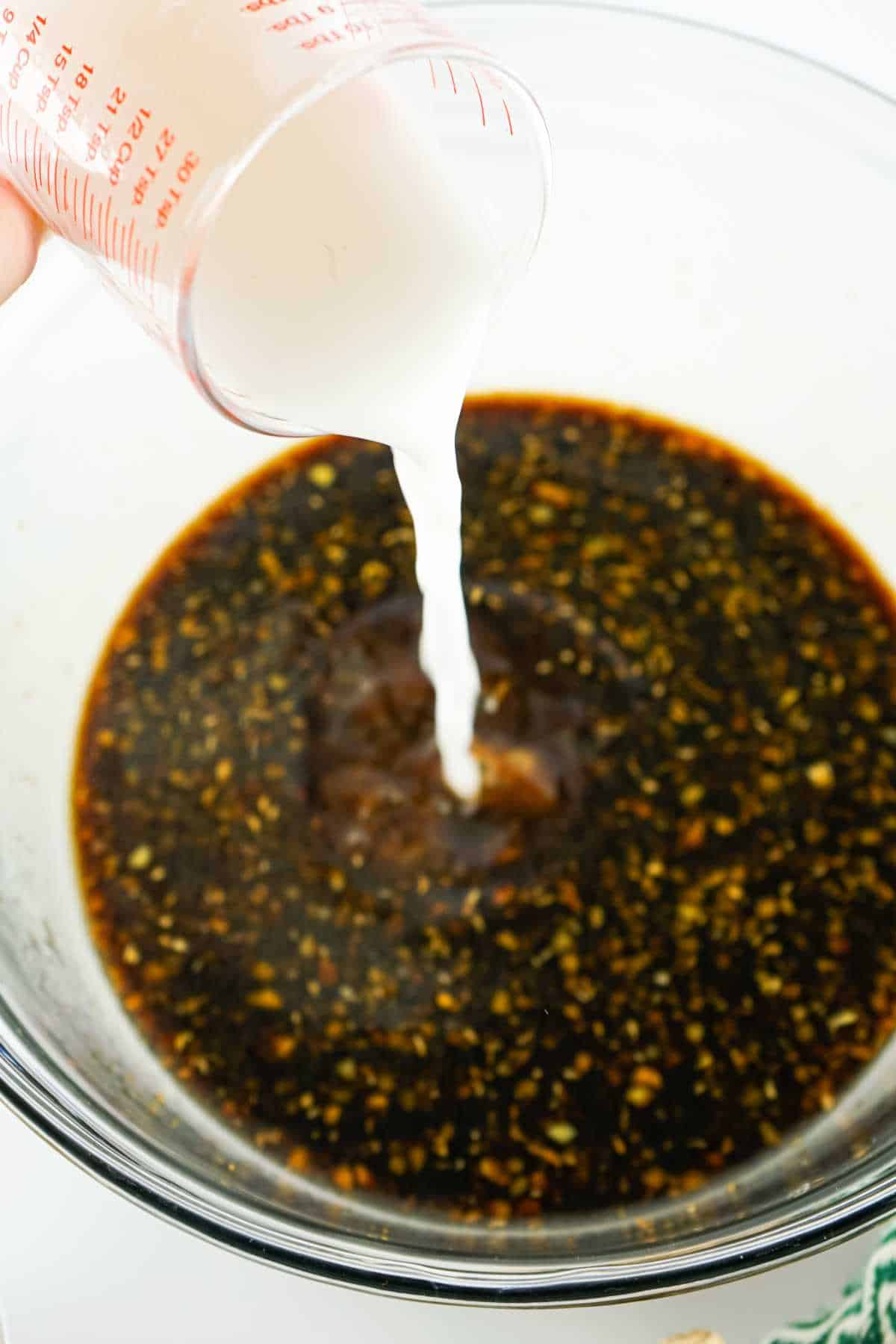
Step 4: Dissolve the cornstarch into the water to make a slurry. Whisk into the bowl of sauce.
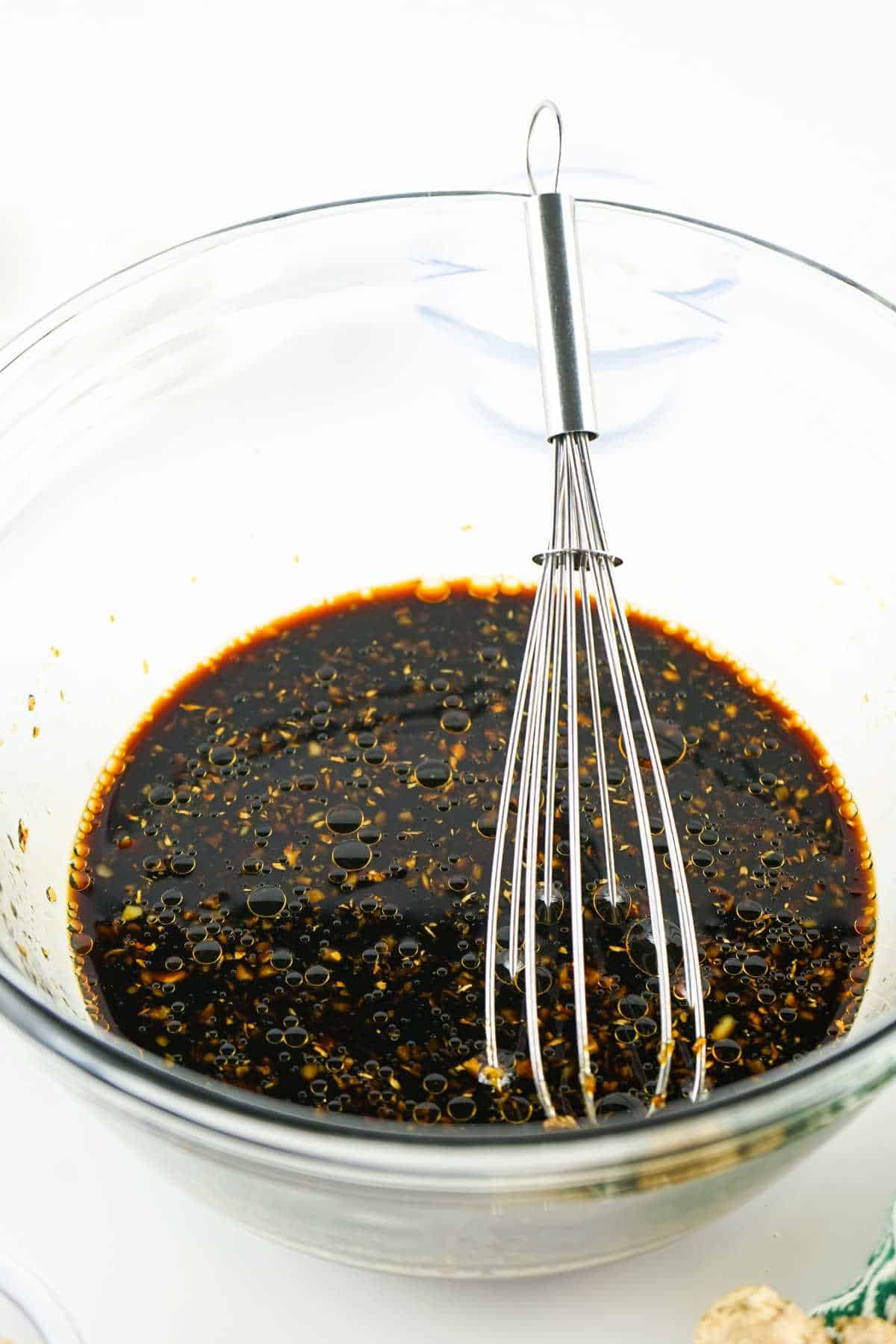
Step 5: Microwave for 3 minutes, stirring with the whisk halfway through.
Stovetop Method
You can also prepare this sauce on the stove top. Combine all of the ingredients in a small saucepan. Heat the sauce over medium heat, stirring constantly, until the sugar has dissolved.
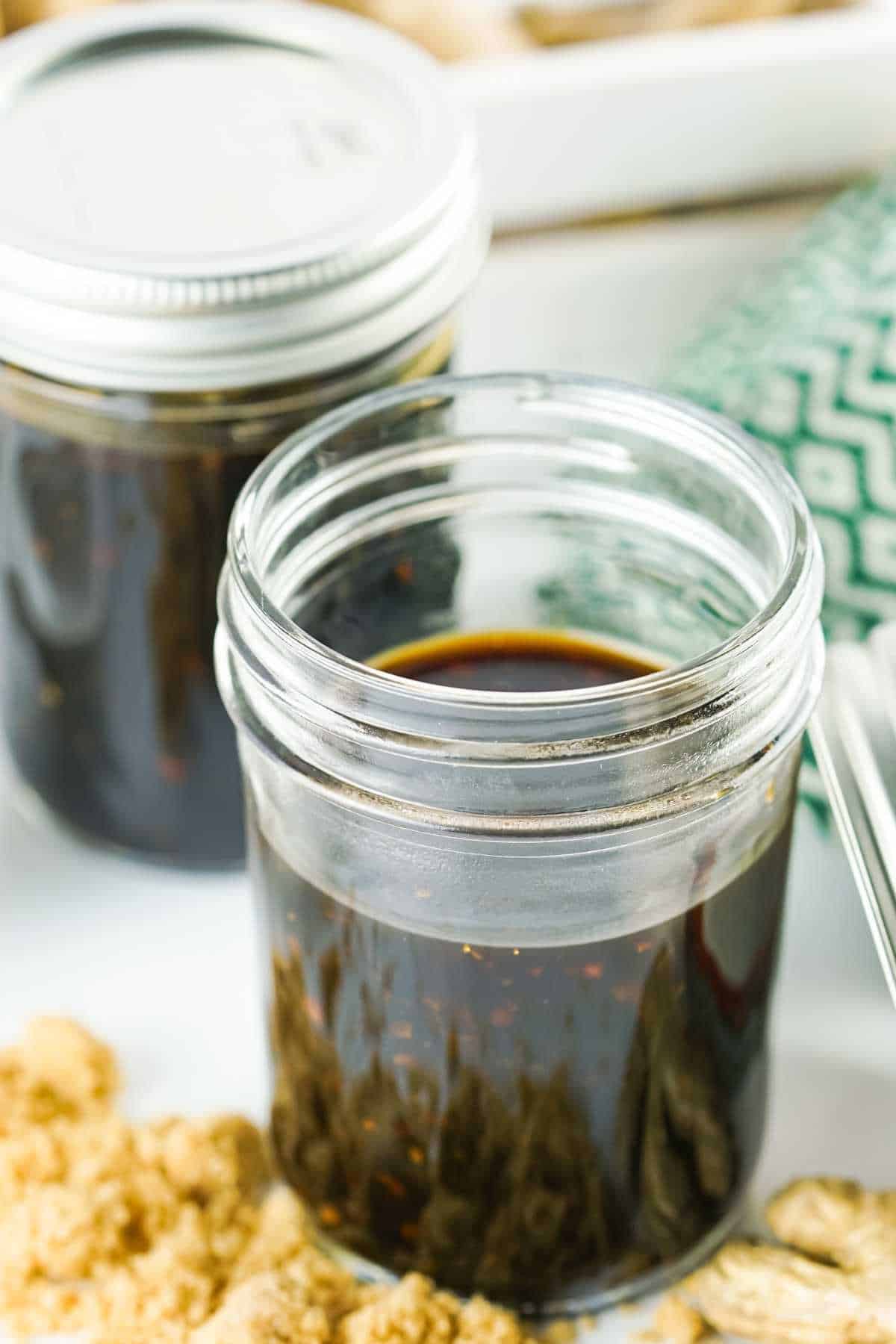
Serving Suggestions
Serving Suggestions
Brush teppanyaki sauce over grilled chicken skewers, when making refried rice, or searing steaks during the final minutes of cooking. You can also serve it at the table for dipping or spoon it over rice and noodles.
For an easy dinner, pair it with Panda Express string bean chicken and steamed jasmine rice, or use it to add a sweet and savory finish to a Blackstone-style hibachi meal.
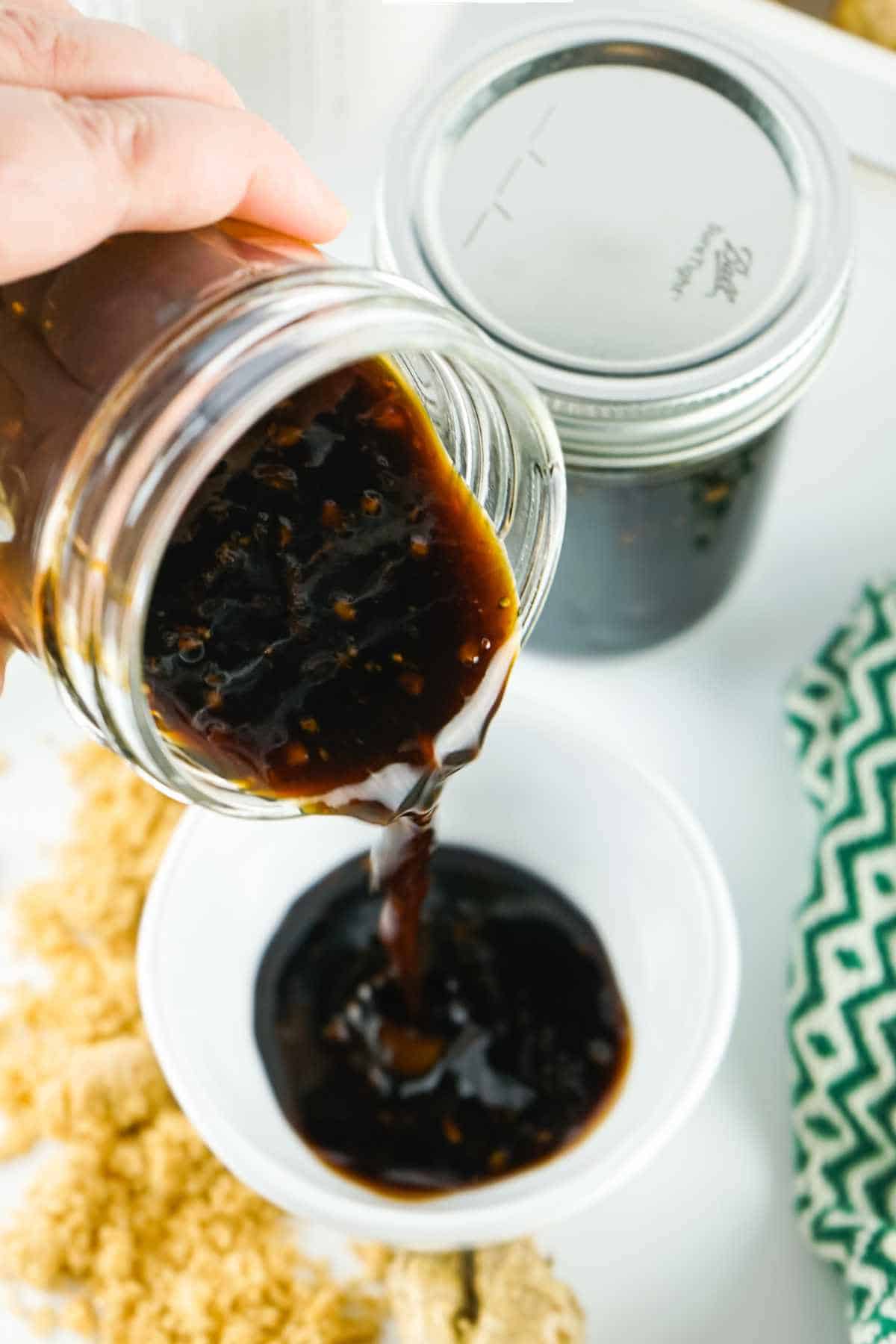
Substitutions and Variations
Here are a few delicious variations or substitutions when making this recipe.
- Mirin Substitutes: Mirin is a Japanese rice wine that gives the sauce a unique flavor. If you can't find Mirin, you can substitute Sake1, Sherry, or dry white wine.
- Sesame Oil Substitutes: If you don't have sesame oil, you can substitute any vegetable oil.
- Adjust Sweetness: You can adjust the amount of sugar to taste. If you like a sweeter sauce, add more sugar. If you prefer a more savory sauce, add less sugar.
Tips for Success
Here are a few tips for making this recipe:
- Balance the sweetness: Adjust sugar or honey slightly depending on how sweet you like your sauce.
- Use low sodium soy sauce: Prevents the sauce from becoming too salty as it reduces.
- Simmer gently: A low simmer keeps the sauce smooth and prevents it from thickening too fast.
- Let it cool before storing: The sauce thickens slightly as it cools.
Storage and Reheating
Some recommended storage options for this recipe are:
- Refrigerate: Store in an airtight container up to 5 days.
- Stir before using: Ingredients may settle slightly.
- Do not freeze: Texture may change after thawing.
Related Recipes
- Grilled Top Sirloin Steak
- Mall Bourbon Chicken
- Orange Teriyaki Sauce
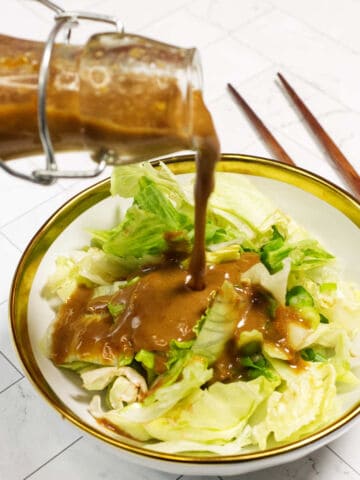
- Japanese Steakhouse Ginger Dressing
Frequently Asked Questions
Teppanyaki sauce is usually used as a dipping or cooking sauce with a more savory, balanced flavor. Teriyaki sauce is thicker, sweeter, and used as a glaze that coats meats while cooking.
At least 30 minutes, but you can marinate in the refrigerator for up to 12 hours.
If you don't have Mirin, a good substitute is dry sherry or a sweet white wine with a pinch of sugar added. For a non-alcoholic option, use white grape juice with a small amount of rice vinegar.
While designed for Teppanyaki, this versatile sauce is great for many other uses. It works wonderfully as a marinade for chicken, beef, or tofu, a stir-fry sauce, or a dipping sauce for grilled meats and vegetables.
Teppanyaki sauce is typically a versatile sauce used for cooking on a griddle (teppan), and served with grilled meats, seafood, and vegetables. Yakiniku sauce is a type of dipping sauce specifically for yakiniku, which refers to grilled meat. While similar, Yakiniku sauce is generally a thicker, sweeter, and richer dipping sauce for bite-sized grilled meats. The two sauces are often used interchangeably.
For authentic flavor, use a good quality Japanese soy sauce (like Kikkoman or Yamasa). You can use regular or low-sodium depending on your dietary preferences, but be mindful of the salt content when seasoning the rest of your dish.
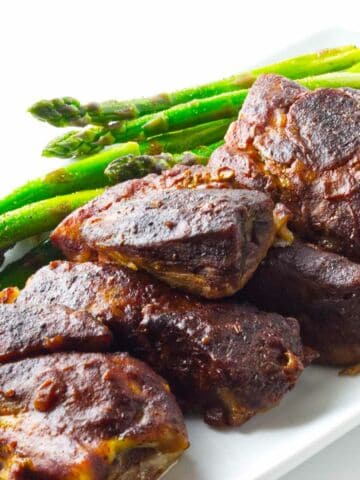
More Grilling Recipes
Get The Recipe!
Teppanyaki Sauce (Yakiniku)
Equipment
- Microwave Safe Measure and Mix Bowl Set w Pouring Spouts and Covers
- Whisk
Ingredients
- ½ cup soy sauce or tamari
- 2 tablespoon brown sugar
- 2 teaspoon ginger fresh, grated fine
- 1 teaspoon garlic fresh, grated fine
- 1 tablespoon honey
- 2 teaspoon sesame oil toasted
- 3 tablespoon rice wine mirin or sake
- 1 tablespoon cornstarch
- ¼ cup water
- red pepper flakes to taste
- 2 teaspoon sesame seeds toasted
Instructions
- Combine the soy sauce to a microwave safe bowl with the brown sugar, grated garlic, and grated ginger.½ cup soy sauce, 2 teaspoon ginger, 1 teaspoon garlic, 2 tablespoon brown sugar
- Stir in the honey and sesame oil and whisk.1 tablespoon honey, 2 teaspoon sesame oil
- Pour the Mirin into the mixture and whisk to blend. Add the red pepper flakes or toasted sesame seeds if you are using them.3 tablespoon rice wine, red pepper flakes, 2 teaspoon sesame seeds
- Dissolve the cornstarch into the water to make a slurry. Whisk into the bowl of sauce.1 tablespoon cornstarch, ¼ cup water
- Microwave for 3 minutes, stirring with the whisk halfway through. PRO TIP: You can also prepare this sauce on the stove top if you prefer. Combine all of the ingredients in a small saucepan. Heat the sauce over medium heat, stirring constantly, until the sugar has dissolved.
- Use this teppanyaki sauce right away as grilling sauce, marinade, or dipping sauce, or store in the refrigerator.
Notes
- Freeze Fresh Ginger: Freeze fresh ginger before grating. It's much easier to grate when frozen, gliding smoothly over the grater for finely grated ginger that quickly defrosts into the sauce.
- Use Dark Soy Sauce for Richness: For a richer, deeper flavor and a darker color, opt for dark soy sauce instead of light soy sauce.
- Toast Sesame Seeds for Intensity: To bring out a more intense, nutty flavor from your sesame seeds, quickly toast them in a dry skillet for about a minute before adding them to the sauce.
- Add Red Pepper Flakes for Spice: If you like a bit of heat, stir in a pinch of red pepper flakes to make a spicier teppanyaki sauce.
- Boost Complexity with More Aromatics: For a more complex flavor profile, consider adding an extra tablespoon of grated fresh ginger or an additional teaspoon of toasted sesame seeds.
Nutrition
Pin It For Later ⤵

Leave a Reply