

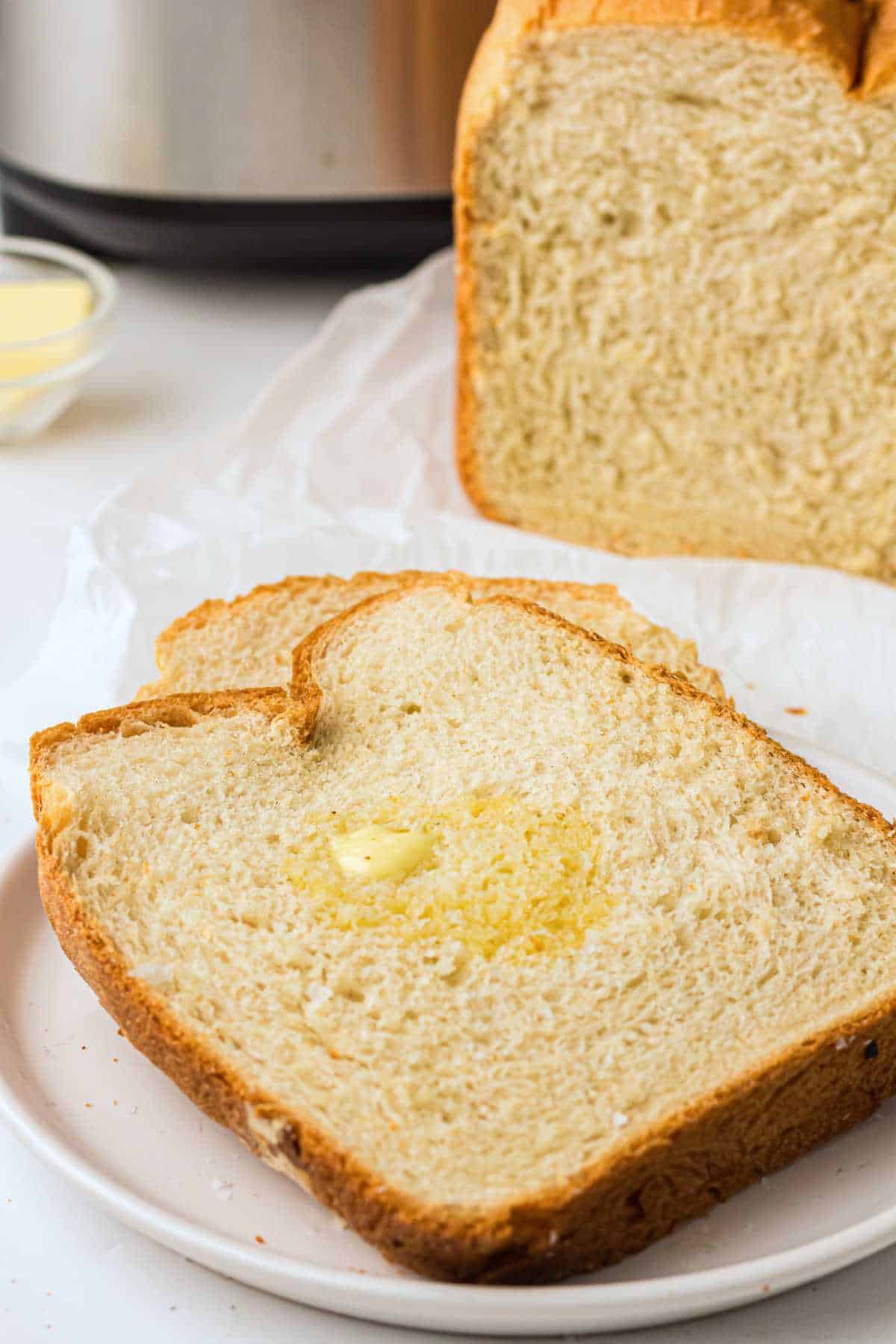
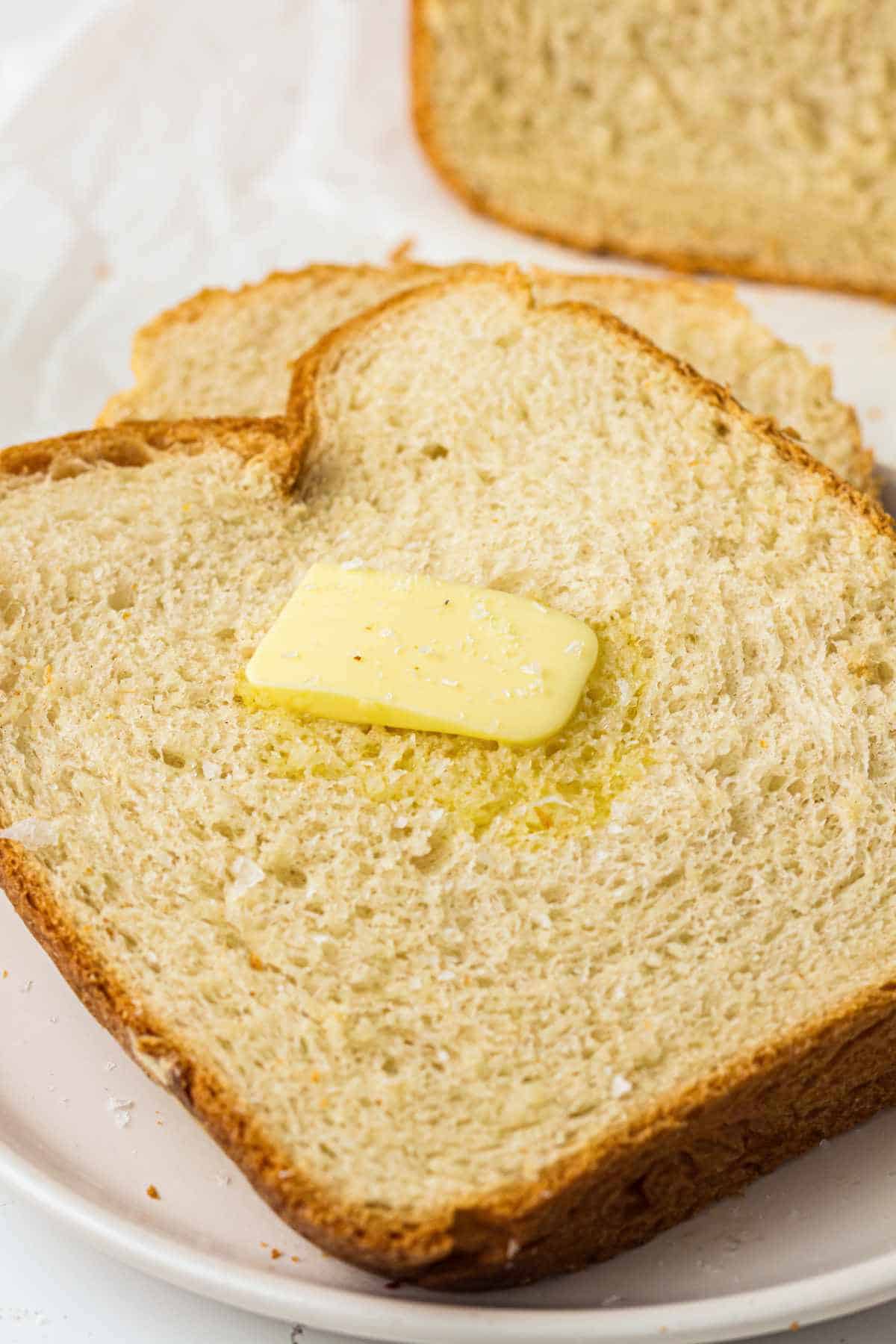
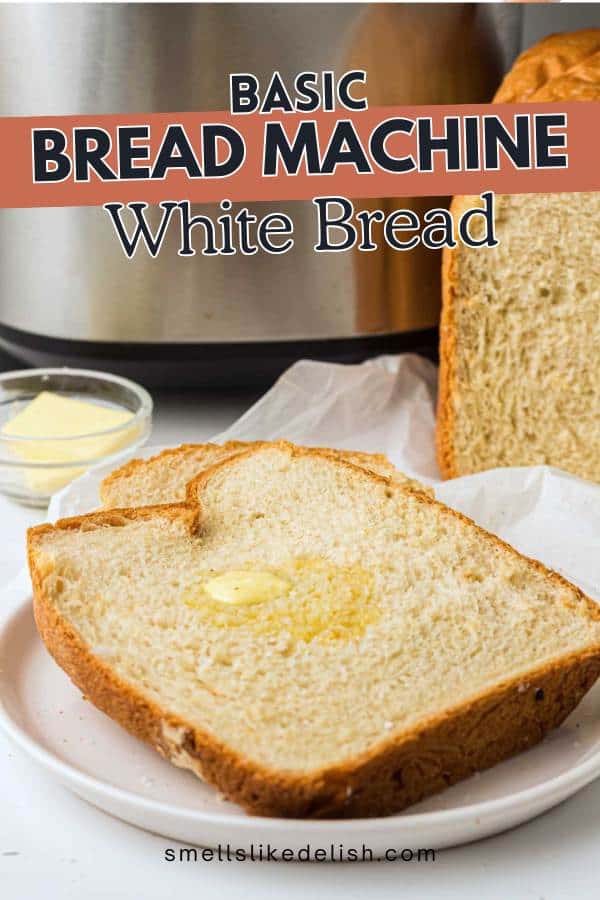
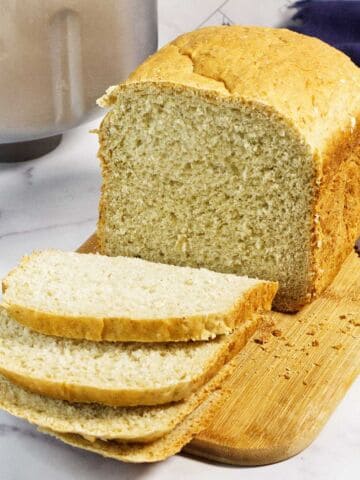
This bread machine white bread recipe makes a dependable, slightly sweet sandwich loaf designed specifically for new bread machine users. It makes a 1½ pound loaf that bakes up soft, even, and sliceable without towering so high it won't fit in your toaster.
Why You'll Love This Bread Machine White Bread Recipe
If you're just getting comfortable with your bread machine, this is the loaf to start with. The ingredient amounts are balanced so the bread rises well without over-doming, the crumb stays tender at room temperature, and the flavor is neutral enough for sandwiches but just sweet enough to taste like classic store-bought sandwich bread.
The ingredient balance keeps the loaf from rising too high, so you get even slices that fit in a standard toaster. The soft crumb stays tender at room temperature, making it dependable for sandwiches, toast, or simple buttered slices throughout the week.
- Even, toaster friendly slices: The controlled rise keeps the loaf from doming too high so every slice fits neatly in a standard toaster.
- Soft texture that stays tender: The oil and balanced hydration help the crumb remain soft at room temperature, making it ideal for sandwiches and toast.
- Flexible base recipe: Simple swaps like milk for water or honey for sugar let you adjust flavor while keeping the structure reliable.
Ingredient Order Matters in a Bread Machine
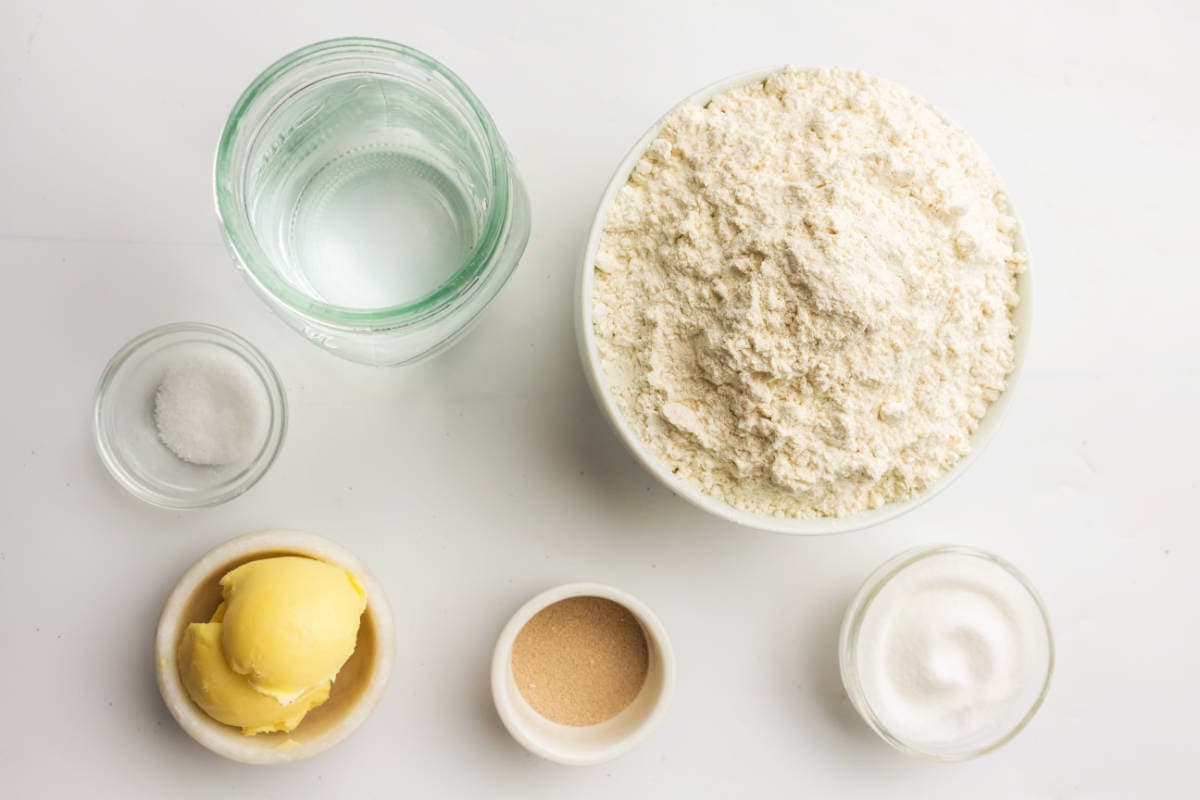
The base recipe uses water and vegetable oil for consistency and ease, but you can swap in milk or buttermilk, use butter instead of oil, or trade the sugar for honey. The structure stays the same. That flexibility makes this a solid starter loaf you can rely on.
One of the most important parts of successful bread machine baking is adding ingredients in the correct order. Most bread machines work best when ingredients are added in this sequence:
- Warm liquid (water, milk, or buttermilk, 105-110°F)
- Oil or softened butter
- Salt
- Sugar or honey
- Bread flour
- Yeast (placed last, on top of the flour)
Keeping the yeast separate from the liquid until mixing begins helps prevent premature activation and supports consistent results.
Full ingredient amounts and preparation instructions are in the printable recipe card at the bottom of this post. This makes 1 loaf, about 12 to 14 slices.
💡 Pro Tip
New bread machine users often assume more yeast means a better rise. Too much yeast can cause the loaf to dome too high, collapse slightly, or bake into slices that are too tall for a standard toaster.
This recipe uses 1¼ teaspoons of yeast to produce a controlled rise and even sandwich slices.
How To Make This Bread Machine White Bread Recipe
Making this loaf is simple and follows the standard Basic cycle on most bread machines. Ingredients are added to the pan in a specific order, then the machine takes care of the mixing, kneading, rising, and baking. Follow the step-by-step visual guide below to see how each stage should look.
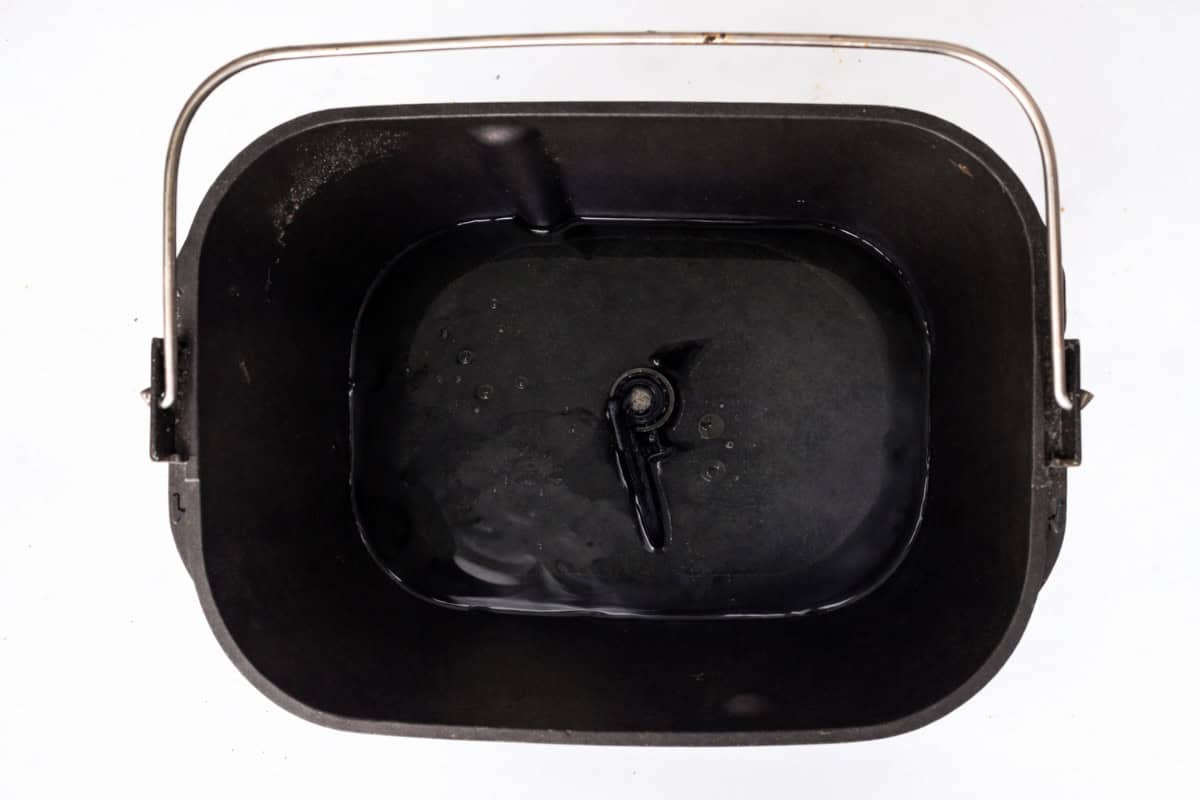
- Add the warm water to the bread machine pan.
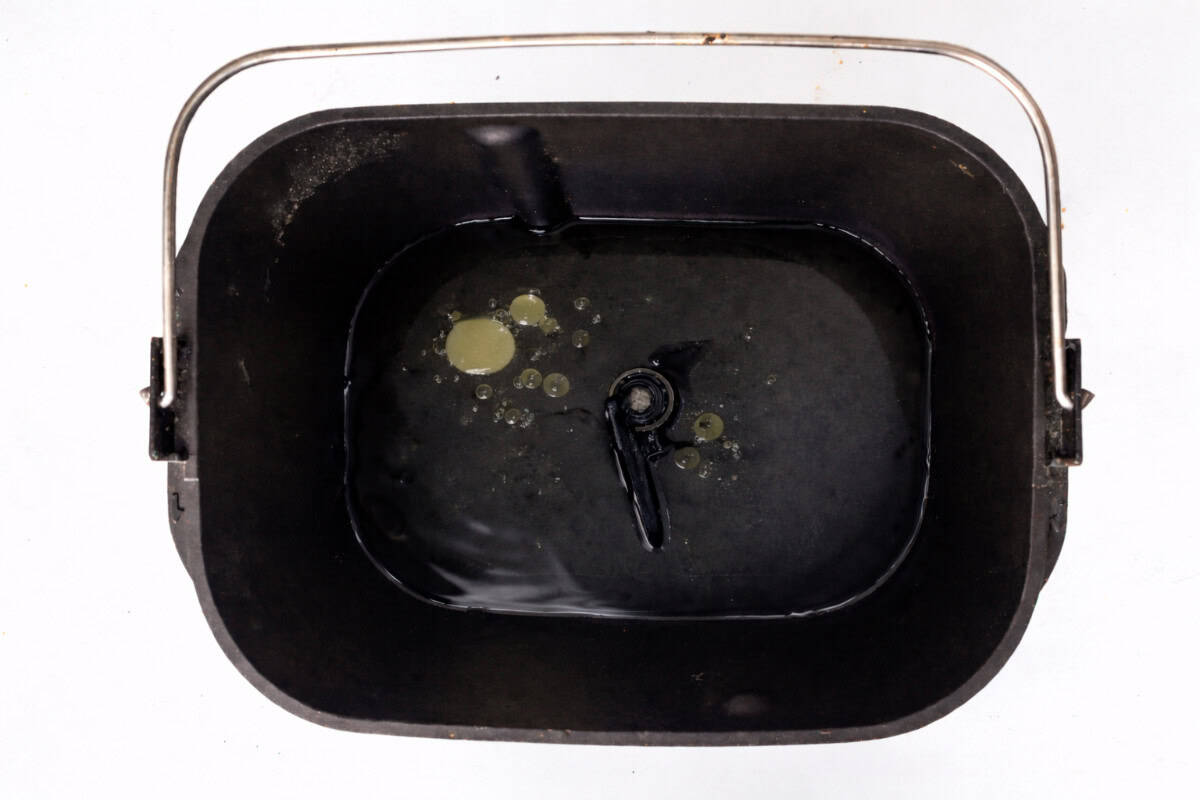
- Add the vegetable oil, salt, and sugar.
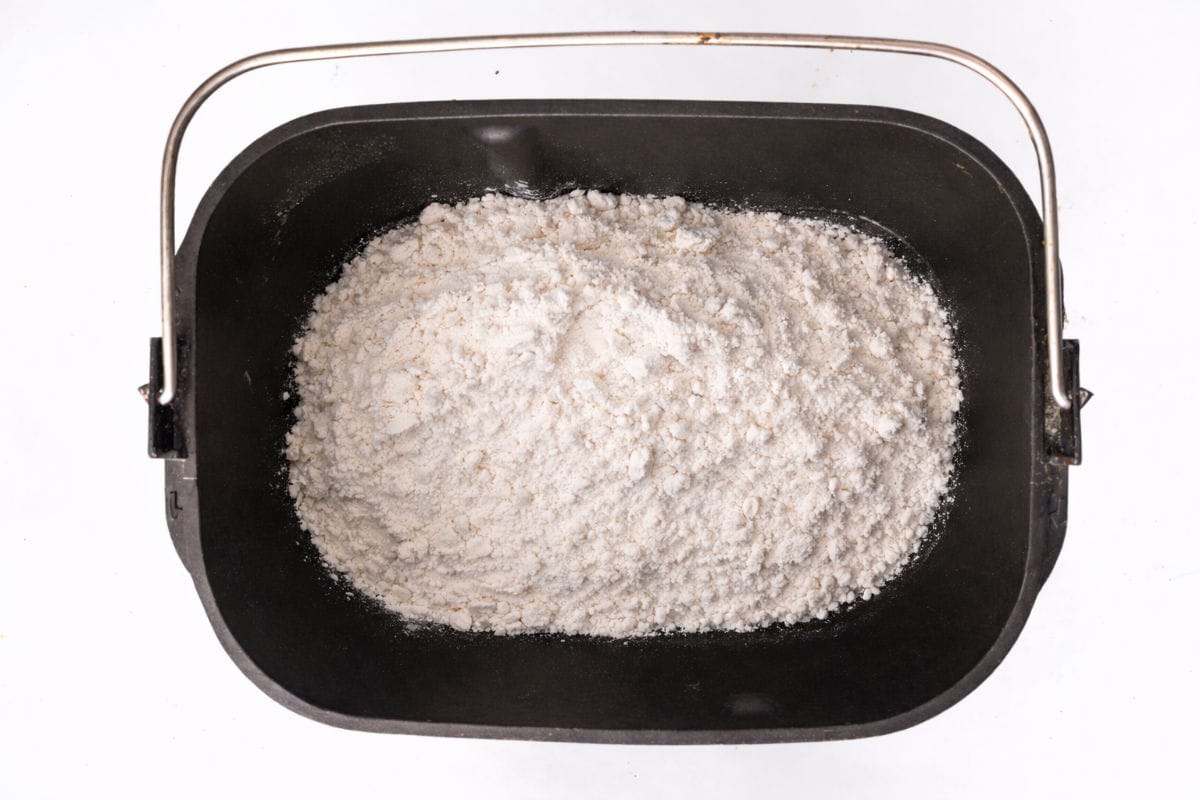
- Spoon in the bread flour, leveling it gently.
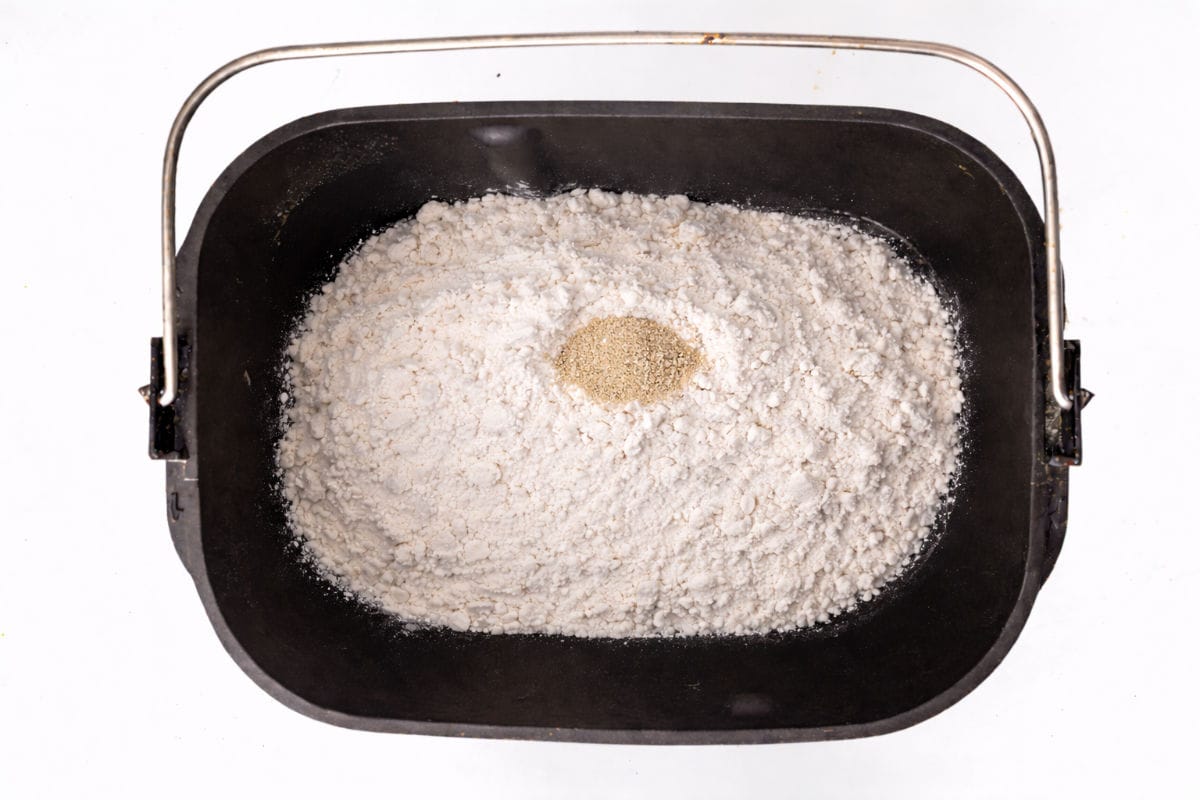
- Make a small well in the center of the flour and add the yeast.
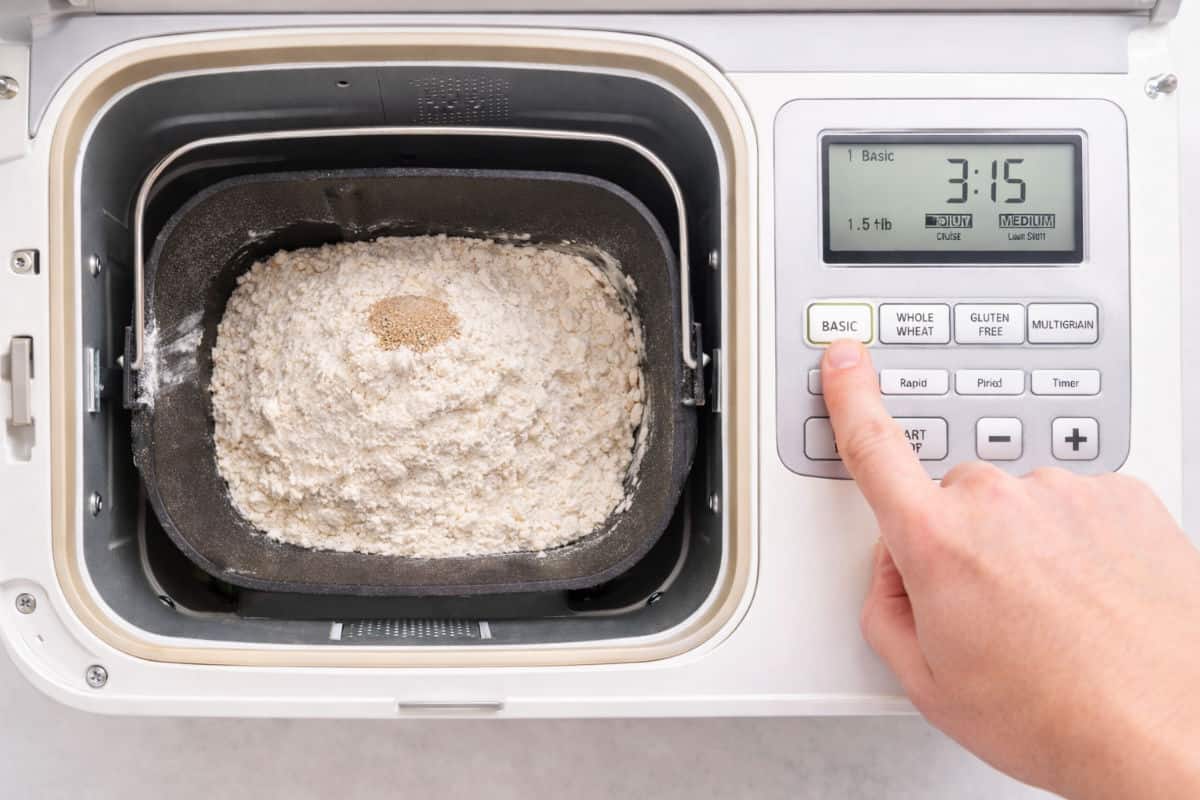
- Insert the pan into the machine and select the Basic or White Bread cycle, 1½ lb loaf size, medium crust.
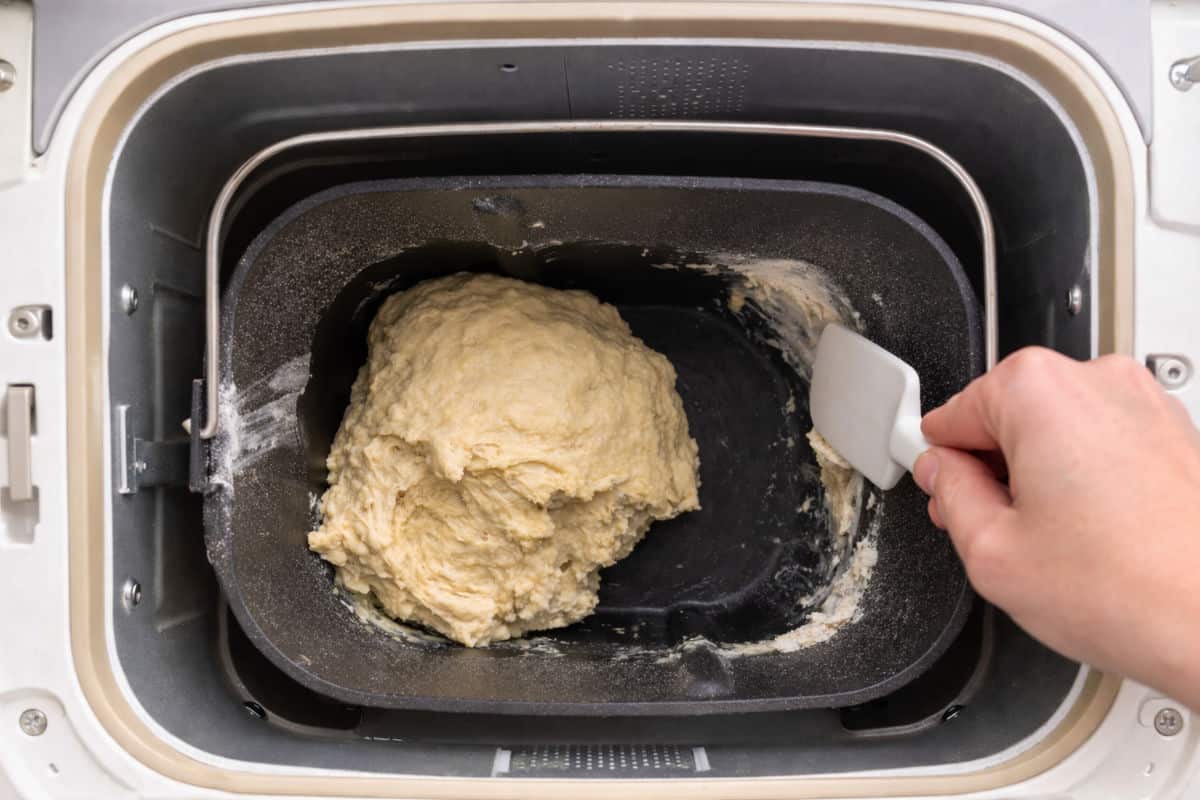
- Check during mixing and use a spatula to push down any stuck flour or dough from the pan sides.
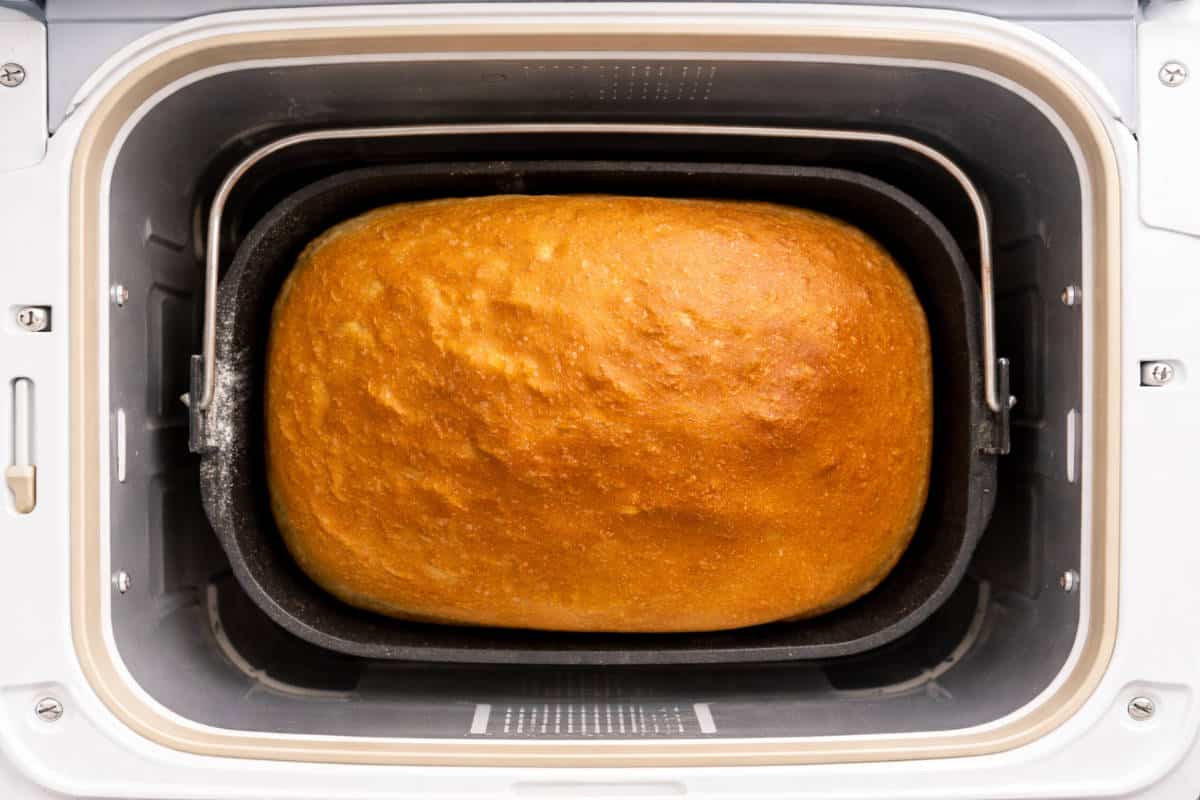
- Remove the loaf pan promptly after the baking cycle and let the bread rest in the pan for 5 minutes.
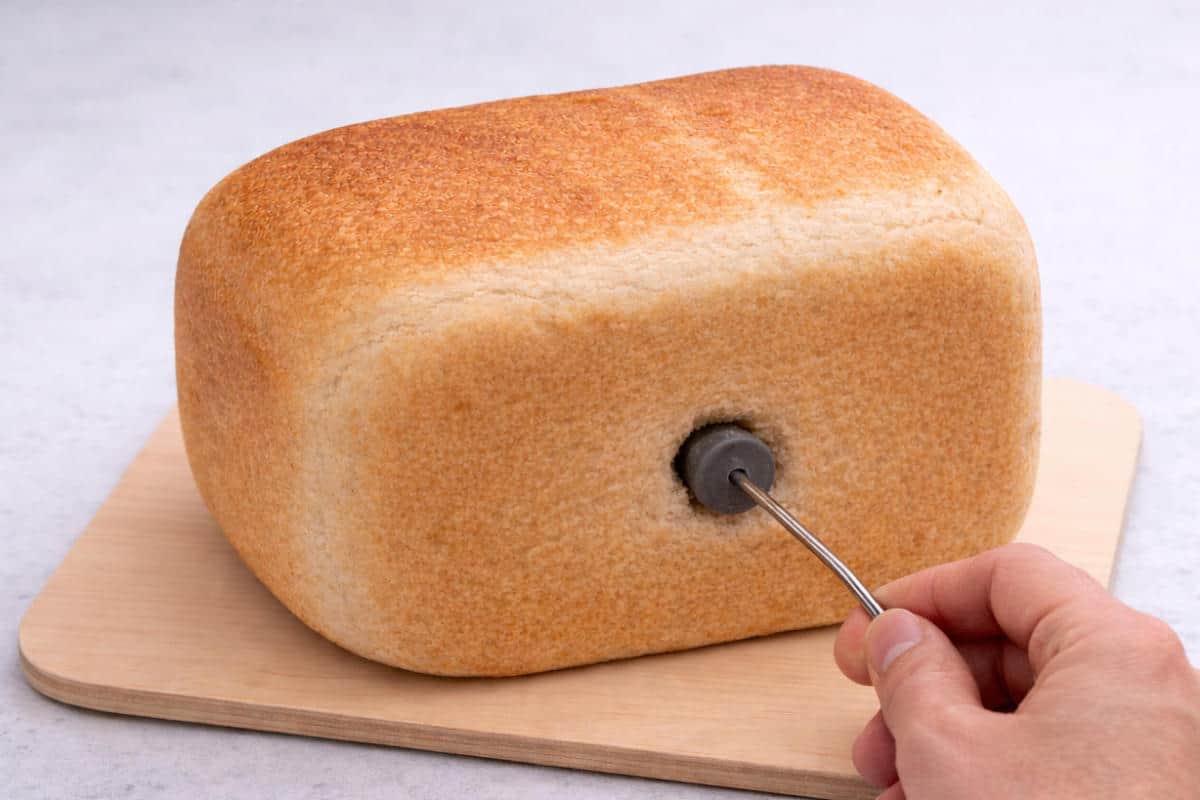
- Tip the loaf out onto a wire rack, check that the kneading paddle is not stuck in the bottom (remove it if needed), and cool completely before slicing.
Serving Suggestions
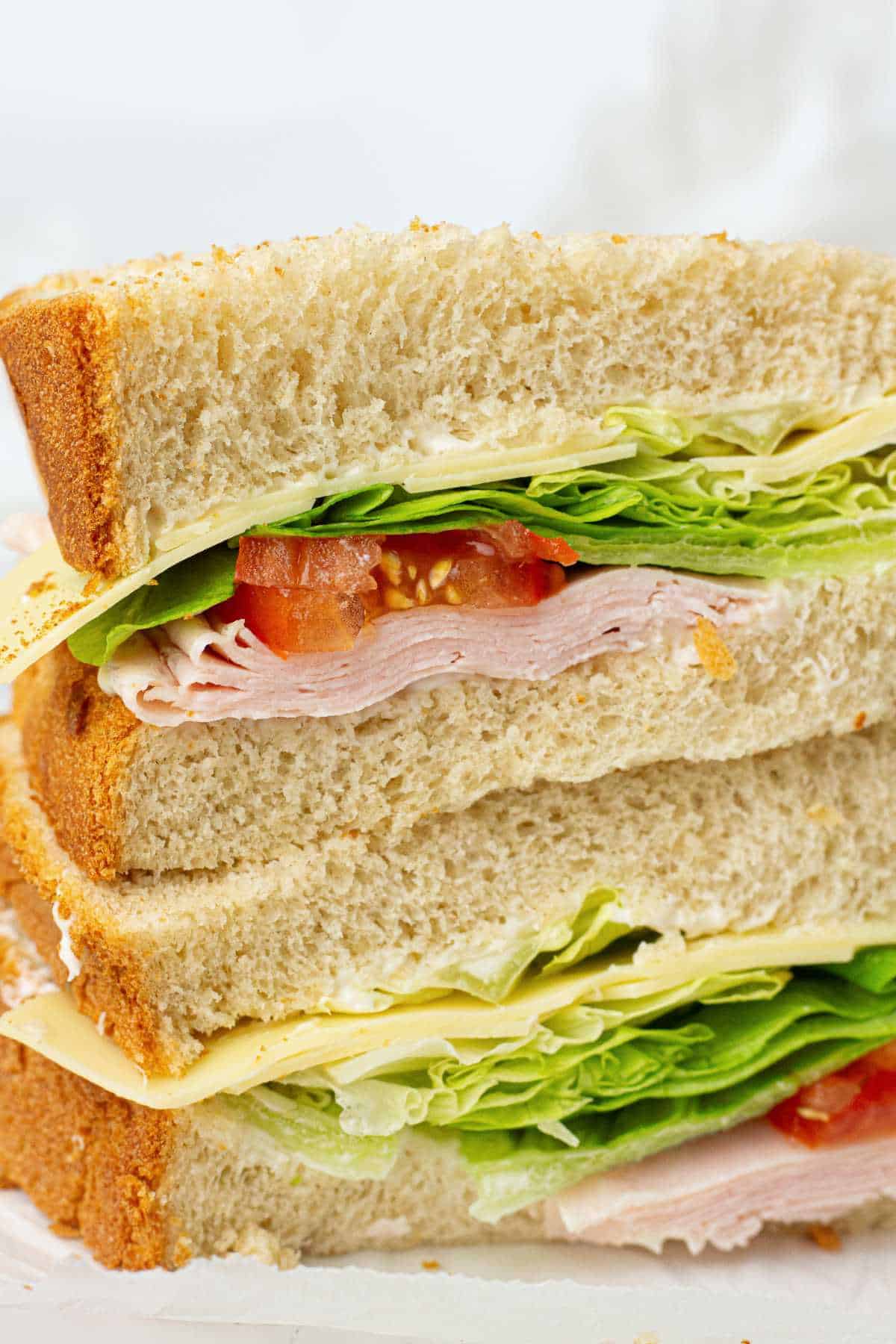
This bread is perfect for everyday meals. Use it for sandwiches like the cold roast beef sandwiches, to make sandwiches with Chicken Salad without celery, or toast thick slices for breakfast with butter and jam.
The soft, slightly sweet crumb makes it just as good for grilled cheese as it is for classic peanut butter and jelly.
Substitutions and Variations
Some useful tips and substitutions when making this recipe:
- Use milk instead of water: Swap the water for whole milk for a slightly richer flavor and softer crumb. Buttermilk can also be used for a mild tang.
- Honey in place of sugar: Replace the 3 tablespoons of sugar with 3 tablespoons of honey for a deeper sweetness and subtle flavor change.
- Butter instead of oil: Use 4 tablespoons of softened butter instead of vegetable oil for a more traditional flavor while still keeping the loaf tender.
- All purpose flour swap: If you are out of bread flour, all purpose flour will work. The loaf may be slightly less chewy but will still bake up soft and sliceable.
- Light wheat blend: Replace up to 1 cup of the bread flour with whole wheat flour for a heartier loaf while keeping the texture suitable for sandwiches.
- Lower sugar option: Reduce the sugar to 2 tablespoons for a less sweet loaf that still supports yeast activity and structure.
Tips for Success
Helpful tips to help you when making this recipe:
- Measure flour correctly: Spoon the flour into the measuring cup and level it off rather than scooping directly from the bag. Too much flour can make the loaf dense and dry.
- Use warm, not hot liquid: Keep the water between 105 and 110°F so the yeast activates properly without being damaged by excess heat.
- Add ingredients in the correct order: Liquids go in first, followed by salt and sugar, then flour, with the yeast placed on top. This helps the machine mix and rise the dough consistently.
- Check the dough during the first knead: After a few minutes of mixing, the dough should form a soft, slightly tacky ball. If it looks dry, add a teaspoon of water at a time. If too sticky, sprinkle in a little flour.
- Cool completely before slicing: Let the loaf cool fully on a wire rack before cutting. Slicing too soon can compress the crumb and make the texture gummy.
Storage Options
Here is how I store leftovers when making this recipe:
- Store at room temperature: Keep the cooled loaf in a bread bag or airtight container for up to 3 days to maintain a soft crumb.
- Slice before freezing: Slice the loaf once fully cooled, then freeze in a zip top bag so you can remove only what you need.
- Freeze for longer storage: Wrap the whole loaf tightly in plastic wrap and place in a freezer bag for up to 3 months. Thaw at room temperature before slicing.
- Avoid refrigerating: The refrigerator can dry out homemade bread and make it stale more quickly than storing at room temperature.
Related Recipes
Frequently Asked Questions
Too much yeast is usually the cause. A higher yeast amount can make the dough rise aggressively, creating a tall dome that may collapse or produce slices that are too large for a toaster.
Collapse often happens from too much yeast or too much liquid. It can also occur if the lid was opened during the baking phase, causing a temperature drop.
Yes, all purpose flour will work, though the loaf may be slightly softer and less chewy. Bread flour provides more structure because of its higher protein content.
Yes, active dry yeast can be used in the same amount. It does not need to be proofed first in most bread machines.
Dense bread is often caused by too much flour or not enough liquid. Measuring flour correctly by spooning and leveling helps prevent this issue.
After a few minutes of mixing, the dough should form a soft, slightly tacky ball that clears the sides of the pan but may lightly touch the bottom.
The hole is from the kneading paddle. Sometimes it bakes into the bread and needs to be removed after baking.
Allow the loaf to cool completely before slicing. Cutting too soon can compress the crumb and create a gummy texture.
Yes, you can replace the water with the same amount of milk or buttermilk. Milk will give the loaf a slightly richer flavor and softer crumb, while buttermilk adds a mild tang. The structure of the bread remains the same.
A medium crust setting works well for this recipe and produces an even golden brown finish. If you prefer a lighter or darker crust, adjust the setting to suit your preference.
Lunch Recipes



Get The Recipe!
Basic Bread Machine White Bread
Equipment
- Bread Maker Machine
Ingredients
For a 1½ lb loaf:
- 9 oz warm water (260 ml, 105-110°F)
- 4 tablespoons vegetable oil or softened butter
- 1½ teaspoons salt
- 3 tablespoons sugar or honey
- 2¾ cups bread flour
- 1¼ teaspoons instant yeast or active dry yeast
For a 2 lb loaf
- 12 ounces warm water about 355 ml, 105-110°F
- 5 tablespoons vegetable oil
- 2 teaspoons salt
- 4 tablespoons sugar
- 3⅔ cups bread flour
- 1¾ teaspoons instant or active dry yeast
Instructions
- Add the warm water to the bread machine pan.9 oz warm water
- Add the vegetable oil, salt, and sugar.4 tablespoons vegetable oil, 1½ teaspoons salt, 3 tablespoons sugar
- Spoon in the bread flour, leveling it gently.2¾ cups bread flour
- Make a small well in the center of the flour and add the yeast.1¼ teaspoons instant yeast
- Insert the pan into the machine and select the Basic or White Bread cycle, 1½ lb loaf size, medium crust.
- Start the machine and allow it to complete the cycle. Check during the mixing phase and use a spatula to push down any stuck flour or dough on the pan sides.
- Remove the loaf pan promptly after the baking cycle and let the bread rest in the pan for 5 minutes. Tip the loaf out onto a wire rack, check that the kneading paddle is not stuck in the bottom (remove it if needed), and cool completely before slicing.
Notes
- Measure flour correctly: Spoon the flour into the measuring cup and level it off rather than scooping directly from the bag. Too much flour can make the loaf dense and dry.
- Use warm, not hot liquid: Keep the water between 105 and 110°F so the yeast activates properly without being damaged by excess heat.
- Add ingredients in the correct order: Liquids go in first, followed by salt and sugar, then flour, with the yeast placed on top. This helps the machine mix and rise the dough consistently.
- Check the dough during the first knead: After a few minutes of mixing, the dough should form a soft, slightly tacky ball. If it looks dry, add a teaspoon of water at a time. If too sticky, sprinkle in a little flour.
- Cool completely before slicing: Let the loaf cool fully on a wire rack before cutting. Slicing too soon can compress the crumb and make the texture gummy.
Nutrition
Pin It For Later ⤵

Kelly Bloom says
My family loved this!