


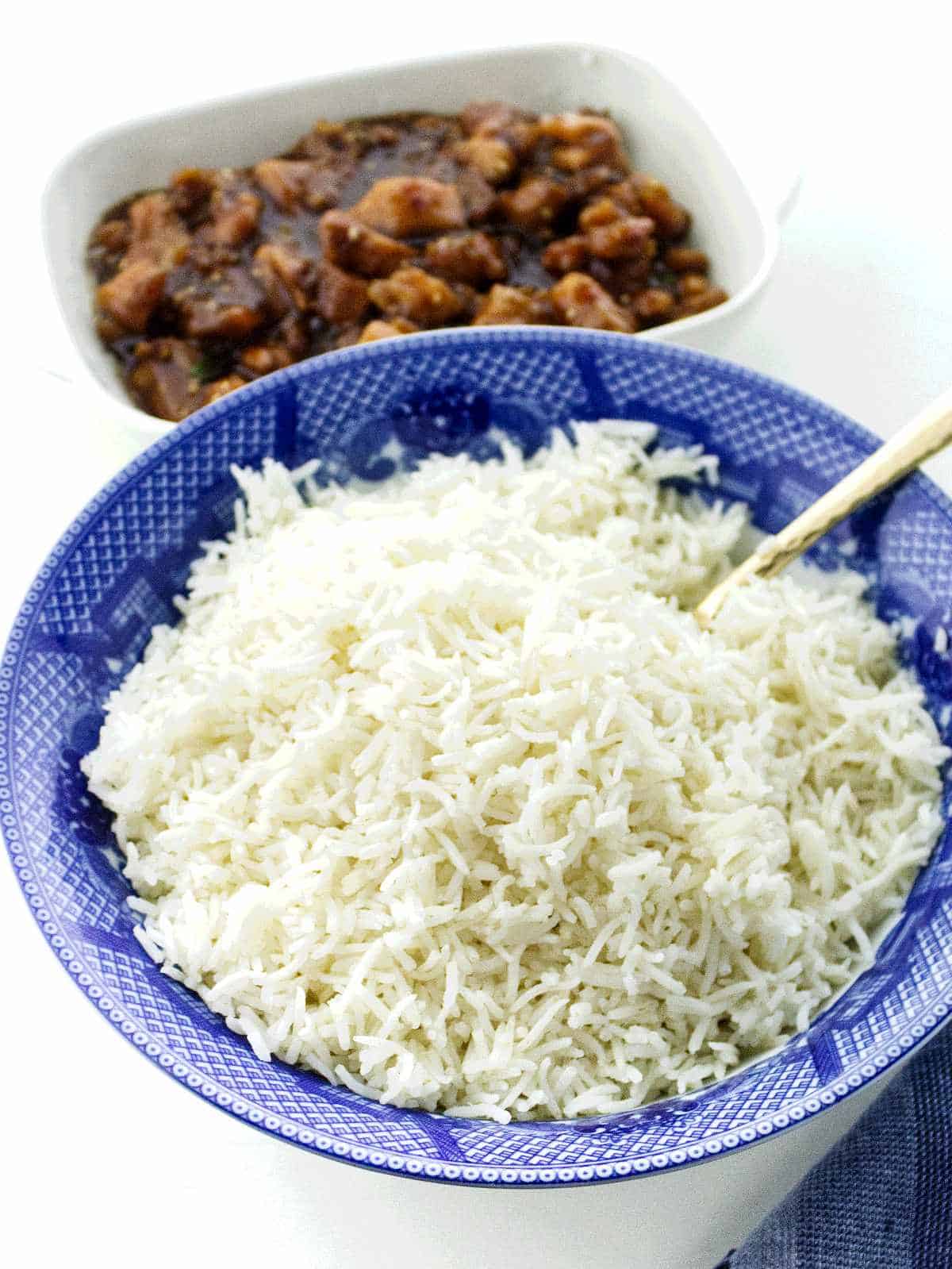
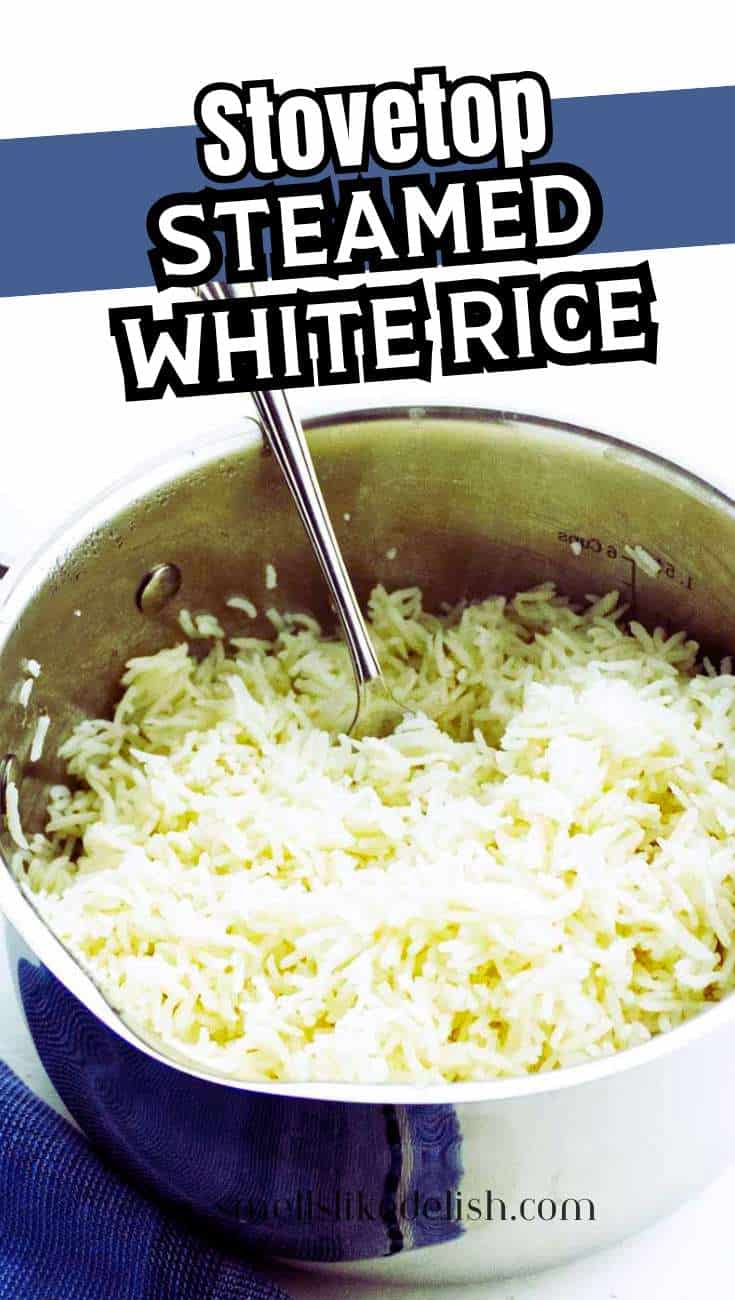
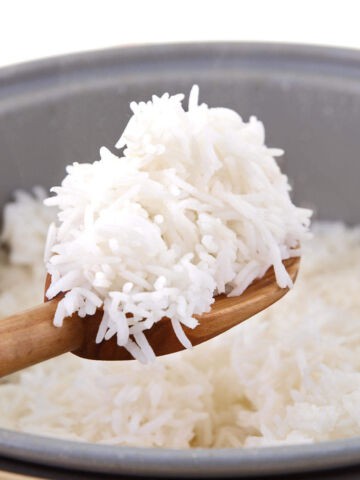
This steamed white rice is cooked to come out light and separate, not sticky or soggy. It's a simple method that works every time and makes a good base for stir fries, curries, and other sauced dishes.
Why You'll Love This Steamed White Rice Recipe
If you're like me, consistently getting fluffy steamed white rice has been a struggle.
You will love this simple approach to making steamed white rice on your stovetop. This method is foolproof, resulting in fluffy, tender long grain white rice every time.
Ingredients Overview
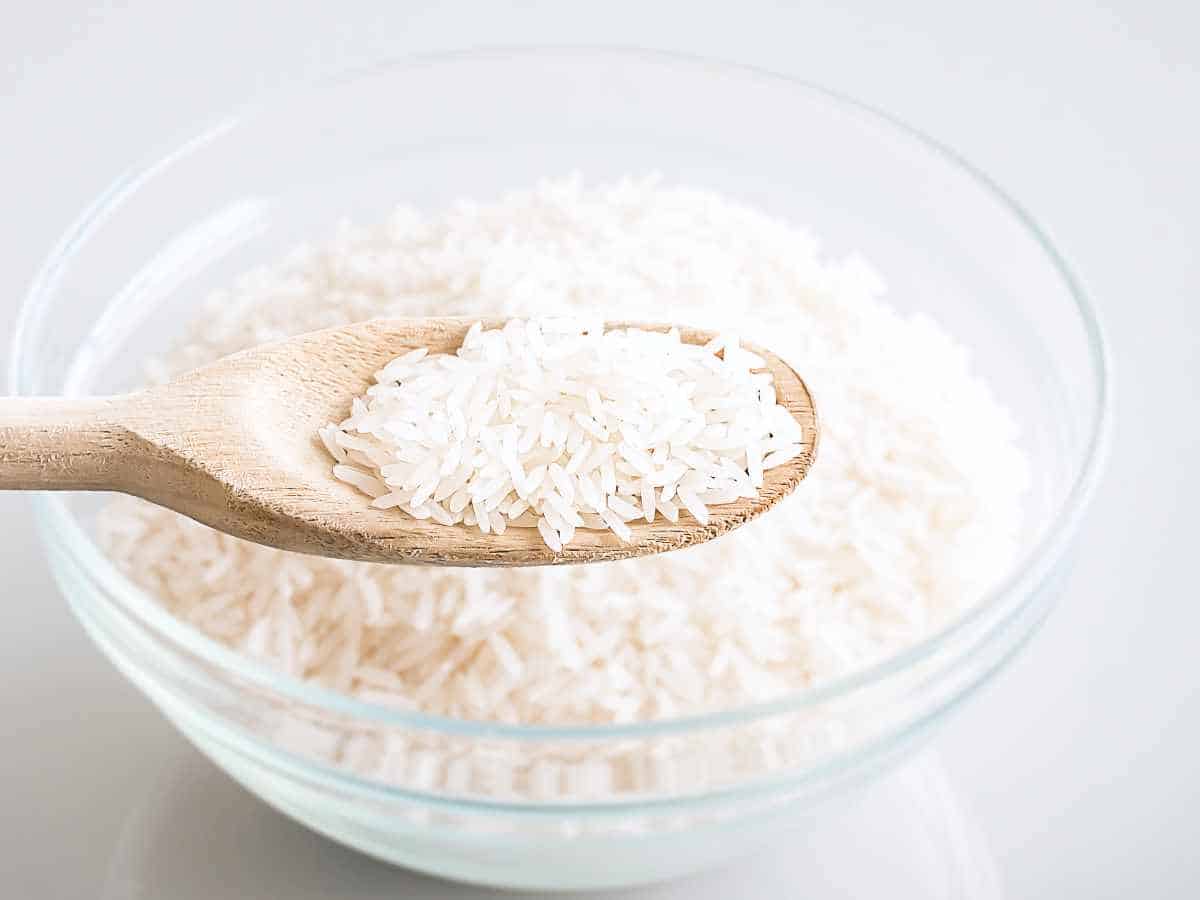
There are several varieties of white rice available, and these instructions are for the long grain type of white rice.
You can use regular long grain white rice, long grain basmati rice, and even long grain jasmine rice. The cooking time will be the same for all off these long grain varieties.
Full ingredient amounts and preparation instructions are in the printable recipe card at the bottom of this post.
How To Make Perfect, Fluffy Steamed White Rice
The secret to making fluffy, perfectly steamed white rice is using less water. Yes, by not following the rice package instructions, you will get a much better steamed rice.
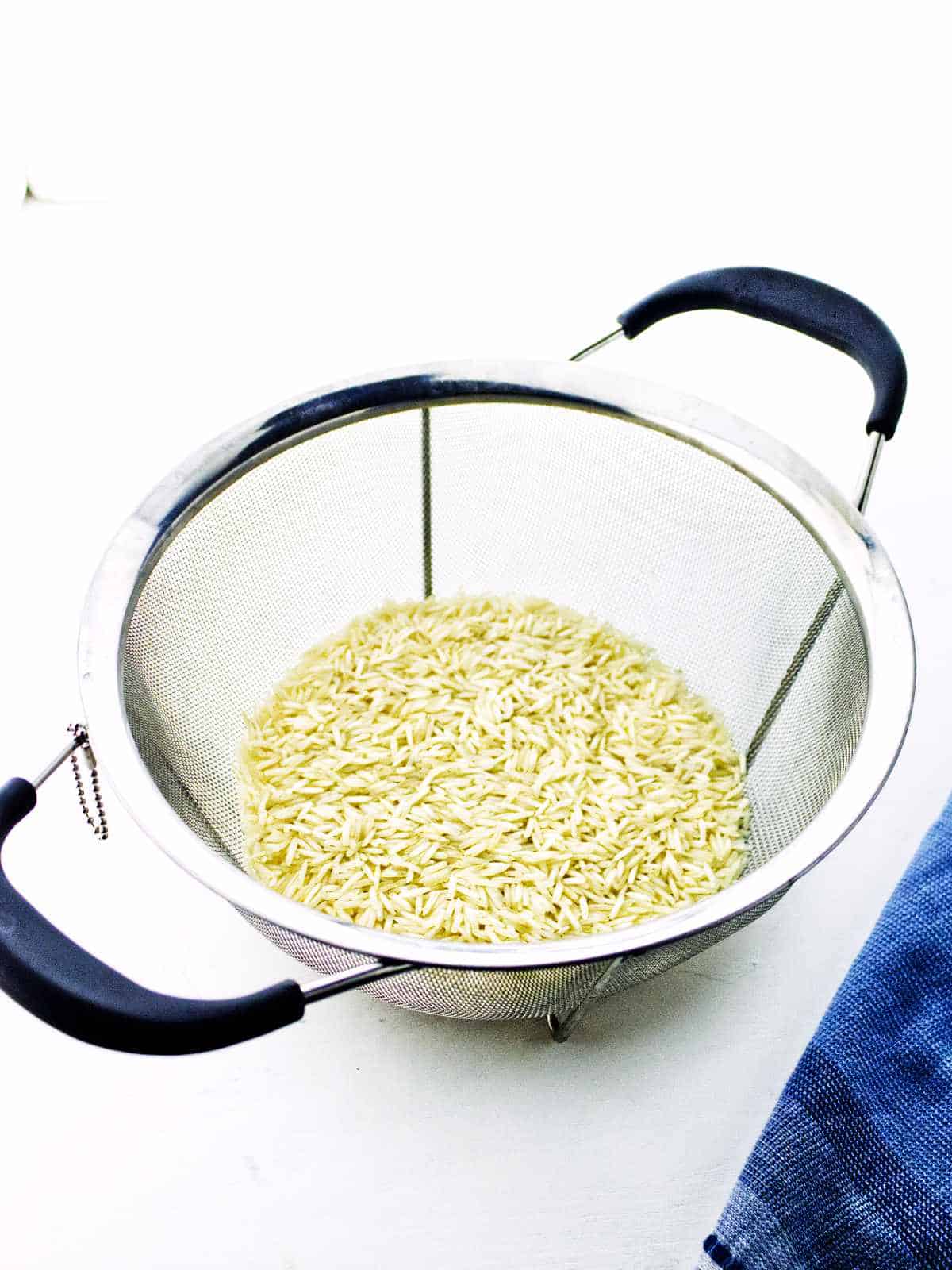
Step 1: Measure your rice and put it in a sieve. Rinse the rice under cool or cold water for about 30 seconds. Long grain rice does not have much of a starchy coating, so 30 seconds is usually enough. Shake to drain excess water.
PRO TIP: The instructions on most bags of rice call for 2 cups of water for every 1 cup of rice. You are going to reduce the water by ⅛th. That would be 1 ¾ cup of water for each 1 cup of rice.
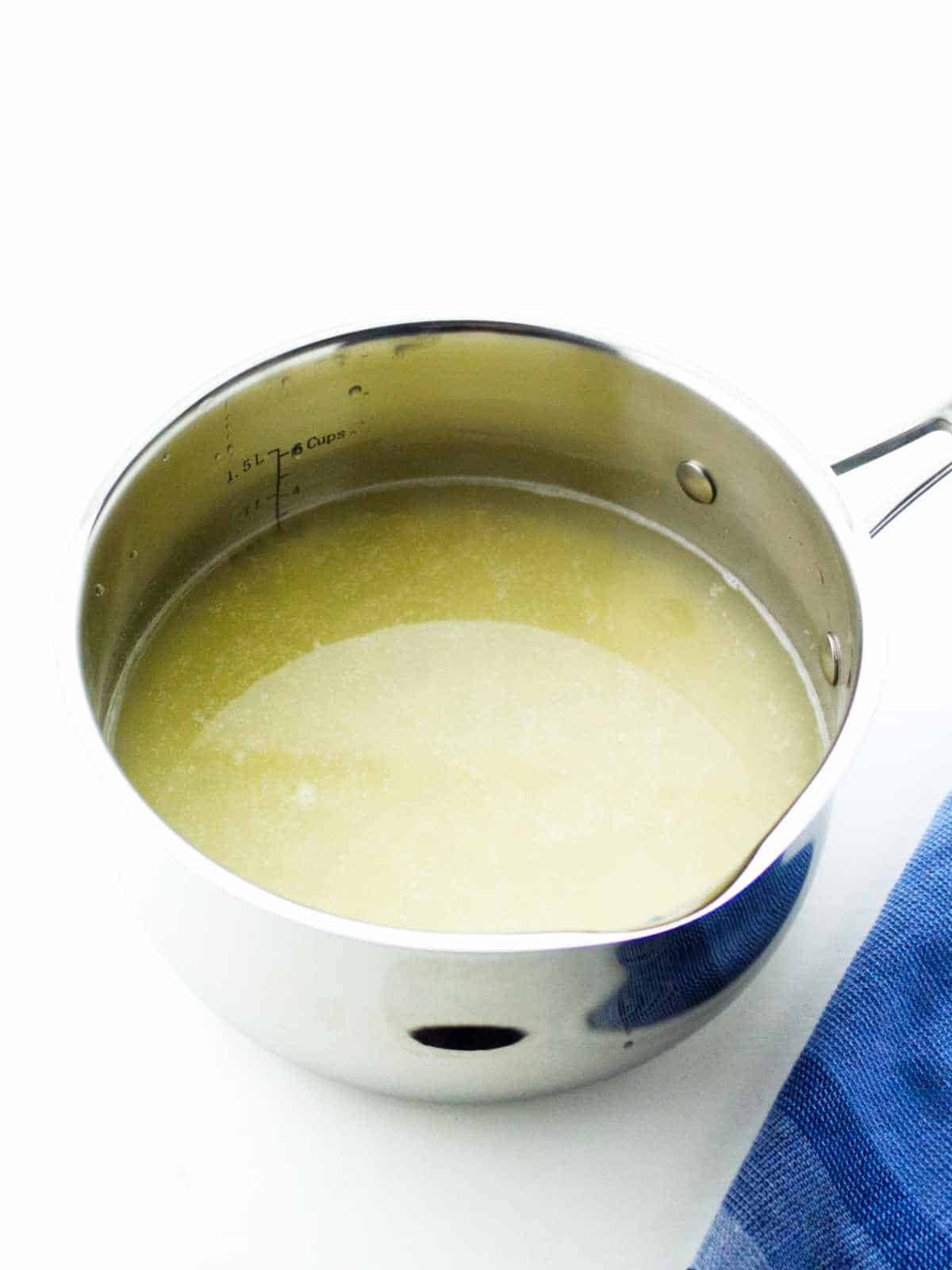
Step 2: Add the water and the salt and the rinsed rice. Bring saucepan with rice and water to a quick boil for 1 minute. Cover with a lid. Reduce heat and cook on low for 10 minutes.
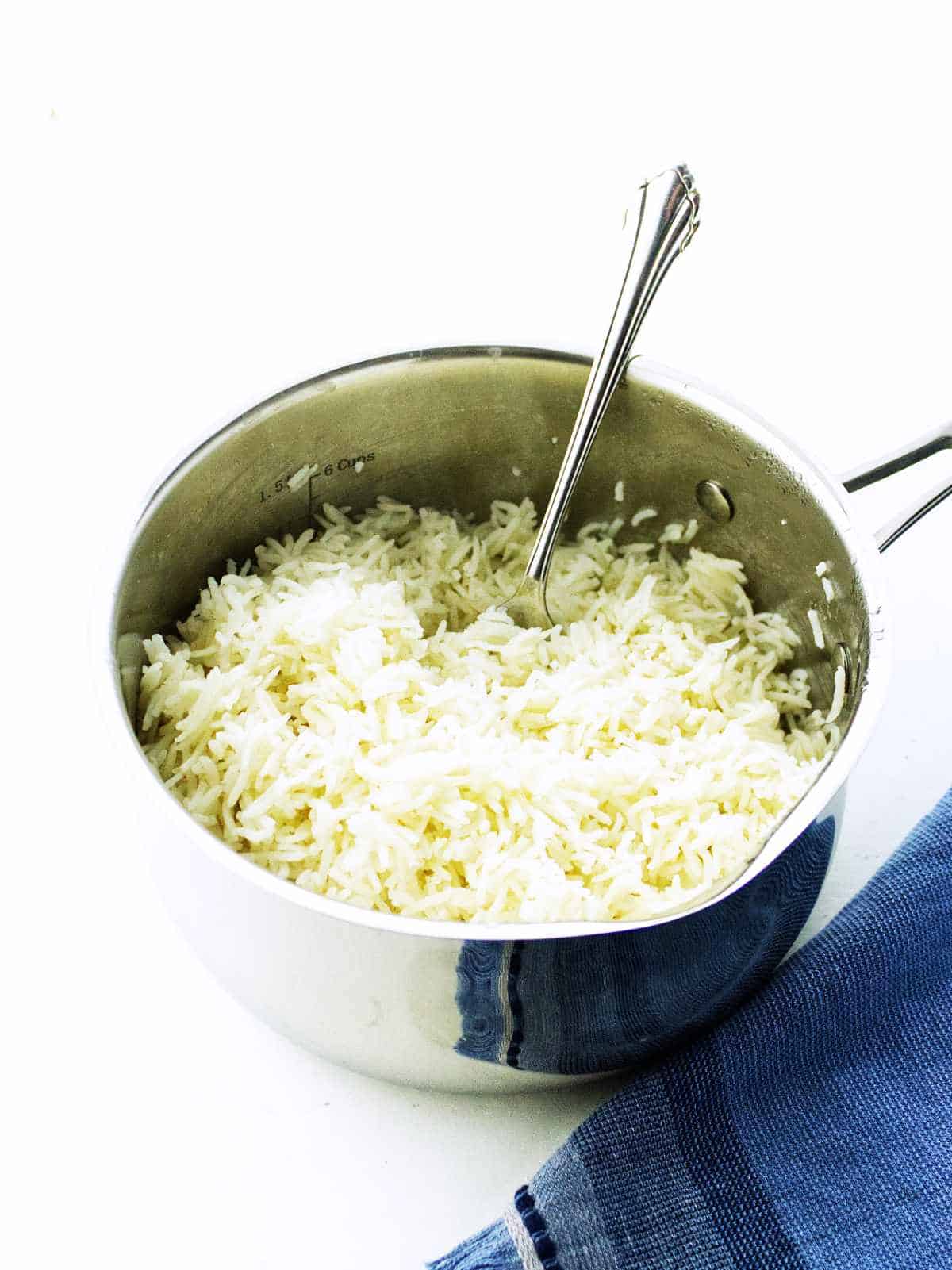
Step 3: After 10 minutes, remove from the heat and set aside COVERED for an additional 10 minutes. Don't remove the cover during this unheated 10 minutes. After the 10 minutes have passed, remove the cover lid and fluff your perfect foolproof steamed rice with a fork.
How Can I Jazz Up White Rice?
Looking for more than just white steamed rice? Here are some fabulous variations!
- Broth - For a dramatic difference, infuse your rice with flavored cooking water or use broth.
- Cheese - Adding grated cheese to the final 10 minutes of cook time will give you a creamy rice.
- Vegetables - A dry vegetable soup mix is a delicious option to make a rice pilaf.
- Herbs and Seasonings - Everything from Annatto, Saffron, Cilantro, and Chil powder make flavorful additions to your steamed white rice.
- Fried - Yes, make fried rice from your cooled, steamed white rice!
Serving Suggestions
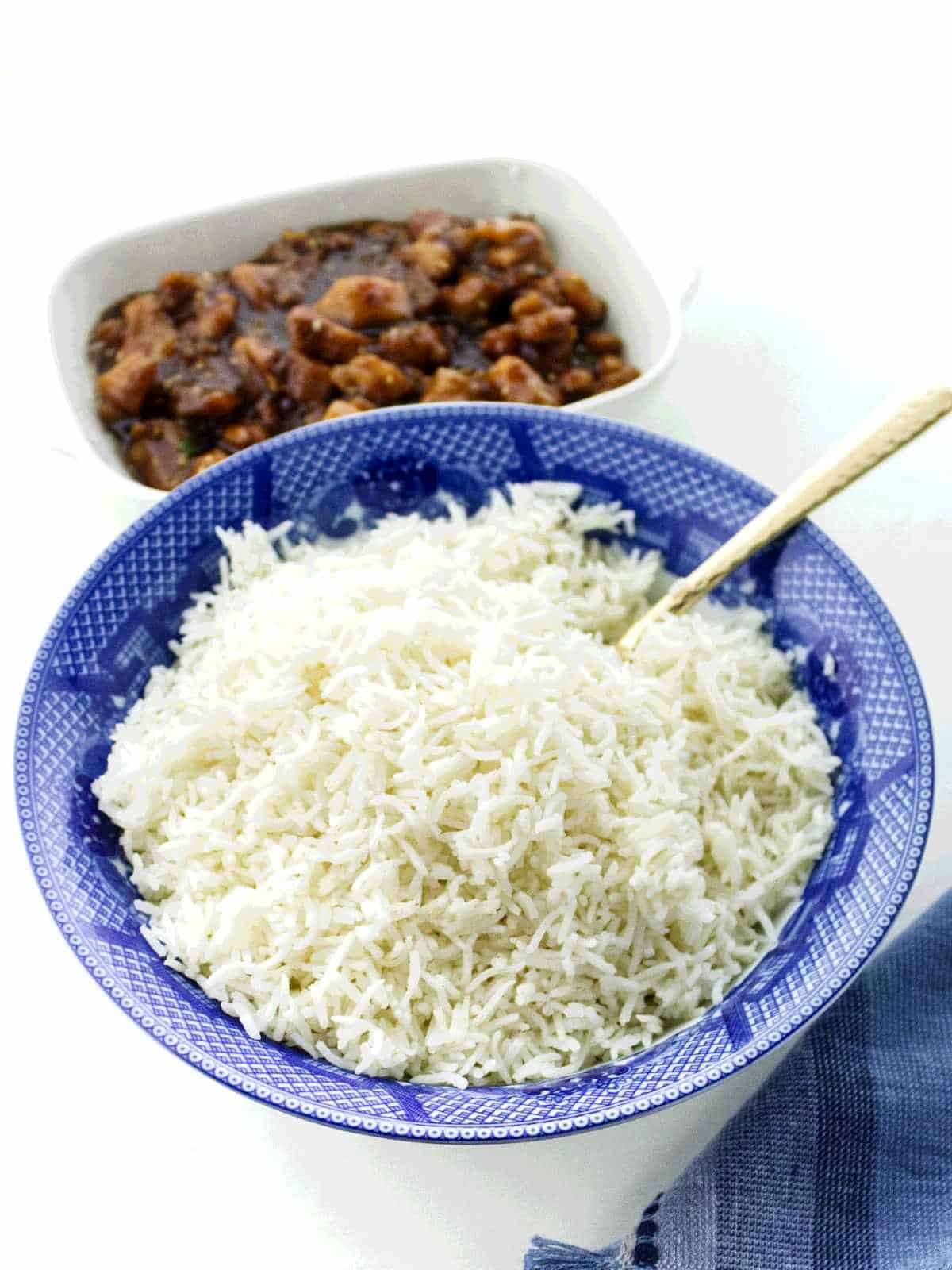
Serve it with dishes like red beans and rice, beef tips and gravy, or anything with a sauce or gravy. It also works as a base for any type of rice bowl, paired with vegetables and a protein for a quick, complete meal.
It's a natural fit for Asian-style dishes like copycat Mall bourbon teriyaki chicken or Panda Express string bean chicken, chili con carne, and making fried rice.
Substitutions and Variations
Here are a few substitutions and variations using this recipe:
- Different types of white rice: This method works with long grain, jasmine, or basmati rice. Cooking times and water amounts may vary slightly depending on the type.
- Brown rice: You can use brown rice, but it will need more water and a longer cooking time since it still has the bran layer.
- Use broth instead of water: Swap some or all of the water for chicken or vegetable broth to add more flavor.
- Add a little fat: A small amount of butter or oil can be added while cooking for a slightly richer flavor.
- Seasoned rice: Add a pinch of salt, garlic powder, or a bay leaf while cooking if you want a little extra flavor.
- Coconut rice variation: Replace part of the water with coconut milk for a lightly sweet, richer version.
- Herb finish: Stir in chopped herbs like parsley or cilantro after cooking for a fresh finish.
- Make it a base: Use the cooked rice for fried rice, rice bowls, or to go alongside sauced dishes.
Tips for Success
Helpful tips to help you when making this recipe:
- Choose a pot with a tight fitting lid.
- If your pot lid has a vent hole, cover with foil.
- If you like your rice buttered, add the butter when fluffing with a fork.
- Ignore the rice to water ratio on the rice package. Use 1 ¾ cups of water for each 1 cup of dry, uncooked long grain rice.
Storage Options
Here is how I store leftovers when making this recipe:
- Cover and store leftover steamed white rice in the refrigerator for up to four days.
- To reheat, place in a bowl and cover with plastic wrap.
- Microwave for 1 minute, then stir. Continue to microwave in 1 minute increments until heated through.
- We make the popular copycat Longhorn Rice Pilaf, Chimichurri Rice, Cilantro Lime rice, and Ghanaian Jollof rice with day old steamed white rice.
Related Recipes
Frequently Asked Questions
Yes, just make sure you are using a pot large enough to accommodate the expanding rice.
Yes, this Steamed White Rice recipe is a basic recipe for many rice pilafs, or seasoned rice dishes. Add your spices, seasonings, and herbs to the water with the rinsed rice.
Yes, store it in the portion size you will want to use it. Freeze, and then defrost. Microwave and serve as a side, or add to soups.
Long grain rice makes the fluffiest rice. Long grain" is just a generic classification for rice whose milled grains are at least three times as long as they are wide. Common varieties are usually simply labeled "long grain," but you might know them as basmati, Carolina, jasmine or Texmati.
They are: American Rice, Doguet's Rice, Falcon Rice Mill, Farmers Rice Milling, Hoppe Farms, Louisiana Mill, Lowell Farms, Mars Food, Producers Rice Mill, Rice Tec, Riceland Foods, Riviana Foods, Sem Chi Rice Products, Specialty Rice, and Sunwest Foods.
Dinner Recipes



Get The Recipe!
Steamed White Rice
Equipment
- 2 quart saucepan
- Colander
Ingredients
- 1 cup long grain rice Basmati, Jasmine, regular long grain, or brown long grain
- 1 ¾ cup water
- ½ to 1 teaspoon salt
Instructions
- Rinse the rice under cool or cold water for about 30 seconds. Long grain rice does not have much of a starchy coating, so 30 seconds is usually enough.1 cup long grain rice
- Add the water into a 2 quart sauce pan.PRO TIP: The secret to making fluffy, perfectly steamed white rice is using less water than the package states.1 ¾ cup water
- Add the salt and the rinsed rice to the water in the saucepan.½ to 1 teaspoon salt
- Bring to a quick boil for 1 minute.
- Cover with a lid. Reduce heat and cook on low for 10 minutes.
- Remove from the heat and set COVERED for an additional 10 minutes. Don't remove the cover during this unheated 10 minutes.
- Last, remove the cover lid and fluff your perfect fool proof steamed rice with a fork.
- Serve with your favorite main dish that is best suited for fluffy steamed white rice.
Notes
- Choose a pot with a tight fitting lid.
- The instructions on most bags of rice call for 2 cups of water for every 1 cup of rice. You are going to reduce the water by ⅛th. That would be 1 ¾ cup of water for each 1 cup of rice.
- If your pot lid has a vent hole, cover with foil.
- If you like your rice buttered, add the butter when fluffing with a fork.
Nutrition
Pin It For Later ⤵
Leave a Reply